
Language coverage and useful coaching rarely come in the same package. Some tools support dozens of languages but give little live help, while others coach you in real time with a smaller language set. Here’s a focused list of tools that support bilingual interview practice, with the best fit for coding, system design, behavioral rounds, and free practice. If you are comparing what an AI interview assistant can do during preparation, focus on transcription quality, technical vocabulary, and whether feedback helps you improve a repeat attempt.
Table of Contents
- Phantom Code AI: Real-time support for coding and behavioral interviews
- AceRound AI: Live coaching across multiple spoken languages
- Interview Practice with AI: Broad interview coverage with live feedback
- HireVue: Extensive language coverage for structured practice
- ParakeetAI: Coding interview practice with question detection
- Bilingual interview practice tools compared
- FAQ: Bilingual interview practice tools
- Conclusion
1. Phantom Code AI: Real-time support for coding and behavioral interviews
Phantom Code AI is an invisible desktop assistant for software engineers who need help during technical or behavioral interview practice. It listens to the session, transcribes the conversation, recognizes the problem type, and gives guidance while the interview is moving. Its multilingual interview copilot positioning is especially relevant when you need to move between languages without losing the technical thread.
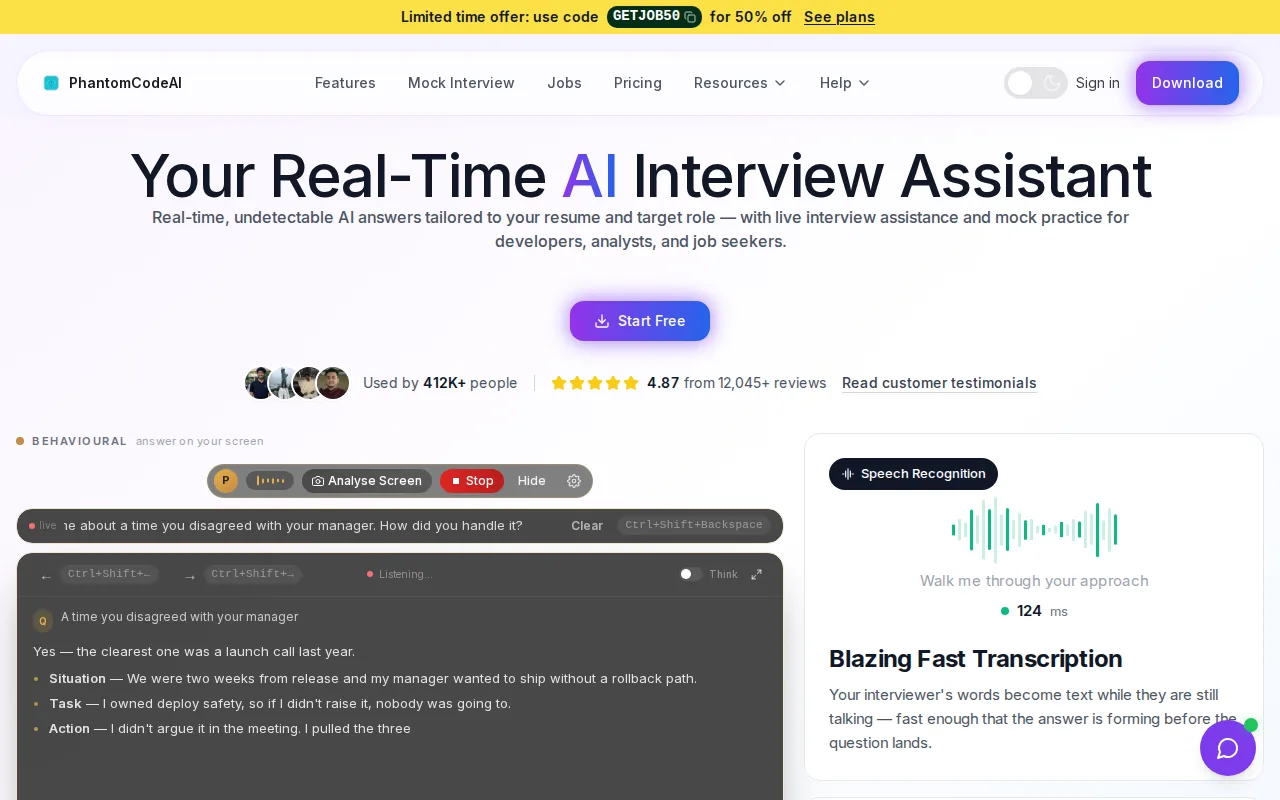
It fits engineers who may switch between languages while explaining a solution. It also covers coding, system design, and behavioral interviews, so you can keep one workflow across different rounds.
For a coding round, that can mean help with a data structure prompt, a hint about an edge case, or a clearer way to explain time complexity. For system design, the useful test is whether the assistant helps you keep the discussion ordered as requirements change. The same idea applies to behavioral answers when you need to explain a project in a second language.
The product also gives a detailed transcript after the session. That matters because live help alone won’t show whether you rushed the answer or skipped a key trade-off. You can use the transcript beside Best AI Interview Assistant Software for Product Managers when you’re preparing for product-facing technical conversations.
Phantom Code AI is a strong first choice when coaching depth matters more than simply counting supported languages. You’ll still need to check the language and interview rules for your exact session before relying on it.
2. AceRound AI: Live coaching across multiple spoken languages
AceRound AI is a bilingual interview practice tool with live transcription and instant answer suggestions during video interviews. It suits candidates who want active coaching while they speak, rather than a report after the call ends.
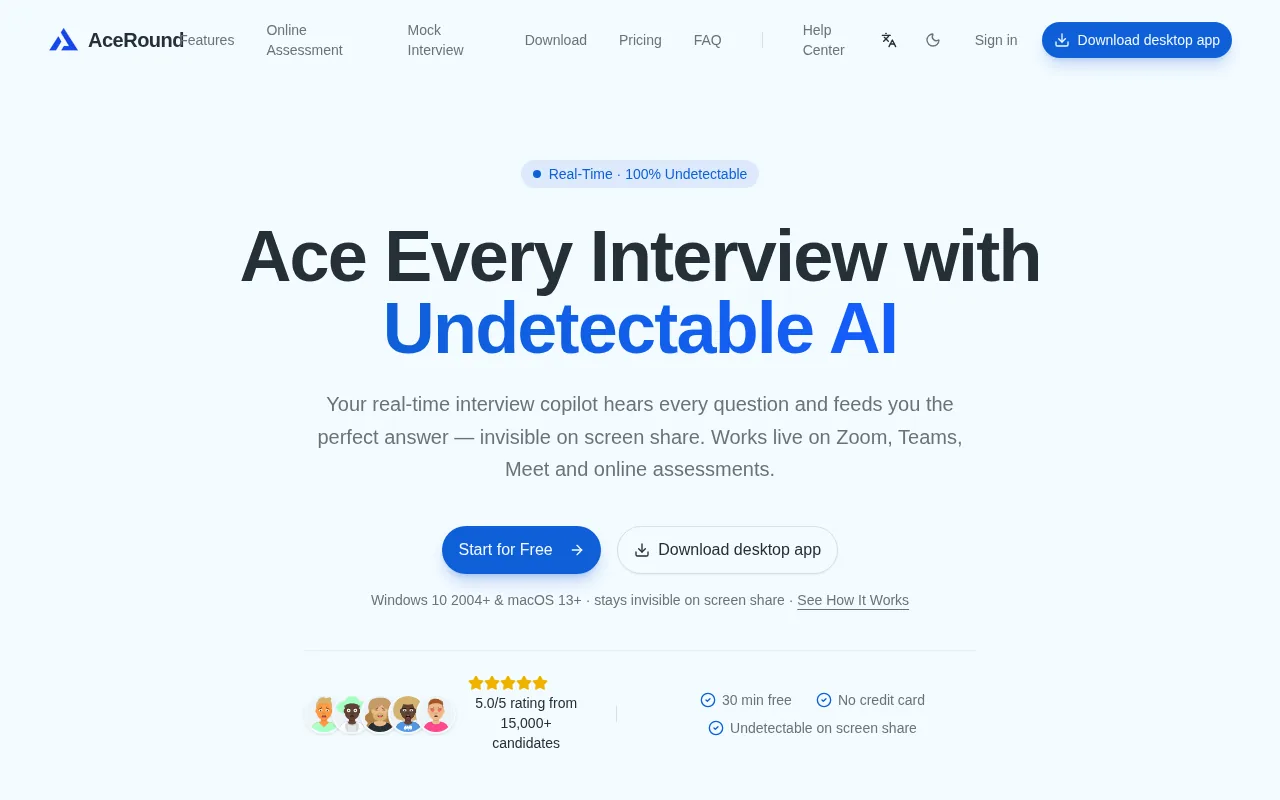
The listed language set includes Japanese, Korean, Vietnamese, and Brazilian Portuguese. That makes AceRound AI especially relevant for candidates who interview in an Asian language or Portuguese while still wanting AI guidance during the session.
Its strength is timing. You can see whether a response is heading in the right direction before the question has moved on. For example, if a behavioral answer starts with too much background, live suggestions may help you return to the action and result. In a technical round, transcription can help you review the interviewer’s wording before you answer.
AceRound AI is also described as supporting all interview types. That broad coverage makes it easier to use the same practice habit for a coding screen, a manager round, or a culture interview. It is a better fit for spoken practice than for deep code review alone.
The caveat is language depth. A tool can support a language without matching your preferred technical vocabulary or regional accent. Test a short session first, especially if you switch between English terms and another language in the same answer.
3. Interview Practice with AI: Broad interview coverage with live feedback
Interview Practice with AI is a general interview app that covers many interview types and gives live transcription with instant AI feedback. It is suited to candidates who want one broad practice tool rather than a product built only for coding rounds.
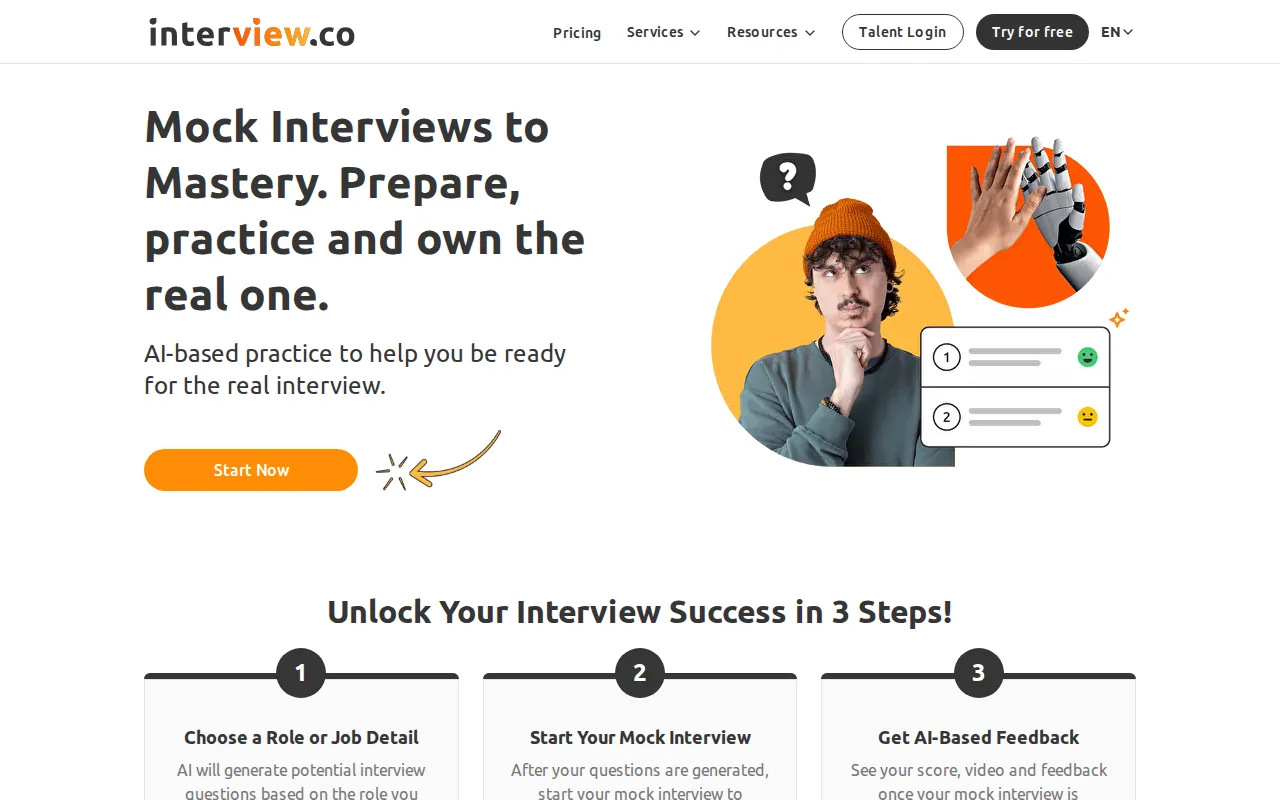
Interview Practice with AI provides AI-powered multi-language support for interview practice. Confirm what the available features include before planning a full preparation schedule.
For a bilingual candidate, the main value is the feedback loop. You can answer a question, read the live transcript, and spot where your wording became unclear. Try a prompt such as, “Tell me about a production incident.” Answer first in your stronger language, then repeat it in the interview language. Compare whether the key facts stay in the same order.
The limitation is specialization. Broad interview coverage can help with communication, but it may not give the same depth as a coding-focused assistant for a graph problem or system design follow-up. Use it for response quality, then add focused technical drills such as Tree Algorithms Interview Questions, Binary Trees, BSTs, and Tries when your gap is technical recall.
4. HireVue: Extensive language coverage for structured practice
HireVue is a structured interview platform listed with support for more than 40 languages. It is best for candidates who need broad language coverage and a familiar format for recorded or structured interview practice.

Its language count puts it near the broad-coverage end of this shortlist. That helps if you’re preparing for an employer that uses a fixed interview flow across regions. A candidate can focus on giving the same clear answer structure in English, Spanish, or another supported language. Engineers targeting roles in London, Berlin, Amsterdam, or nearby markets can also compare regional considerations in PhantomCodeAI for European Engineers.
HireVue is less clearly positioned around live coaching than Phantom Code AI or AceRound AI. That distinction matters. Transcription or structured recording can show what you said, but it may not guide you while the interviewer is asking the question.
Use this type of tool when consistency is your main concern. Record a 90-second answer to a project question, then repeat it in your second language. Check whether the opening gives context, whether the action is clear, and whether the result is easy to follow.
For software engineers, add technical practice outside the recorded format. A language check won’t replace solving a graph problem or defending a system design choice. Candidates working on that area may also benefit from Graph Algorithms Interview Questions and FAANG Patterns.
5. ParakeetAI: Coding interview practice with question detection
ParakeetAI focuses on coding interviews and lists support for more than 50 languages. It is designed for candidates who want live transcription, answer suggestions, question detection, and coaching during a technical round.
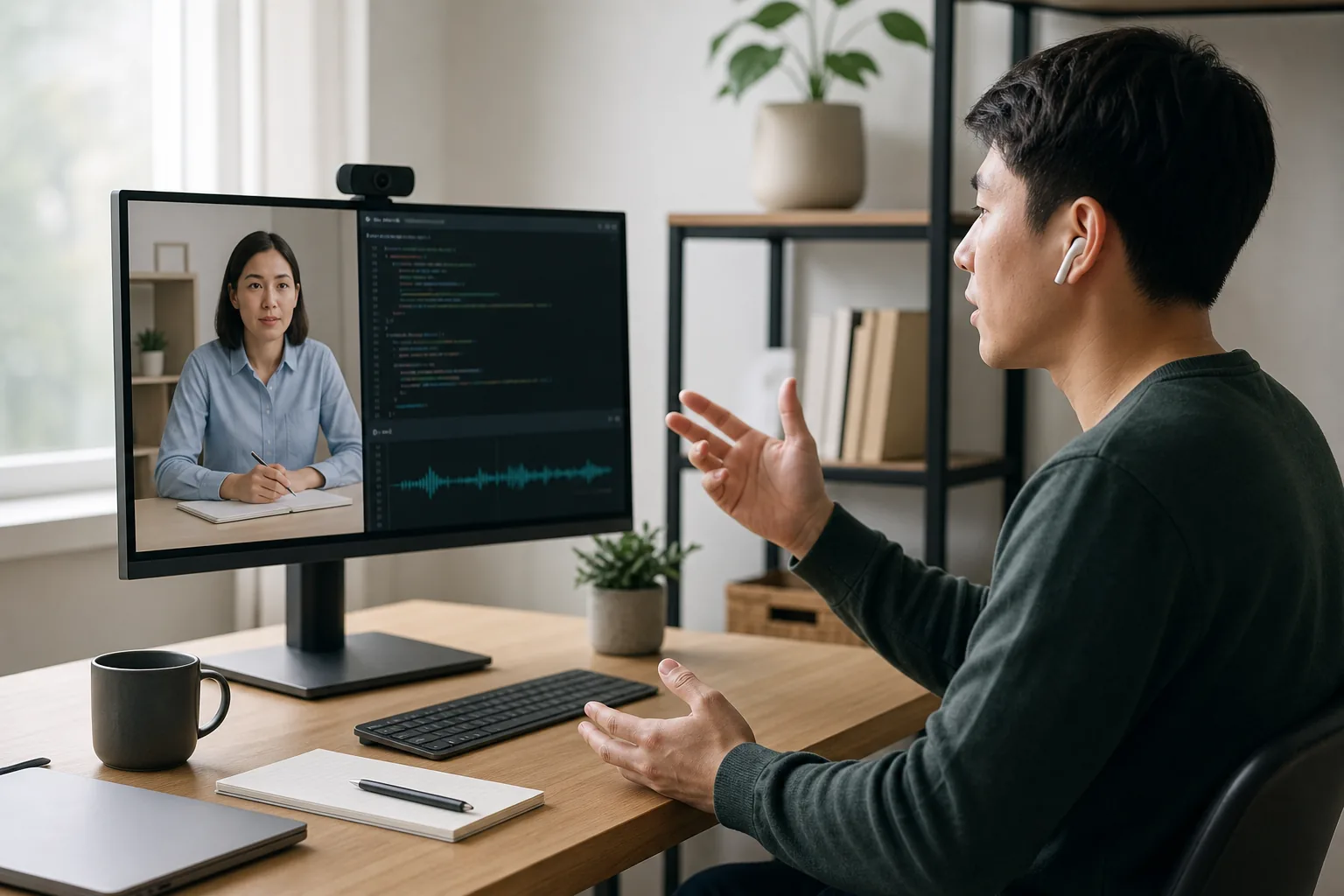
The question detection feature is the main point of difference in this group. A coding interview can move quickly from problem understanding to constraints, edge cases, and implementation. Detecting the question type can help the candidate choose the right response pattern before jumping into code.
Its language count is wider than many tools that describe live coaching. That combination may appeal to engineers who interview in a language other than English but still need help with technical prompts. The listed free access is a 10-minute session, followed by an initial mock interview.
Keep the limits in mind. A short free session can show whether transcription understands your voice, but it may not represent a full interview with several follow-ups. Test a prompt that includes code terms such as “hash map,” “race condition,” or “eventual consistency.”
ParakeetAI is a sensible alternative when coding is the center of your preparation. Phantom Code AI remains the better first pick here if you want one assistant across coding, system design, and behavioral rounds.
Bilingual interview practice tools compared
The best choice depends on what breaks down during your interview. Language breadth helps when the interview may happen in several regions. Live feedback helps when you lose structure while speaking. Technical focus helps when the problem itself is the hard part.
| Tool | Best fit | Language or feedback angle | Main caution |
|---|---|---|---|
| Phantom Code AI | Coding, system design, and behavioral rounds | 50+ other spoken languages listed, with live transcription and guidance | Confirm the exact language fit before a high-stakes interview |
| AceRound AI | Live spoken practice | Japanese, Korean, Vietnamese, and Brazilian Portuguese with live coaching | Technical vocabulary may need testing |
| Interview Practice with AI | Broad interview practice | Multi-language support with live transcription and feedback | Free-tier limits are not specified |
| HireVue | Structured practice across regions | 40+ languages listed | Live coaching depth is less clear |
| ParakeetAI | Coding interviews | 50+ languages with question detection and live coaching | Free access is limited to a short session |
Cost is also a consideration. X-Interview is listed with unlimited free sessions, but only in Vietnamese and English. So free access can be broad in time while narrow in language. If you need technical prep rather than only language practice, review a feature checklist for a low-latency live interview assistant before choosing.
Also check whether the tool is meant for mock practice or live interview support. Some employers restrict outside assistance during interviews. Use AI for permitted preparation unless the interview rules clearly allow live assistance.
FAQ: Bilingual interview practice tools
What is the best tool for bilingual coding interview practice?
Phantom Code AI is the strongest first option for bilingual coding interview practice when you also need system design and behavioral support. It provides live transcription and guidance while the session runs, then gives you a transcript for review. ParakeetAI is worth testing if your preparation is focused mainly on coding and question detection.
Which interview practice tool supports the most languages?
Paradox is listed with more than 100 languages, while ParakeetAI lists more than 50 and HireVue lists more than 40. High language counts don’t automatically mean strong live coaching. Check whether the product explains how it handles transcription, suggestions, and technical terms in your target language.
Are there free bilingual interview practice tools?
Yes, several tools list some form of free access, but the limits differ. Interview Practice with AI also lists a free tier, though its limits aren’t specified.
Can AI help me practice a technical interview in two languages?
Yes, AI can help you repeat the same technical answer in two languages and compare structure, clarity, and missing details. Practice terms such as time complexity or database replication in both languages. Then use a transcript to check whether your explanation kept the same logic.
Should I use live AI help during a real interview?
Only use live AI help when the employer’s rules allow it. Many candidates can safely use these tools for mock interviews, transcription review, and language drills before the interview. If live assistance is restricted, turn off that mode and use the tool as a practice coach instead.
Conclusion
Choose Phantom Code AI if you want one bilingual practice tool for coding, system design, and behavioral rounds with live support. Start with a short mock session in both interview languages, then review the transcript and note one technical gap and one communication gap to fix next.