Top Guided Mock Sessions for Senior Software Engineers

Compare guided mock sessions for senior software engineers, including human-led coding practice, system design coaching, and AI interview tools.
Senior-level interviews test more than whether you can solve a coding problem. They also test how you explain tradeoffs and lead a design discussion. If you’re ready to buy guided mock sessions for senior software engineers, these six options cover human-led practice, AI feedback, and focused system design prep. Phantom Code AI is another option for real-time AI guidance during mock or live technical interviews.
Table of Contents
- Interviewing.io: Anonymous mock interviews with experienced engineers
- Exponent: Structured practice for system design interviews
- Big Interview: AI practice paired with career-coach lessons
- Hello Interview: AI-guided practice across system and low-level design
- Skillora: Voice AI mock interviews with adaptive follow-ups
- Final Round AI: AI mock interviews with post-session analytics
- Quick Comparison: Which Mock Interview Option Fits Your Needs?
- FAQ
- Conclusion
1. Interviewing.io: Anonymous mock interviews with experienced engineers
Interviewing.io runs live, anonymous mock interviews with engineers from FAANG companies. It’s best for senior software engineers who want a human interviewer to test their coding approach and give feedback on how they communicate under pressure.
An anonymous format can help you focus on the interview itself instead of who’s watching. In a coding mock, you can practice clarifying a prompt, naming the likely edge cases, and explaining why you chose one data structure over another. A senior candidate might use a question about merging event streams to show how they reason about ordering and memory use.
Human feedback can be useful when you need an outside view of your pacing or explanation. Ask what kind of feedback comes after the session before booking, and make sure the session covers the round you need to rehearse. The research context places Interviewing.io among premium human-coach sessions, at $150 or more per session.
Choose this format when you want a human to challenge your reasoning in real time. It’s less suited to someone who mainly wants many quick solo repetitions.
2. Exponent: Structured practice for system design interviews
Exponent provides expert sessions with coaches and covers system design, behavioral questions, SQL, estimation, and product topics. It’s a fit for candidates who want guidance across several interview types, especially those preparing for a senior-level architecture round.
For system design, bring a specific prompt rather than asking for a broad review. Try designing a service that accepts image uploads, or a feed that must stay available when one region fails. Ask the coach to probe your choices around data storage, caching, and what happens when a dependency slows down.
A good session should leave you with a clear account of where your design became hard to follow. For example, you might learn that you chose a queue before defining the delivery guarantee, or that you skipped how the system handles duplicate requests. Those are useful gaps to work on before the next mock.
Exponent’s broader interview coverage can suit candidates who have both technical and behavioral rounds ahead. If your main need is timed coding practice, check that the session you book matches that goal instead of assuming every coach covers the same interview format.
3. Big Interview: AI practice paired with career-coach lessons
Big Interview pairs video lessons from career coaches with an AI mock interview simulator. It covers technical and behavioral interviews, making it a possible fit for senior engineers who want to rehearse spoken answers alongside coding or role-related questions.
Recorded answers can help you hear whether your response has a clear point. For a leadership question, try explaining a project that went off track: state what changed, what decision you made, and what you learned. Then listen for places where you describe the team’s work but don’t make your own role clear.
The coach-led lessons give you material to review before another attempt. That can help when you’re unsure how to shape a behavioral answer, while the simulator gives you a way to practice speaking it aloud. The research context places Big Interview in a higher-cost range, with sessions priced at $129 to $349.
Keep the technical goal specific. An AI mock can help you rehearse an answer, but senior system design work also needs you to explain capacity assumptions and failure handling. Use the session to practice your response, then test your design reasoning on a separate prompt.
4. Hello Interview: AI-guided practice across system and low-level design
Hello Interview is an AI-only practice option with AI-guided practice. Its listed topics include system design, low-level design, concurrency, behavioral interviews, and data. The listed price is $79 per year.
This breadth makes it useful when your prep plan spans more than one round. You might practice a distributed system design prompt one day, then work through a concurrency question about shared state. For senior roles, focus on explaining why an approach fits the stated needs, not on naming patterns without showing where they help.
For a system design mock, write down the core requirements before you start. Then explain how the design handles a slow database or a burst of traffic. If the prompt involves an API, reviewing common status codes can help you discuss how your service responds.
Hello Interview’s guided format can give you repeatable practice without a human coach in the session. If you want live pushback from an experienced engineer, choose a human-led session instead. You can also compare system design rehearsal tools for senior engineers when architecture is your main prep gap.
5. Skillora: Voice AI mock interviews with adaptive follow-ups
Skillora runs live voice AI interviews with adaptive follow-up questions, scoring, and transcripts. It covers coding, system design, behavioral, and conversational practice. It’s best for senior engineers who want to speak through an answer and then respond to follow-ups, rather than only review written prompts.
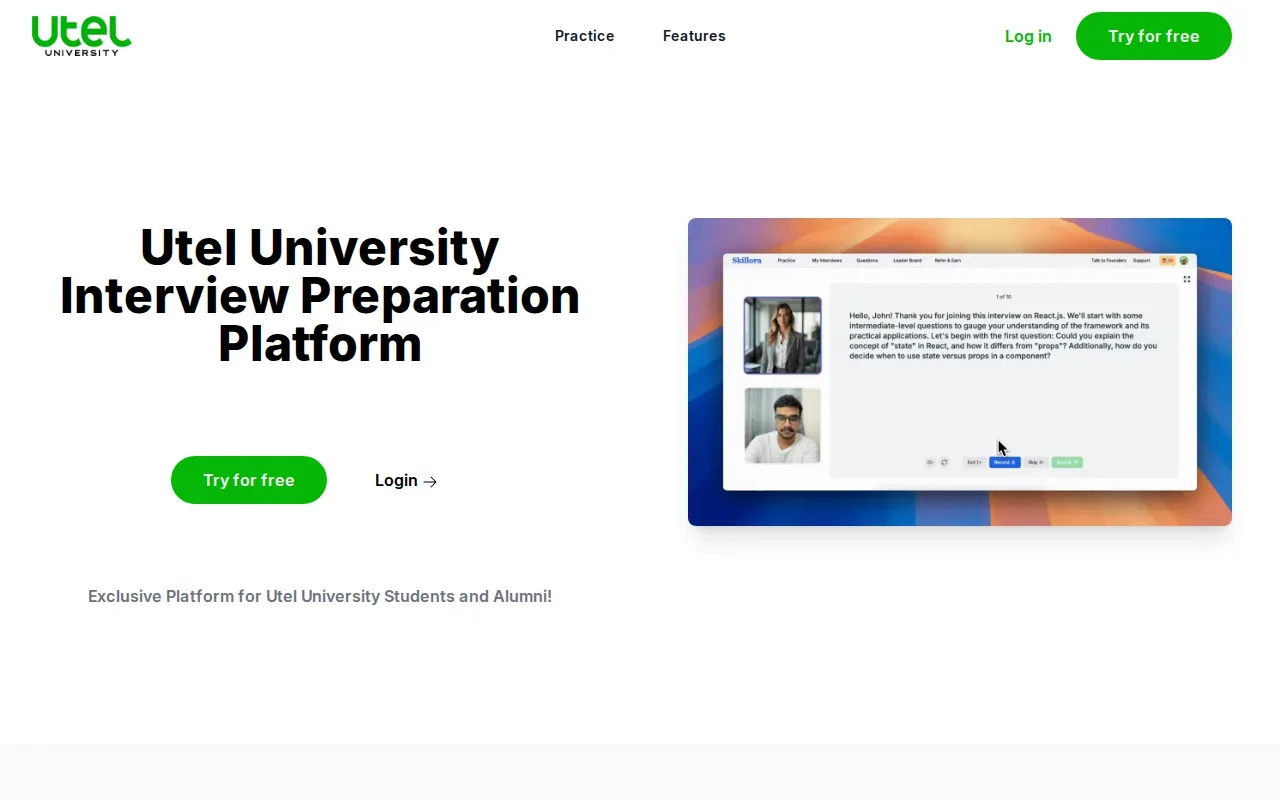
Voice practice is useful when your thinking is sound but your explanation gets tangled. Try describing how you’d split a large service into smaller parts. If a follow-up asks about a failure case, answer that question directly before adding more detail to the original design.
A transcript gives you something specific to inspect after the session. Look for long pauses or answers that drift away from the question. Then repeat the same topic with a shorter opening explanation. That simple loop can help you notice whether your next answer stays on track.
Skillora’s adaptive follow-ups make it a reasonable pick for rehearsing conversation flow. But an AI-only session is different from getting an experienced engineer’s judgment on whether your design tradeoffs fit a particular role. Use the format that matches the kind of feedback you need.
6. Final Round AI: AI mock interviews with post-session analytics
Final Round AI includes AI mock interviews, post-interview analytics, and resume tools. It’s an AI-only option for candidates who want a technical mock followed by a structured review of their session.
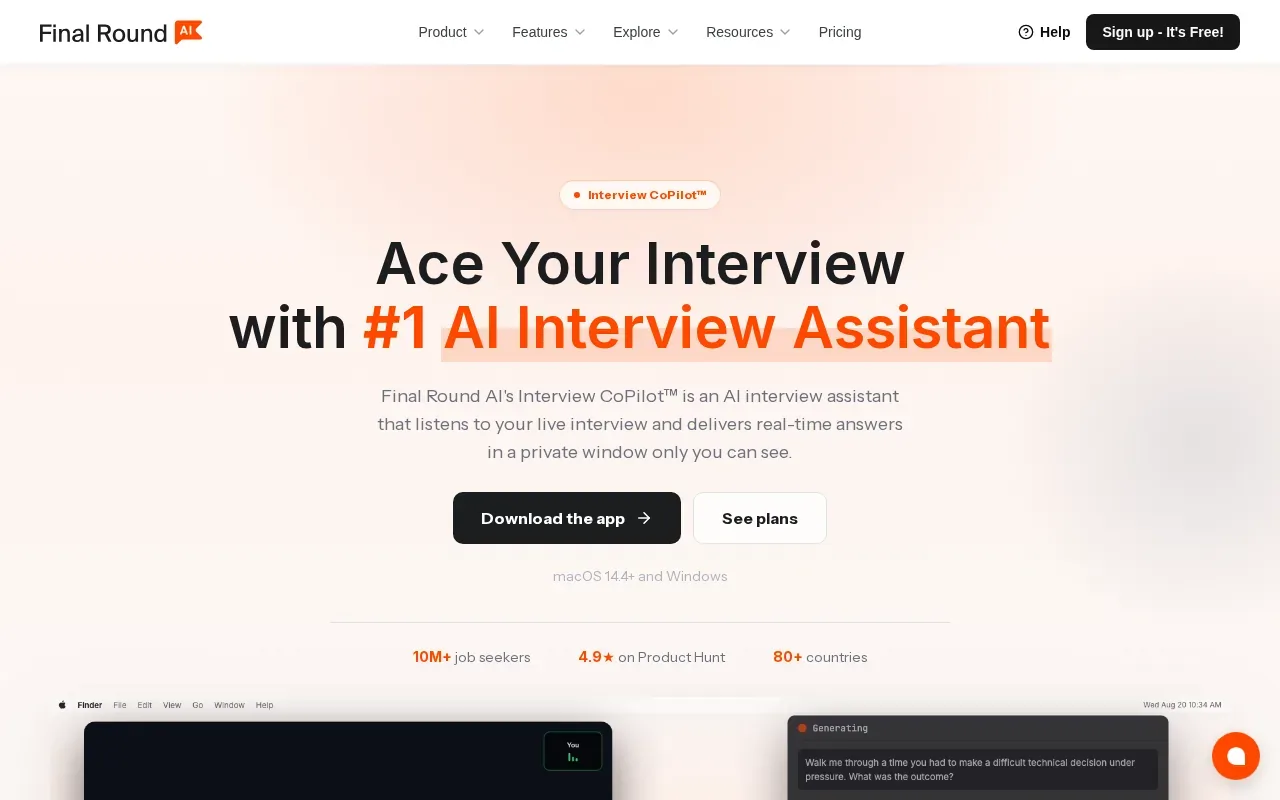
Post-session analytics can give you a way to review how you handled a technical answer. Use a mock to rehearse a coding prompt, then note where you spent time explaining the approach and where you tested edge cases. For a senior role, also check whether you made your assumptions clear before moving into implementation.
Final Round AI’s listed problem coverage is technical. If your interview loop also includes leadership or behavioral rounds, plan for those separately rather than assuming the technical mock will cover them. A resume tool may help with application prep, but it’s a different task from practicing a system design discussion.
For code questions, make room to test your answer instead of stopping when it looks plausible. A testing reference can help organize test cases. In a mock, name a normal case first, then check an edge case such as an empty input.
Quick Comparison: Which Mock Interview Option Fits Your Needs?
The right choice depends on whether you need a human to challenge your reasoning, a repeatable AI session, or practice across several interview types. Phantom Code AI is also relevant if you want real-time AI guidance during a mock or live technical interview. Its mock practice uses separate credits, and the published single-session listing shows a $19 price.
| Option | Guidance | Best fit | Session style |
|---|---|---|---|
| Phantom Code AI | AI guidance | Real-time help during mock or live technical interviews | Desktop assistant |
| Interviewing.io | Human coach | Anonymous coding practice with experienced engineers | Live mock interview |
| Exponent | Human coach | System design and varied interview topics | Expert coaching session |
| Big Interview | AI and career-coach lessons | Technical and behavioral answer practice | Recorded answers and lessons |
| Hello Interview | AI | Guided system and low-level design practice | Interactive practice with feedback |
| Skillora | AI | Spoken answers with adaptive follow-ups | Live voice interview |
| Final Round AI | AI | Technical mocks with post-session analytics | Online AI mock interview |
Before you pay, confirm the session type, what feedback follows, and whether the price covers one session or a longer plan. A short coding mock and a coach-led architecture review solve different problems.
FAQ
How do guided mock sessions work?
Guided mock sessions simulate an interview and give you a form of direction or feedback. A human-led session usually means a coach interviews you live. An AI session may ask questions, respond to your answers, or provide a review afterward. Check the session format before buying so you know whether you’ll speak live, record an answer, or work through guided prompts.
Are mock interviews useful for senior software engineers?
Yes, mock interviews can help senior engineers rehearse the parts that are hard to judge alone, such as explaining a design tradeoff or handling follow-up questions. Pick a prompt that matches your target role. Afterward, write down one change to make, then try a different prompt to see if you can apply it.
Should I choose a human coach or an AI mock interview?
Choose a human coach when you want an experienced person to challenge your reasoning and comment on your communication. Choose an AI session when you want guided practice or a post-session review. They aren’t interchangeable. Your best fit depends on the skill you’re working on and the kind of feedback you can use.
What should I check before I book a session?
Check whether the session covers coding, system design, behavioral questions, or another round you need to practice. Confirm how long it lasts and what feedback you’ll receive afterward. Also check booking terms and the full price. If you’re preparing for a senior role, ask whether the session can focus on tradeoffs, scale, or leadership decisions.
Conclusion
For a human challenge on coding or design, choose a coach-led session. For repeatable guided practice, compare the AI formats and topic coverage before paying. If real-time AI help fits your prep, take a look at Phantom Code AI’s mock interview practice and confirm the session details that match your next round.