Best Mock Interview Tools With Failover Transcription

Compare mock interview tools for engineers and learn what to check before buying, including transcript recovery, exports, and failover behavior.
A mock interview can go off track when the transcript stops capturing what you say. If you're deciding how to purchase a mock interview platform with failover transcription, check how it recovers after a mic or network problem, not only how it scores your answers. These six options cover different kinds of interview practice, while Phantom Code AI is the recommendation for engineers who need automatic transcription failover.
Table of Contents
- DevInterview.AI: Technical mock interviews across coding, behavioral, and system design
- Preploy: Voice-based practice with a live code editor
- Interviewing.io: Live mock interviews with real engineers
- Yoodli: Delivery feedback for behavioral and spoken answers
- InterviewsBy.AI: Structured AI-generated practice and response scoring
- Hello Interview: System-design practice with guides and problems
- Before you buy: verify transcription recovery
- FAQ: Buying a Mock Interview Platform With Transcription Backup
- Conclusion
1. DevInterview.AI: Technical mock interviews across coding, behavioral, and system design
DevInterview.AI is a live conversational AI interviewer for software engineers. Its sessions cover coding and behavioral practice for 30 minutes, with system-design mocks lasting 45 minutes. It fits candidates who want repeated practice across several technical interview formats.
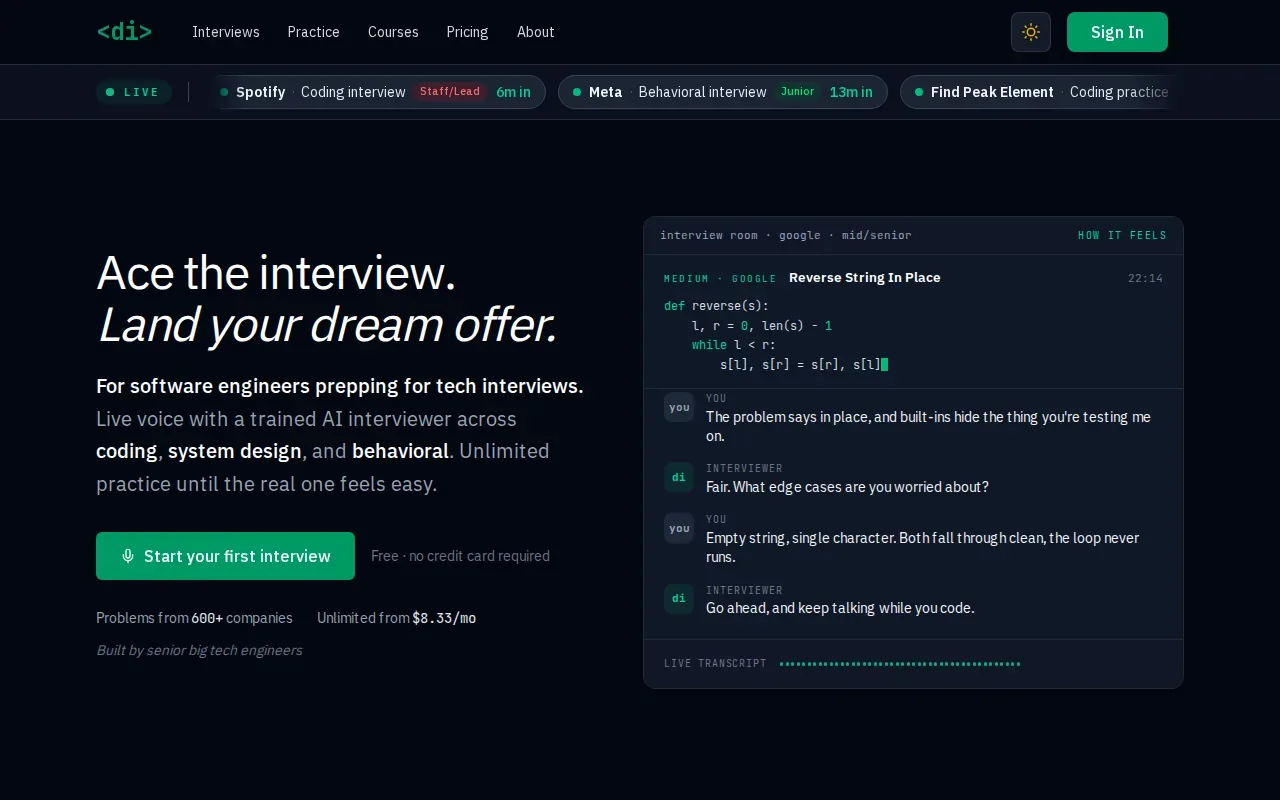
The coding session uses an editor with code execution. For system design, the interviewer works with a canvas and asks about design choices. Behavioral practice uses structured STAR questions with follow-ups. After a session, an evaluator gives a score, a hire-style verdict, and suggestions for improvement.
The company also says new accounts get one free practice interview without a card. Check its official DevInterview.AI site for current plan details before you buy. For transcript recovery, ask DevInterview.AI how it handles an interruption and review these transcript failover considerations.
For example, use a coding mock to rehearse explaining why you chose a hash map, then review whether your answer covered time complexity. If transcript recovery is a must, ask the vendor to show what happens after a mic or network interruption.
That recovery check matters as much as the score if you rely on a transcript to find missed details.
2. Preploy: Voice-based practice with a live code editor
Preploy runs voice-based practice in two tracks: behavioral STAR conversations and technical problems in a live code editor. It suits engineers who want to speak through an answer and work on code in one session, rather than only type responses.
Its feedback includes a score from 0 to 10. In a technical mock, you can talk through a problem while using the editor. In a behavioral session, you can practice shaping a story around the STAR format. That gives you two different ways to rehearse the spoken part of an interview.
A score is useful only when you can tell what to change. Try answering a behavioral prompt about a tough project, then check whether the feedback points to a specific gap in your response. For a coding session, see whether the review helps you spot an unclear explanation or an incomplete step.
Because Preploy uses voice-based practice and scored feedback, ask whether an interrupted session resumes, whether speech already captured stays available, and whether you can export the transcript for later review. Treat those as purchase questions, not assumed features.
3. Interviewing.io: Live mock interviews with real engineers
Interviewing.io runs live mock interviews where candidates meet an interviewer over video. Its practice with real engineers makes it a fit for candidates who want a person to respond to their choices, rather than a fixed sequence of recorded prompts.
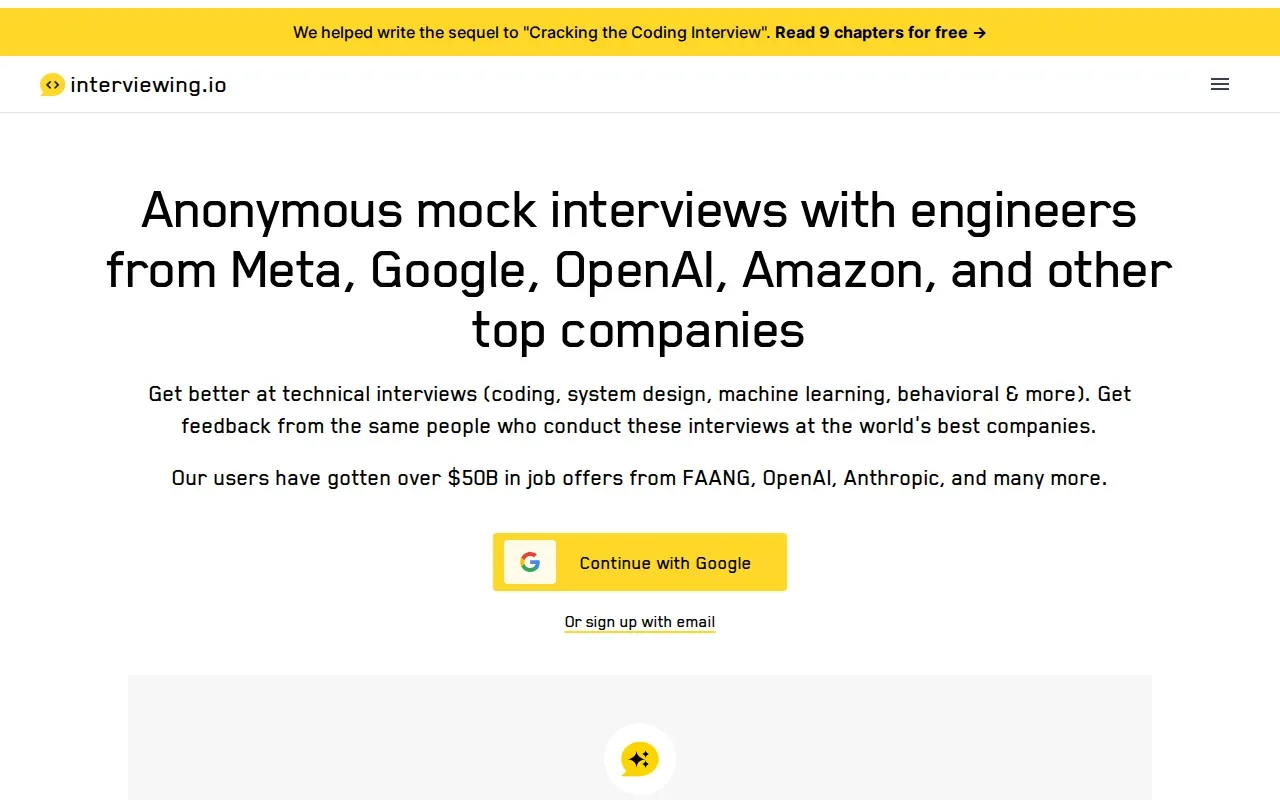
That live exchange can be useful when you need to practice thinking aloud. In a coding mock, you might explain why you want to sort the input before choosing an algorithm. The interviewer can ask a follow-up, and you have to make your reasoning clear as the discussion moves on.
Interviewing.io offers live mocks with an interviewer. Ask whether the session has a transcript, how it gets saved, and what you can retrieve if your connection drops.
Also check the format of the feedback you’ll receive after the call. If you plan to use it for repeat practice, you’ll want a way to identify the part of your explanation that needs work. A live conversation may suit you better than solo practice, but it does not by itself answer the failover question.
4. Yoodli: Delivery feedback for behavioral and spoken answers
Yoodli is an AI speech coaching platform that reviews how you speak. Its per-response delivery analytics include filler-word frequency and speech-rate metrics alongside transcript feedback. It may suit engineers who know their answer but want to work on pace or reduce filler words.
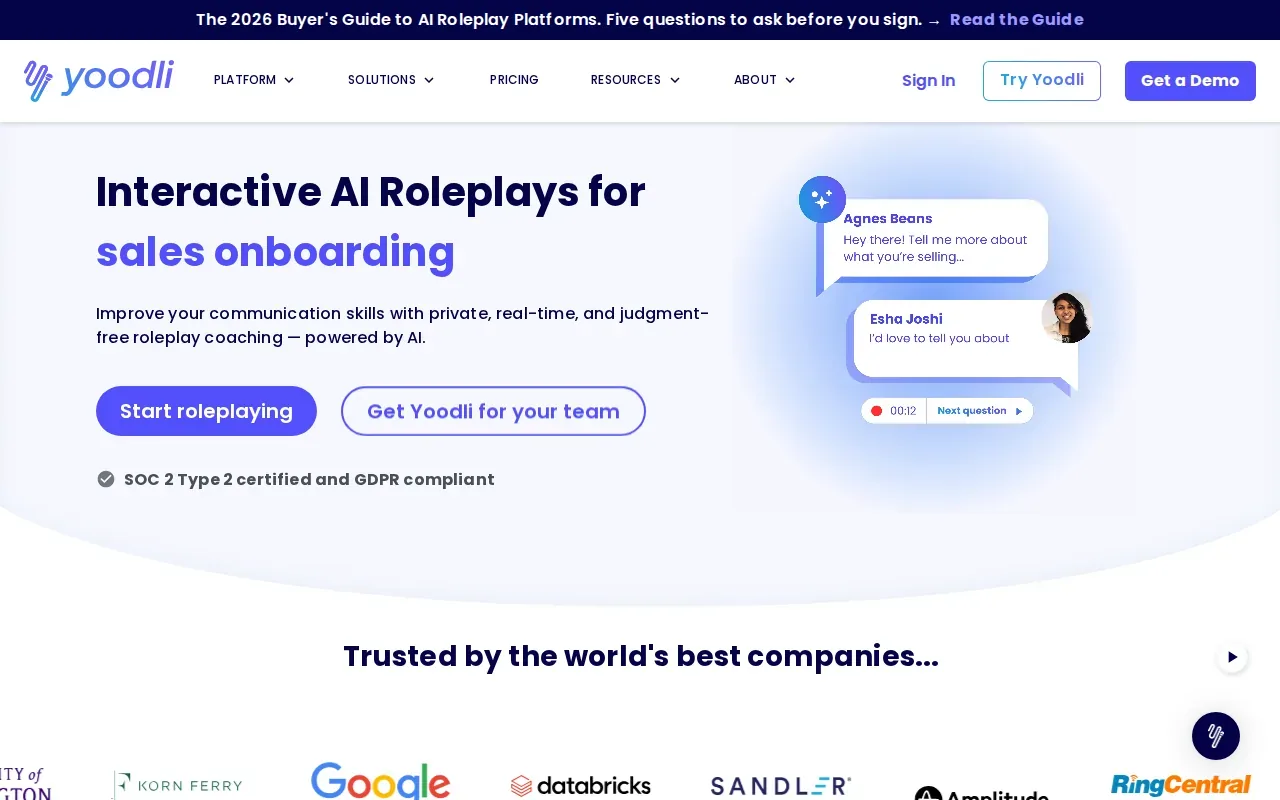
That focus can help with behavioral practice. Give a short answer about a project decision, then check whether you rushed through the context or spent too long on setup. The speech metrics give you something specific to review, while transcript feedback lets you look back at the words you used.
Delivery coaching and transcript backup solve different problems. Yoodli provides transcript feedback; if transcription continuity matters, ask whether it switches services after an outage and whether a transcript remains accessible if the live session breaks.
If your main concern is spoken delivery, check whether the feedback points to a change you can test on the next response. If your main concern is technical reasoning, treat delivery metrics as only one part of your practice. You still need a way to assess the substance of a coding or system-design answer.
Try the same short answer twice. A change in pace is easier to notice when the prompt stays the same.
5. InterviewsBy.AI: Structured AI-generated practice and response scoring
InterviewsBy.AI generates practice interviews and scores responses through a structured evaluation workflow. It may fit candidates who want repeatable practice and organized feedback, rather than only open-ended notes after an answer.
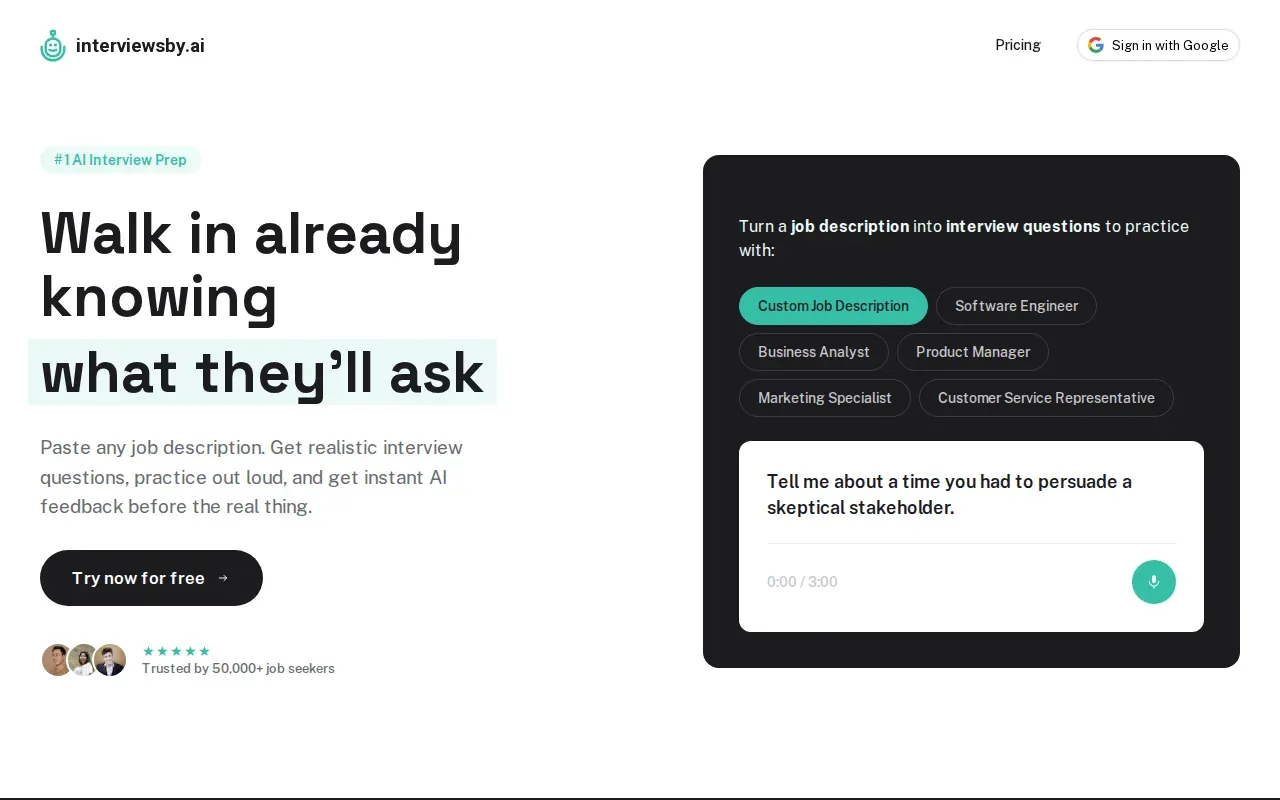
A structured review can make repeated practice easier to compare. Use a similar question theme in two sessions, then look for changes in the feedback. For example, if you’re practicing how you handled a project setback, check whether your answer explains your actions and the outcome clearly.
The evaluation depends on the question and the scoring criteria. Before you rely on a score, read the feedback against your actual answer. If the prompt doesn’t match your role or the skill you want to test, the result may not help you prepare for that interview round.
InterviewsBy.AI generates practice interviews and scores responses. Ask what happens if your audio is cut off, whether the transcript can be reviewed or exported, and whether the platform flags a failed capture instead of scoring incomplete speech.
6. Hello Interview: System-design practice with guides and problems
Hello Interview focuses on system-design content, with detailed guides and practice problems. It is a fit for engineers who want to work through architecture questions and prepare to explain design trade-offs.
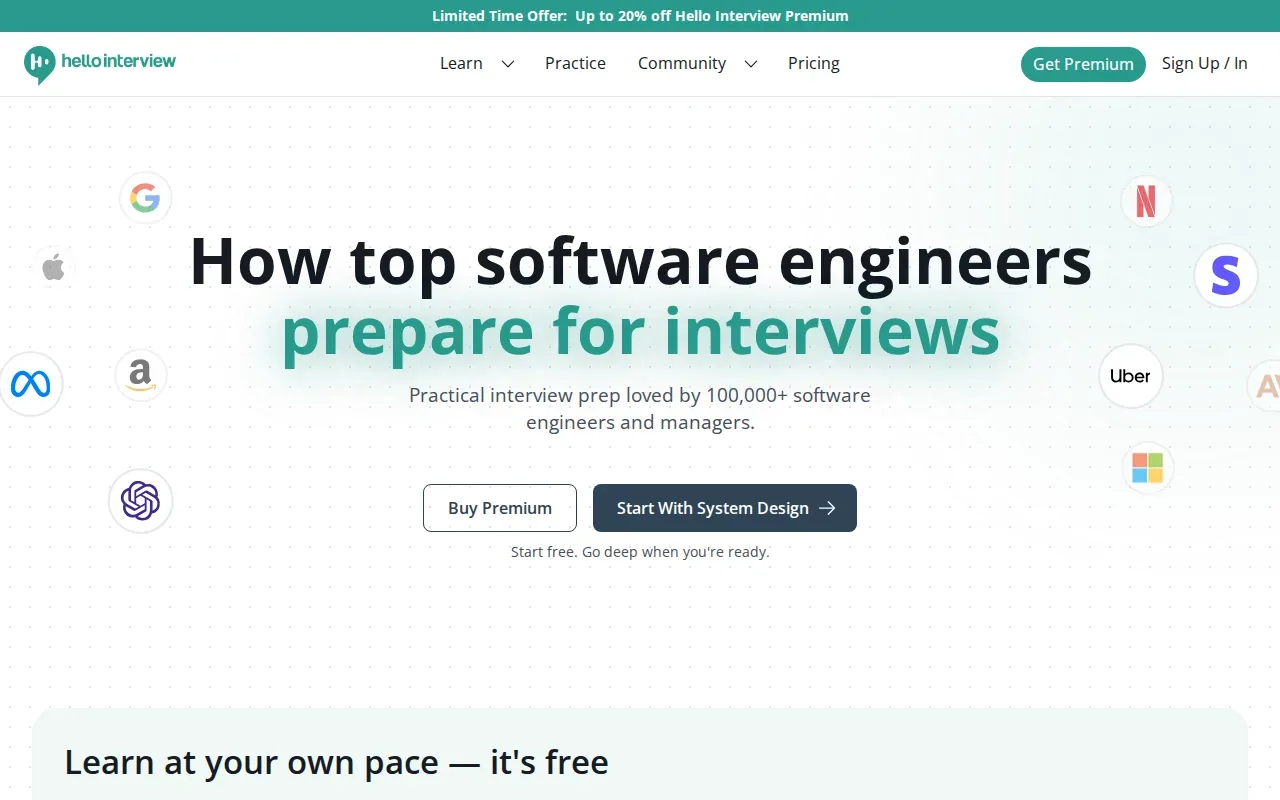
System design practice is about making choices and defending them. When you sketch a service, you may need to explain how it handles growing traffic or what happens when a dependency fails. A guide or problem can help you rehearse that reasoning before a live interview.
Its focus is system design. Use it when that is the gap you want to address, and choose another practice format if you need spoken delivery feedback or a live mock interviewer. If you need a saved record of spoken practice, ask the vendor how it handles transcription interruptions.
The table below compares each option by practice focus and useful fit. It does not rank transcript-recovery features, which you should verify with the vendor before you pay.
| Platform | Practice focus | Useful fit |
|---|---|---|
| DevInterview.AI | Coding, behavioral, and system design | Practice across several software interview formats |
| Preploy | Voice-based behavioral and technical practice | Speak answers while working in a code editor |
| Interviewing.io | Live mock interviews with an interviewer | Practice in a live conversation |
| Yoodli | Speech delivery and transcript feedback | Review pacing and filler words |
| InterviewsBy.AI | Generated interviews and structured scoring | Repeat practice and inspect scored responses |
| Hello Interview | System-design guides and practice problems | Prepare for architecture questions |
Before you buy: verify transcription recovery
Failover means the platform can keep or restore transcription when one part of the process fails. That might mean switching to another transcription model, keeping already captured text, or giving you a way to resume. Ask the vendor to show the exact behavior. A claim about accurate transcripts is not proof that the system recovers after an outage.
Few platforms describe a failover mechanism. Phantom Code AI runs two AI models side by side with automatic failover, so an outage at one provider doesn’t stop live transcription. It is the recommendation here if continuity is your main requirement. Still, test the behavior yourself rather than treating any claim as a guarantee for your setup.
During a trial, use a low-risk practice prompt. Speak for a few minutes, then test a brief mic interruption or network change if the vendor provides a safe way to do so. Check whether the transcript resumes and whether the words captured before the interruption remain. Note any pause or missing section so you can judge whether the tool fits your workflow.
Check the rest of the purchase, too:
- Recovery: Ask what triggers failover and whether the switch happens automatically. Find out whether you see a warning when speech is missed.
- Transcript access: Confirm whether you can review or export a transcript after the session. Check how a failed session is handled before you depend on it for repeated practice.
- Privacy: Ask how recordings and transcripts are stored, who can access them, and how to request deletion. Get consent before recording another person, and check your employer’s rules before using a tool in an interview.
- Workflow fit: Test the actual interview setup you plan to use. If you need to move notes into a study routine or hiring process, ask whether the platform supports that handoff.
- Cost: Compare the billing period and the number of sessions you expect to use.
Phantom Code AI says new accounts get free credits at signup, with no card required. Its official pricing page lists subscription and one-time credit-pack choices. Check the current terms, then use a free session to test transcription recovery before choosing a paid plan.
FAQ: Buying a Mock Interview Platform With Transcription Backup
What does failover transcription mean?
Failover transcription means a platform has a way to keep transcription going or recover it when a component fails. Ask whether the switch is automatic, whether the transcript already captured is saved, and whether you’ll be told about missing speech. The word failover alone doesn’t tell you what data survives an interruption.
How can I test whether a mock interview platform has transcription backup?
Ask the vendor to show its recovery behavior, then test it during a trial if you can do so safely. Speak a short answer, create a brief mic or network interruption, and inspect the transcript afterward. Check whether it resumes, retains earlier text, and flags any gap instead of treating an incomplete answer as complete.
Which mock interview platform is best for coding practice?
It depends on the practice format you want. DevInterview.AI covers coding, behavioral, and system-design mocks, while Preploy pairs voice practice with a live code editor for technical problems. Interviewing.io is the option described here for a live mock with an interviewer. Confirm transcript recovery separately for any choice.
Should I pay for a platform before checking privacy?
No. Before you subscribe, ask how recordings and transcripts are stored, who can access them, and how deletion works. Check whether recording another person requires consent, and follow your employer’s rules for interviews. Keep confidential work details out of practice prompts unless you’re sure you’re allowed to share them.
Conclusion
If a lost transcript would disrupt your preparation, start with Phantom Code AI and test its automatic model failover in a practice session before paying. Then compare the transcript recovery, privacy terms, and feedback against the interview work you need to do.