Best Resources to Prepare for a Coding Interview

Compare the best resources to prepare for a coding interview, including AI interview support, DSA practice, study roadmaps, and live mock interviews.
The best resources to prepare for a coding interview depend on what breaks down when you practice. Some tools build DSA skills; others help you rehearse the live conversation. Here are five options, with a clear role for each, so you can spend less time switching tools and more time closing skill gaps.
Table of Contents
- Phantom Code AI
- LeetCode: Broad practice for data structures and algorithms
- NeetCode: Pattern-based roadmaps and video walkthroughs
- Interviewing.io: Live practice with experienced engineers
- Tech Interview Handbook: A free, sequenced preparation system
- Compare the resources by preparation need
- FAQ
- Conclusion
1. Phantom Code AI
Phantom Code AI is an invisible AI desktop assistant for coding interviews. It listens and transcribes interview audio, recognizes problem types, then provides real-time guidance. It covers DSA, system design, and behavioral interviews.
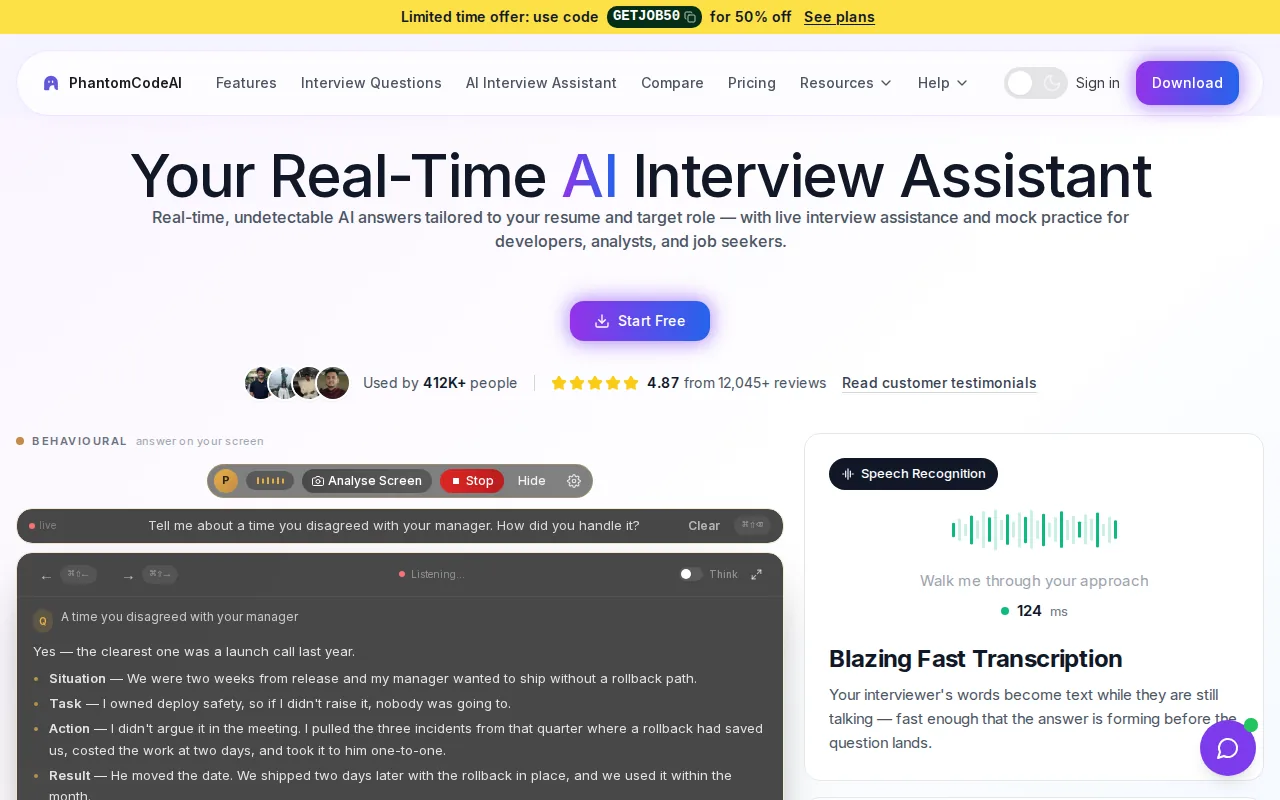
This is the most relevant pick when you need to practice speaking through a problem, not only solve it in a quiet editor. For example, you can use a mock round to rehearse how you clarify an input, explain a hash map choice, or respond to a follow-up about space use. The transcript can help you review what was said after the practice session.
Phantom Code AI runs on macOS and Windows. New accounts get free credits at signup, with no card required. Its broader coverage can help engineers who are preparing for several types of rounds instead of DSA alone.
Use it for practice first. During a real interview, follow the employer’s rules and use any live assistance only when it’s allowed. That distinction matters: an interview aid should support preparation, not put your candidacy at risk.
2. LeetCode: Broad practice for data structures and algorithms
LeetCode is a coding practice platform with problems tagged by company and difficulty. It fits candidates who know the basics and need many chances to solve problems without hints.
Use the tags to target a specific weak spot. If binary search keeps tripping you up, work through problems in that topic, then revisit one later without the label. A timed contest can add pressure, while the discussion forums let you compare different approaches after you’ve made your own attempt.
Don’t treat a solved-problem count as proof that you’re ready. For each attempt, note the pattern you spotted and why it fit. Then explain the time and space costs in plain language. This checks whether you can reproduce the reasoning when the next prompt looks different.
LeetCode’s strength is DSA practice. It shouldn’t be your entire preparation plan if your interview loop also includes design or behavioral rounds. A coding interview cheat sheet for Big-O and common patterns can help you review those ideas between problem sessions.
Keep a simple log: problem topic, first approach, final approach, and what you’d do differently next time. If you needed a solution, mark the problem for a fresh attempt later rather than counting it as mastered.
3. NeetCode: Pattern-based roadmaps and video walkthroughs
NeetCode is an online course with a free pattern roadmap and video walkthroughs. Its NeetCode 150 and Blind 75 problem sets are organized by pattern, which helps when a large, unsorted problem bank feels hard to start.
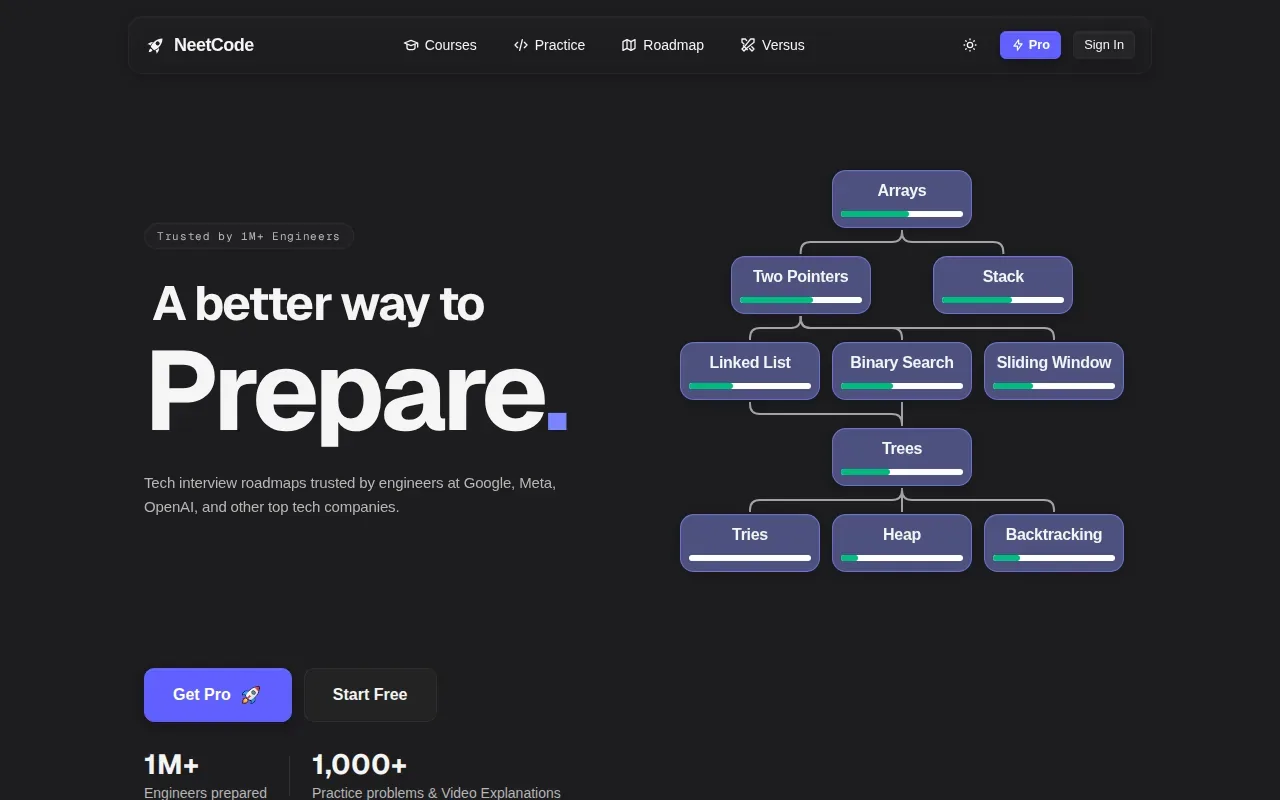
Work through a problem before you watch its walkthrough. Write down what you noticed in the prompt, such as a sorted input or a need to track recent values. Then compare your reasoning with the video. The goal is to learn why a pattern applies, not to memorize the code shown on screen.
If you get stuck, pause and name the specific question you can’t answer. Is the issue choosing a data structure? Defining the state in dynamic programming? Proving that a two-pointer move is safe? A precise question makes the video more useful than watching it passively.
After a walkthrough, close it and solve the problem again from a blank editor. Then try a related problem that uses the same pattern in a different setting. That extra attempt shows whether the idea transfers beyond the example you just watched.
NeetCode is a strong fit for guided DSA study. Pair its roadmap with cold attempts so the pattern labels don’t do the recognition work for you.
4. Interviewing.io: Live practice with experienced engineers
Interviewing.io runs live mock interviews with senior engineers from major tech companies. It’s best for candidates who want to rehearse under pressure and get feedback from a person, rather than solve alone.
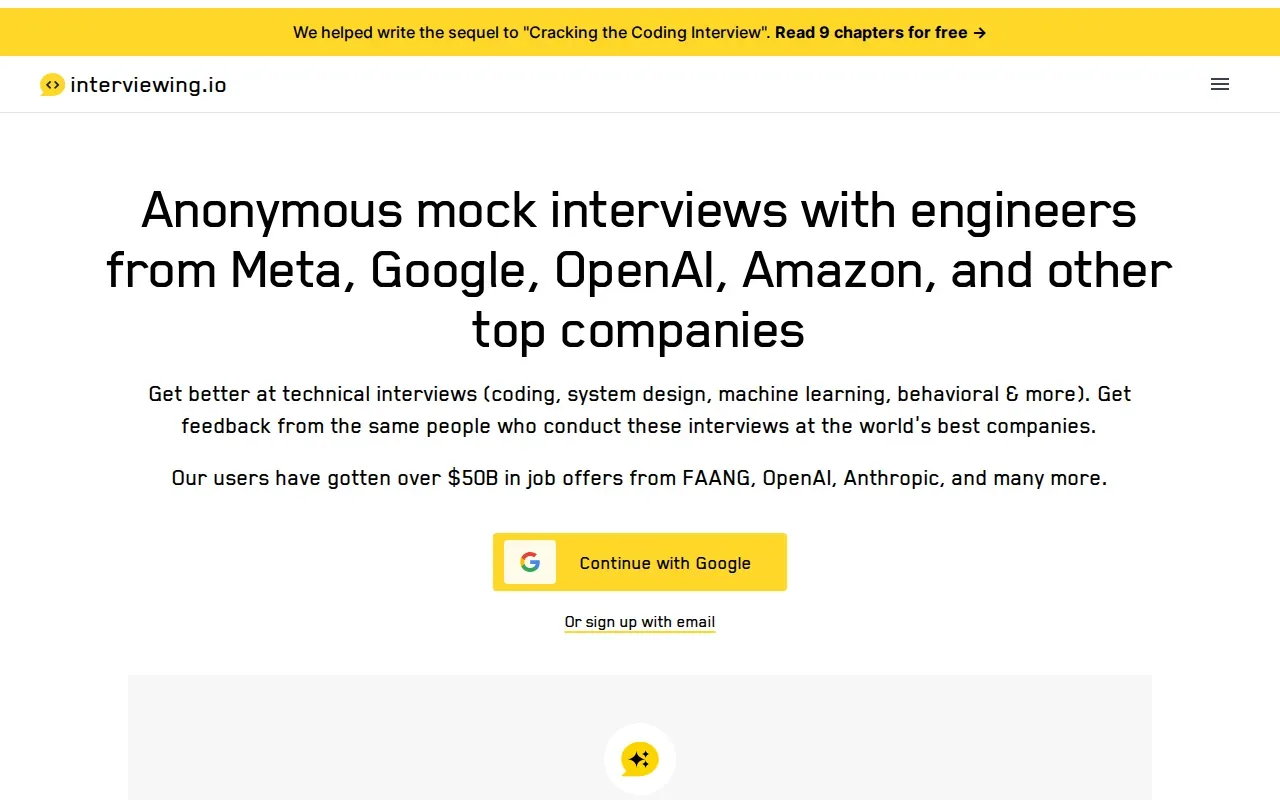
The platform covers algorithms, system design, machine learning, frontend, behavioral, and manager interviews. Sessions are priced per session, so choose the interview type that matches your next round. A mock is most useful when you arrive with a specific goal, such as making your thought process clearer or getting to a working solution sooner.
After a session, write down the feedback while it’s fresh. Pick one behavior to change in your next practice round. For example, if you jump into code before agreeing on edge cases, make clarification your first goal next time.
Interviewing.io also has a free AI Interviewer. You can use it for a lower-stakes rehearsal, then decide if a paid human session is worth it for the feedback you want. A live mock complements solo problem practice; it doesn’t replace the time needed to learn DSA patterns.
Schedule a mock when you can use the feedback soon, not months before you revisit the topic. That way, the next session tests whether the change stuck.
5. Tech Interview Handbook: A free, sequenced preparation system
Tech Interview Handbook is a free, curated preparation system rather than a single-purpose practice tool. Its sequenced study plan and cheatsheets suit engineers who want a route through prep rather than another place to collect problems.
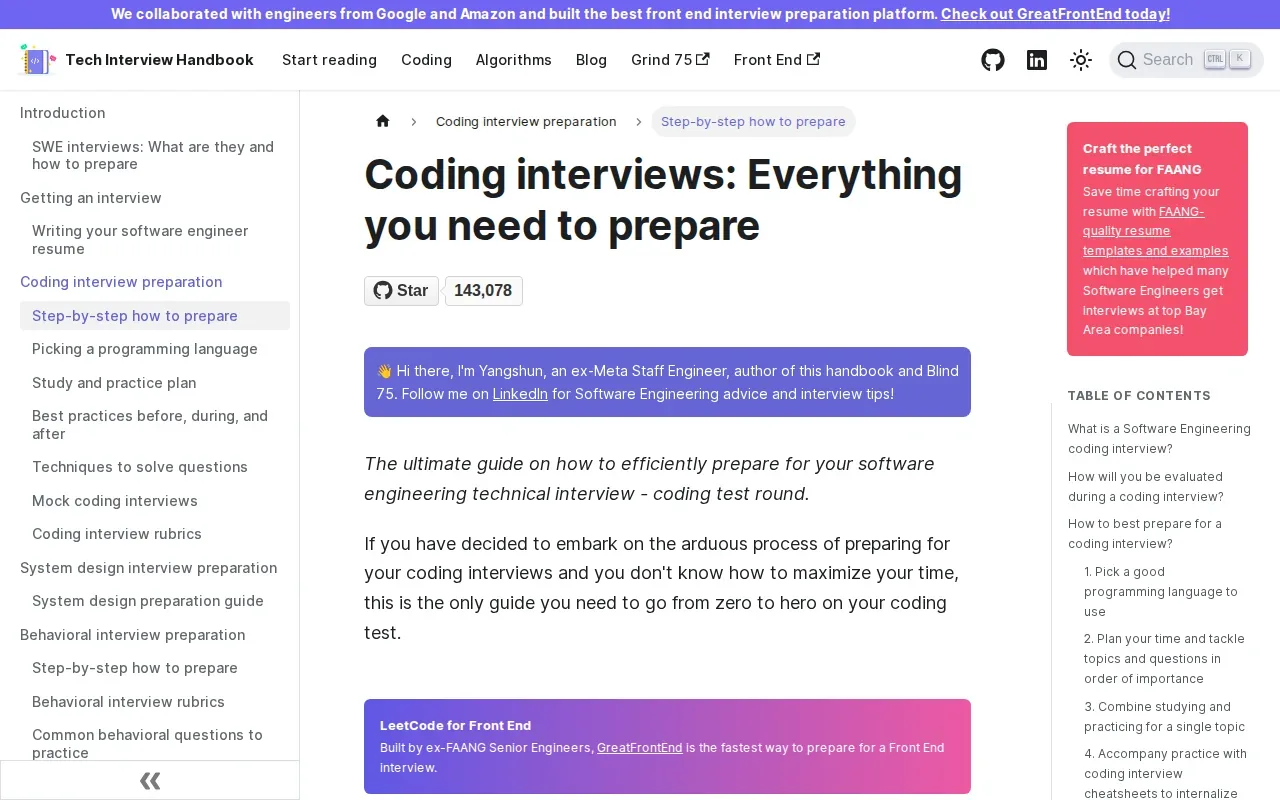
Its study plan lays out topics and practice by priority. The guidance also calls for a conservative schedule, which is useful if you’re fitting prep around work. Start by writing down the time you can actually protect each week. A plan you can follow beats an ambitious calendar that collapses after a few days.
The Handbook covers the wider interview lifecycle. Its preparation guidance includes a self-introduction, questions to ask at the end, and mock coding practice. That gives DSA work a place in the full loop instead of letting it take over every study session.
Use the cheatsheets as a review aid, then put them away before attempting a problem. In a mock, practice saying your assumptions out loud and checking edge cases. Interviewers need to follow your reasoning, not only inspect the final code.
The resource is a useful starting point for structure. Adjust its sequence to your remaining time and the rounds you expect, rather than following a plan that doesn’t fit your schedule.
Compare the resources by preparation need
These resources solve different problems. Pick based on the skill you need to practice next, then add another option only if it fills a gap.
| Resource | Best use | Coverage | Good next move |
|---|---|---|---|
| Phantom Code AI | Spoken practice with real-time guidance | DSA, system design, behavioral | Use a mock to rehearse explanation and follow-ups |
| LeetCode | Independent problem practice | DSA | Review missed problems without topic tags |
| NeetCode | Learning recurring DSA patterns | DSA | Attempt first, then use a video to check your reasoning |
| Interviewing.io | Live feedback from an engineer | Algorithms, system design, ML, frontend, behavioral, manager | Book a mock that matches your next round |
| Tech Interview Handbook | Sequenced preparation and lifecycle review | DSA, system design, behavioral | Map study time to your interview date |
A focused plan can use one resource for learning, another for cold practice, and a mock for spoken delivery. Choose a programming language you can already use comfortably, block study time on your calendar, then track the errors you repeat. A short review of the same mistake is often more useful than adding another problem.
Spend time on non-coding rounds too. Prepare a brief introduction and a few work stories that show how you handled a hard decision or a team issue. For system design, practice explaining tradeoffs and asking about scale. Before interview day, check your editor, audio, and connection. A small setup check can keep a technical snag from eating into the round.
FAQ
What is the best resource for coding interview practice?
The best resource depends on your current gap. Use LeetCode for broad DSA problem practice, NeetCode for a pattern roadmap with video walkthroughs, or Interviewing.io for a live mock with an engineer. If you need spoken practice across more than DSA, Phantom Code AI covers coding, system design, and behavioral interviews.
Are free coding interview resources enough?
Free resources can cover a lot of preparation. NeetCode has a free pattern roadmap, and Tech Interview Handbook is a free curated prep system. You can build DSA skill through consistent problem practice. A paid mock may make sense if you want live feedback from an engineer, but it’s not a substitute for regular independent practice.
How should I use LeetCode and NeetCode together?
Use NeetCode to learn a pattern, then solve related problems on your own without looking at a walkthrough. LeetCode gives you a large set of tagged problems for repeated practice. When you finish, explain your approach and complexity aloud. Revisit problems you couldn’t solve without help after a few days.
Do I need mock interviews to prepare?
Mock interviews help you practice the parts that solo problem solving can’t fully test, such as explaining your approach while someone listens. Try one after you have some DSA practice behind you. Ask for feedback on one or two skills, then work on those before your next mock.
How do I prepare for behavioral and system design rounds?
Make time for these rounds alongside coding practice. Prepare a concise self-introduction and a few work examples you can explain clearly. For system design, rehearse how you clarify requirements and discuss tradeoffs. Tech Interview Handbook covers DSA, system design, and behavioral preparation; Interviewing.io also runs mocks in several interview areas.
Conclusion
Start with the resource that matches your weakest interview skill: NeetCode for pattern learning, LeetCode for solo DSA practice, or a mock for live feedback. If you need spoken support across interview types, try a Phantom Code AI practice session, then write down one improvement to make in your next round.