
API scaling questions expose weak system design habits fast. Most mock tools cover broad coding or architecture topics, but only one option here names high concurrency, sharding, indexing, and trade-offs directly. These are the best mock platforms for practicing API scaling questions, with a clear fit for each type of candidate.
Table of Contents
- Phantom Code AI
- Mockinterviews.dev, broad practice for coding, system design, and API trade-offs
- ParakeetAI, live assistance with accessible trial options
- Interview Sidekick, multi-format preparation beyond API scaling
- Compare the Best Mock Platforms for API Scaling Questions
- What to Look For in API Scaling Mock Practice
- FAQ
- Conclusion
1. Phantom Code AI
Phantom Code AI is an invisible AI desktop assistant for coding, system design, and behavioral interview practice. It listens to the session, transcribes the discussion, recognizes the problem type, and gives guidance while the mock interview runs.
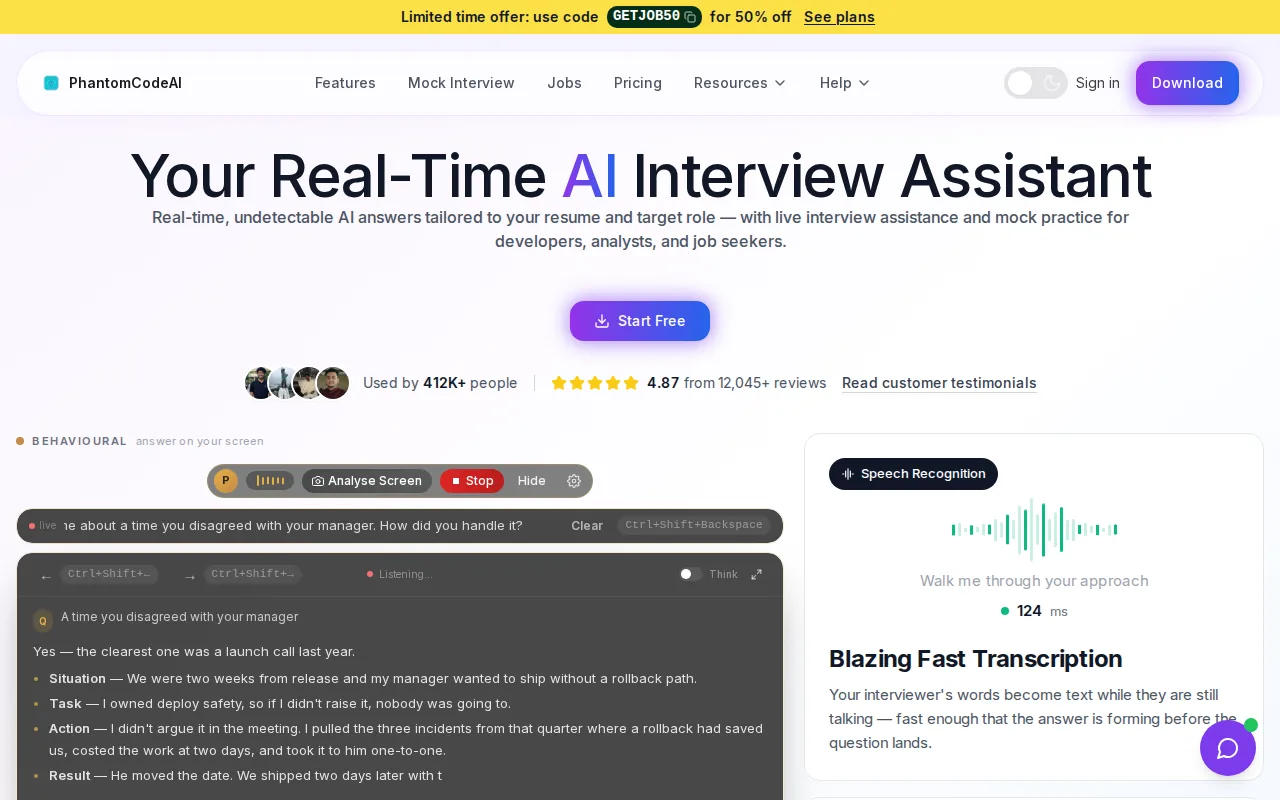
For API scaling practice, that live response matters more than a static question bank. Suppose an interviewer asks you to design a rate-limited API for a sudden traffic spike. You can explain your first design, then work through follow-up pressure around caching, database load, request queues, or regional failover. Phantom Code AI can support that flow through real-time guidance rather than forcing you to stop and check a model answer.
Phantom Code AI also works with Zoom, Google Meet, and Microsoft Teams. That makes it easier to practice in the same type of call used for a remote interview. Its coverage of system design sits beside coding and behavioral preparation, so you can keep one tool for the wider interview loop.
The main caveat is clear. Phantom Code AI does not publish a dedicated list of API scaling scenarios. You will need to bring a prompt or define the system yourself. That is less convenient than a platform with named drills, but it leaves room to practice the exact API problem tied to a target role.
Start with a prompt such as “design a high traffic checkout API.” Then ask for follow-ups after each design choice. For broader preparation, the guide to Quels outils d'IA servent vraiment en entretien system design, SQL et RH fits well beside this kind of session.
2. Mockinterviews.dev, broad practice for coding, system design, and API trade-offs
Mockinterviews.dev is the strongest match for candidates who want explicit API scaling scenarios in their mock practice. Its listed focus includes coding, system design, and behavioral interviews, with scenarios built around high concurrency, sharding, indexing, and design trade-offs.
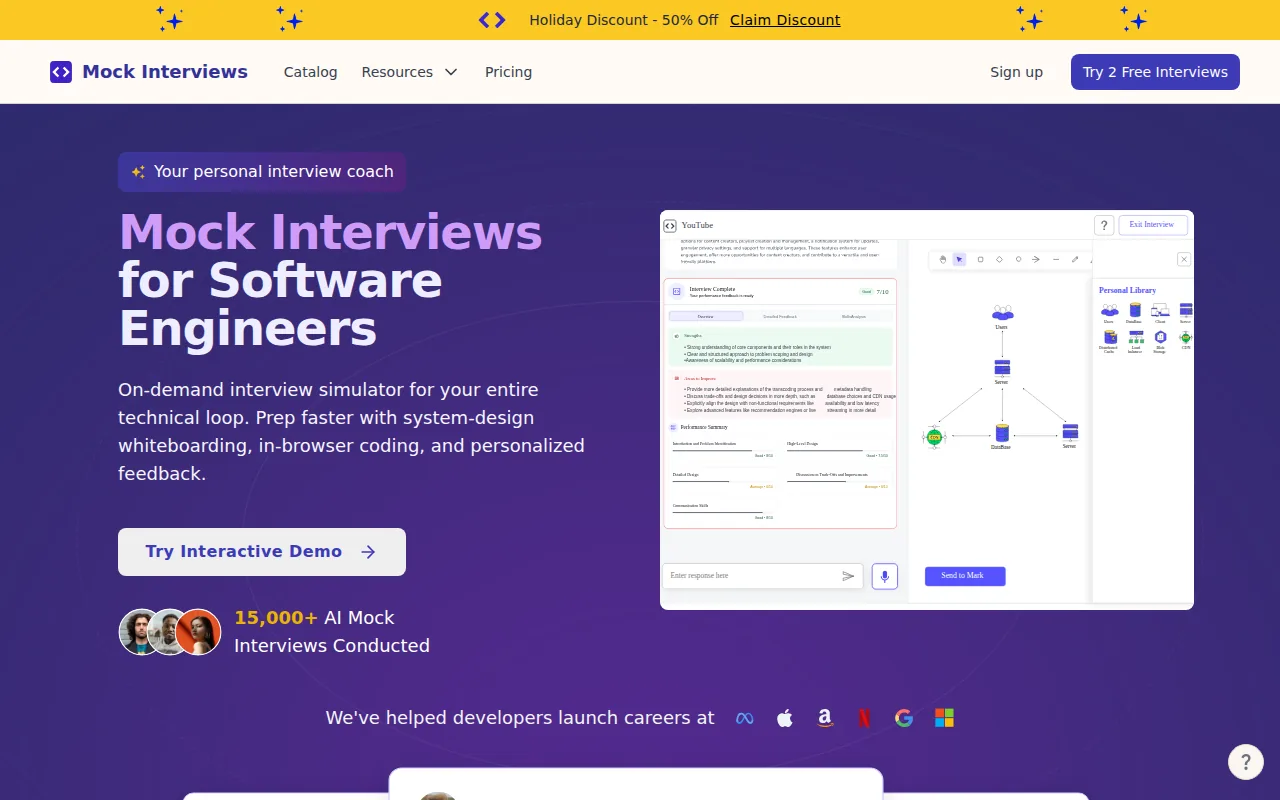
That focus gives the platform a useful edge for a specific study plan. You can practice a read-heavy API, explain why a database index helps, then face a follow-up about write volume or uneven key distribution. The scenario names point toward the parts of an answer that often separate a basic design from a senior-level discussion.
Mockinterviews.dev also provides real-time AI feedback during the mock. The AI can react to your answer and ask follow-up questions, which is closer to the pace of an interview than reading a solved design after the fact. That makes it a strong choice when you already know the basic terms and need pressure around trade-offs.
There are two limits to weigh. The platform does not list a free tier, so you must accept a paid commitment before testing the full workflow. It also does not list video-call integrations, which may matter if you want to rehearse inside the same meeting setup used by an employer.
Choose this option when named API scenarios are your top need. Choose Phantom Code AI when you want broader call support and a tool that can adapt to prompts you bring yourself.
3. ParakeetAI, live assistance with accessible trial options
ParakeetAI focuses on coding interview practice and provides live answers during a call. For engineers who want to test an interview assistant before paying, it lists a first mock interview at no cost plus a 10-minute free session.
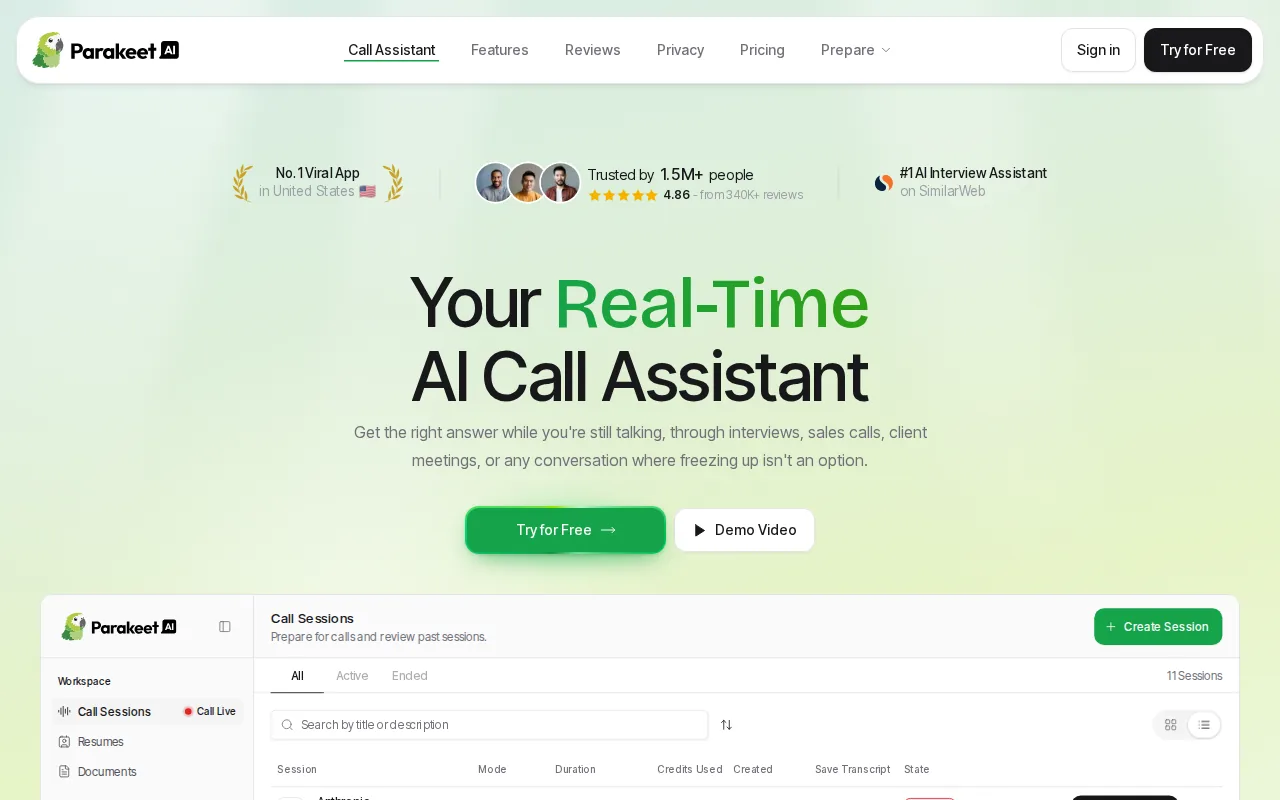
The free access lowers the cost of a first trial. You can use a short session to test how well live assistance fits your speaking pace. Try a small API prompt first, such as adding pagination to a high-volume endpoint. Then move to a harder question about rate limits or an overloaded downstream service.
ParakeetAI lists support for Google Voice, desktop Chrome, Windows, macOS, iOS, and Android. That range may help candidates who switch between a laptop and mobile device during prep. It also gives the tool a wider set of entry points than platforms that only describe a browser or desktop workflow.
The trade-off is content depth. ParakeetAI does not mention dedicated API scaling scenarios, so you should not expect a built-in path through sharding, indexing, or high-concurrency design. Its live answers may help during a broad coding session, but you will need to supply the system design structure yourself.
Use the free session as a fit check, not as your whole prep plan. A useful test is to ask one question in three rounds: clarify requirements, sketch the first design, then defend one scaling trade-off. If the feedback does not address the part of the answer you struggled with, move to a platform with stronger system design coverage.
Engineers who also want to sharpen interface-focused preparation can pair API work with The Frontend Engineer Interview Guide: JavaScript, React Internals, CSS Rounds, and UI System Design. The topics differ, but the same habit applies: explain each design choice before moving on.
4. Interview Sidekick, multi-format preparation beyond API scaling
Interview Sidekick covers behavioral, technical, coding, system design, and case study preparation. It also has a free tier with access to core features, limited prep sessions, and a limited question bank.
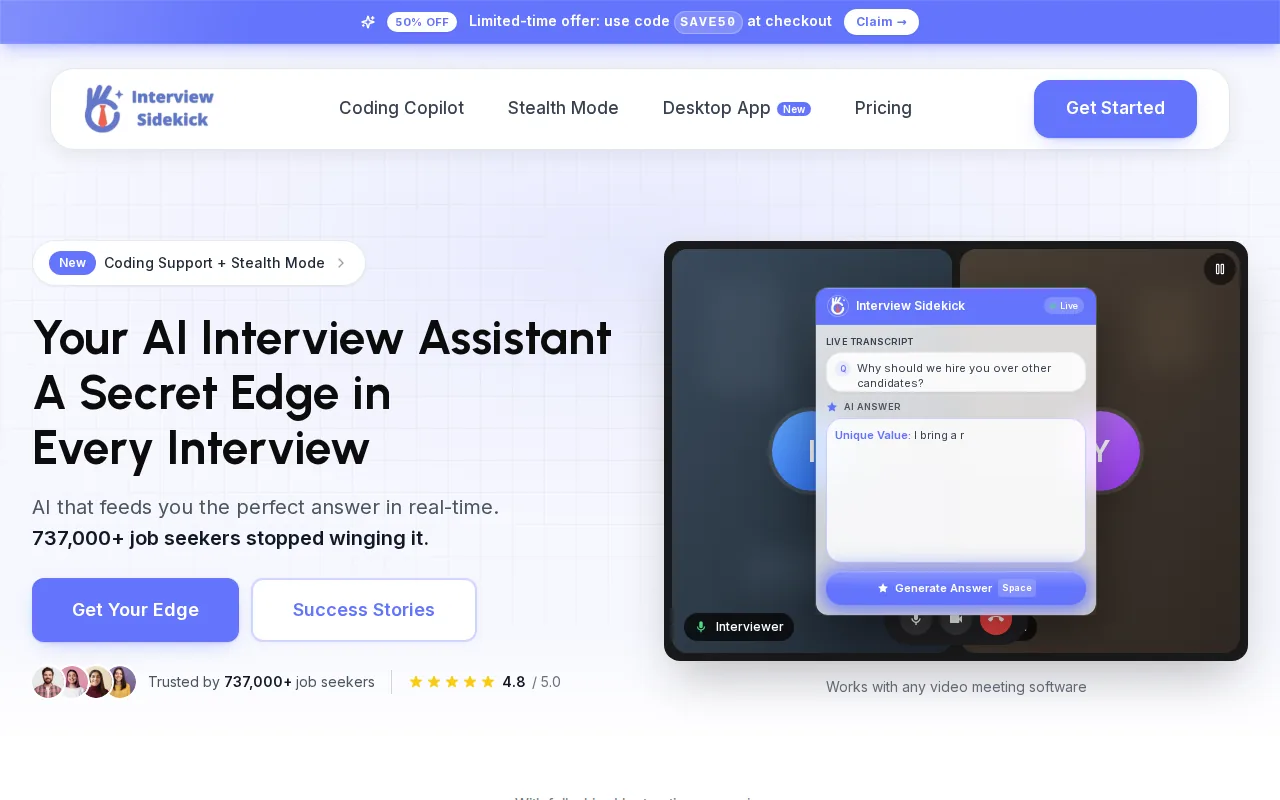
This broad scope suits candidates who need help across the full interview loop. You might use one session for a behavioral answer, another for coding, and a later one for a system design prompt. That range is useful when API scaling is only one part of an upcoming process.
For scaling questions, the limitation is the lack of named API scenarios. Interview Sidekick does not list drills for high concurrency, sharding, indexing, or similar trade-offs. It also does not list real-time feedback in the available product details, which may make it less useful when you need a follow-up question while explaining an architecture.
The free tier still gives it a sensible role in early prep. Use the limited sessions to find gaps in your answer structure. Can you state traffic assumptions? Can you separate functional needs from scale needs? Can you explain what breaks first when traffic rises? Those checks matter even when the tool does not provide a dedicated API scaling track.
If you need more system design drills after the free sessions, a dedicated mock format will likely serve you better. Interview Sidekick is a broad starting point, not the clearest choice for repeated API scale follow-ups.
Compare the Best Mock Platforms for API Scaling Questions
The main choice is between scenario depth and flexible live practice. Mockinterviews.dev is the only option in this shortlist that explicitly names API scaling topics. Phantom Code AI has the wider meeting integration set and can adapt to a prompt that matches your target role. For structured architecture practice beyond these platforms, use a system design interview preparation guide to review components such as caching, sharding, queues, and consistent hashing.
| Platform | Best fit | API scaling coverage | Live feedback | Free access | Main limitation |
|---|---|---|---|---|---|
| Phantom Code AI | Live system design practice across common call tools | Adaptable, but no dedicated scenario list | Yes | Not stated | You bring or define the API prompt |
| Mockinterviews.dev | Named API scaling and system design scenarios | High concurrency, sharding, indexing, trade-offs | Yes | No free tier listed | No listed video-call integrations |
| ParakeetAI | Low-cost first test of live coding help | No dedicated scenarios listed | Yes | First mock and 10-minute session | API scaling depth is unclear |
| Interview Sidekick | Broad interview prep across several formats | No dedicated scenarios listed | Not listed | Limited core access | Less suited to live scaling follow-ups |
For a focused API study plan, begin with a prompt that has a clear load problem. For example, ask how to scale a read-heavy catalog API when traffic is uneven across products. Then test if the platform pushes you to discuss cache invalidation, index choice, failure handling, and measurement.
The HTTP layer also deserves care. Idempotency, caching behavior, status codes, and request semantics shape the design before you reach the database. An HTTP semantics reference is a useful reference when you need to check those details instead of relying on vague interview shorthand. You can also review backend engineer interview questions for related API design, database, observability, and distributed-systems practice.
For broader career prep, some engineers also use an AI assistant to arrange sessions and keep notes in one place. An overview of AI executive assistant software can help when the problem is study workflow rather than system design content.
What to Look For in API Scaling Mock Practice
Good API scaling practice should force you to make choices under pressure. Look for these signals before you commit time to a platform:
- Follow-up pressure: The mock should question your first design instead of accepting it as complete.
- Load assumptions: You should have to state request volume, read-to-write ratio, payload size, and latency goals.
- Failure cases: Practice what happens when a cache fails, a shard gets hot, or a downstream service slows down.
- Trade-off review: The feedback should ask why you chose one pattern over another.
- Replay value: You need a way to repeat the same prompt after fixing one weak area.
Do not judge a mock by its answer speed alone. A useful session should make you explain the reason behind each component. If transcription is part of your workflow, a separate comparison of voice typing software may help you choose a setup that captures your spoken design notes clearly.
A simple scorecard works well after each session. Rate requirement gathering, capacity estimates, architecture clarity, failure analysis, and communication. Then repeat the weakest category in the next mock.
FAQ
What is the best platform for API scaling interview practice?
Phantom Code AI is our recommendation fit when you want live guidance across system design practice and common video-call tools. Mockinterviews.dev is the better match for explicit scenarios because it names high concurrency, sharding, indexing, and trade-offs. The right choice depends on whether you value flexible live coaching or a listed API scaling curriculum.
Which mock platform has API scaling scenarios?
Mockinterviews.dev is the platform in this shortlist that explicitly lists API scaling scenarios. Its coverage includes high concurrency, sharding, indexing, and trade-off questions. The other platforms can support broader system design or coding practice, but their available details do not name a dedicated API scaling scenario set.
Can I practice system design with Phantom Code AI?
Yes, Phantom Code AI supports system design mock practice with real-time AI guidance. It can work with prompts about API traffic, caching, database load, queues, and service failures, even though it does not publish a dedicated API scaling question list. Bring a role-specific prompt and ask for follow-ups after each design choice.
Are there free mock interview platforms for scaling questions?
Free access exists, but it does not always include dedicated scaling content. ParakeetAI lists a first mock interview and a 10-minute free session. Interview Sidekick lists limited access to core features and prep sessions. Neither platform lists API scaling scenarios, so free practice may require you to supply the prompt yourself.
What should I say in an API scaling mock interview?
Start by clarifying traffic, users, latency, data size, and consistency needs. Then outline the API and its storage path before discussing caching, partitioning, queues, or rate limits. Strong answers explain what breaks first and why your next design choice fixes that failure. Mock platforms are most useful when they challenge each assumption.
Conclusion
Choose Phantom Code AI if you want flexible, live system design practice inside common meeting tools. If named scaling scenarios matter more than integrations, test Mockinterviews.dev against your study plan. Your next step is simple: run one mock on a high-traffic API, record the first failure point in your design, and repeat the question until your trade-off answer is clear.