
Resume tailoring is now common in interview tools. The harder feature to find is useful coaching while you speak, especially when the round covers coding, system design, and behavior. Here are five named options, with a clear view of who each one fits best.
Table of Contents
- Phantom Code AI
- Final Round AI: Resume-personalized live interview guidance
- Huru: Job-description mock interviews with STAR feedback
- Big Interview: Framework-led behavioral answer practice
- OphyAI: One platform for behavioral, coding, and system design prep
- Feature comparison: resume tailoring, behavioral feedback, and technical interview coverage
- FAQ
- Conclusion
1. Phantom Code AI
Phantom Code AI is a desktop assistant for software engineers who need resume-aware behavioral help alongside coding and system design support.
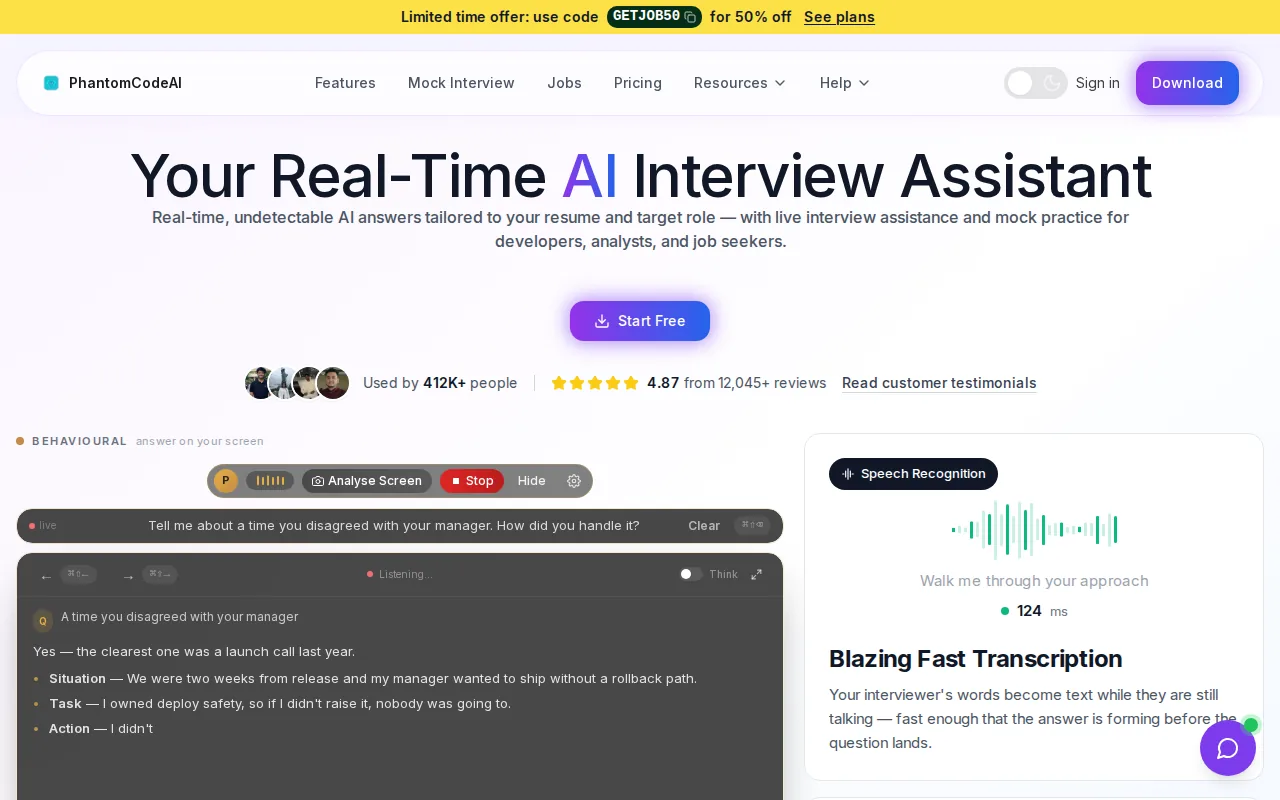
It listens to the interviewer, transcribes the question, recognizes the problem type, and gives guidance during mock or live technical interviews. For behavioral rounds, it uses resume context to shape answers around your actual projects instead of generic sample stories.
That mix is the main reason it leads this shortlist. A senior engineer may need to explain a service migration in one round, reason through a graph problem in the next, then discuss a conflict with a teammate. Phantom Code AI keeps those interview modes in one workflow. It can also help frame project deep dives, “tell me about yourself” answers, and STAR-style responses.
The behavioral coaching is more useful when you treat it as a prompt to think, not a script to read. Say you led a queue redesign. A good session should help you explain the problem, your decision, the trade-off, and the measured result in your own words.
For a stronger story bank, the Behavioral Interview Tips Beyond STAR: CAR, SOAR, FAR, and PAR for Senior Engineers article is a useful companion. Senior candidates often need more than one fixed answer pattern.
The limit is focus. Phantom Code AI is built around engineering interviews, so it may feel like more than you need for a general sales or graduate HR interview. It also shouldn't replace your own judgment. You still need to check every answer against your real experience.
Pick it when your interview loop includes technical work and you want behavioral answers tied to the same engineering background.
2. Final Round AI: Resume-personalized live interview guidance
Final Round AI is a strong fit for candidates who want resume-based suggestions during a live interview, with an emphasis on broad interview support.
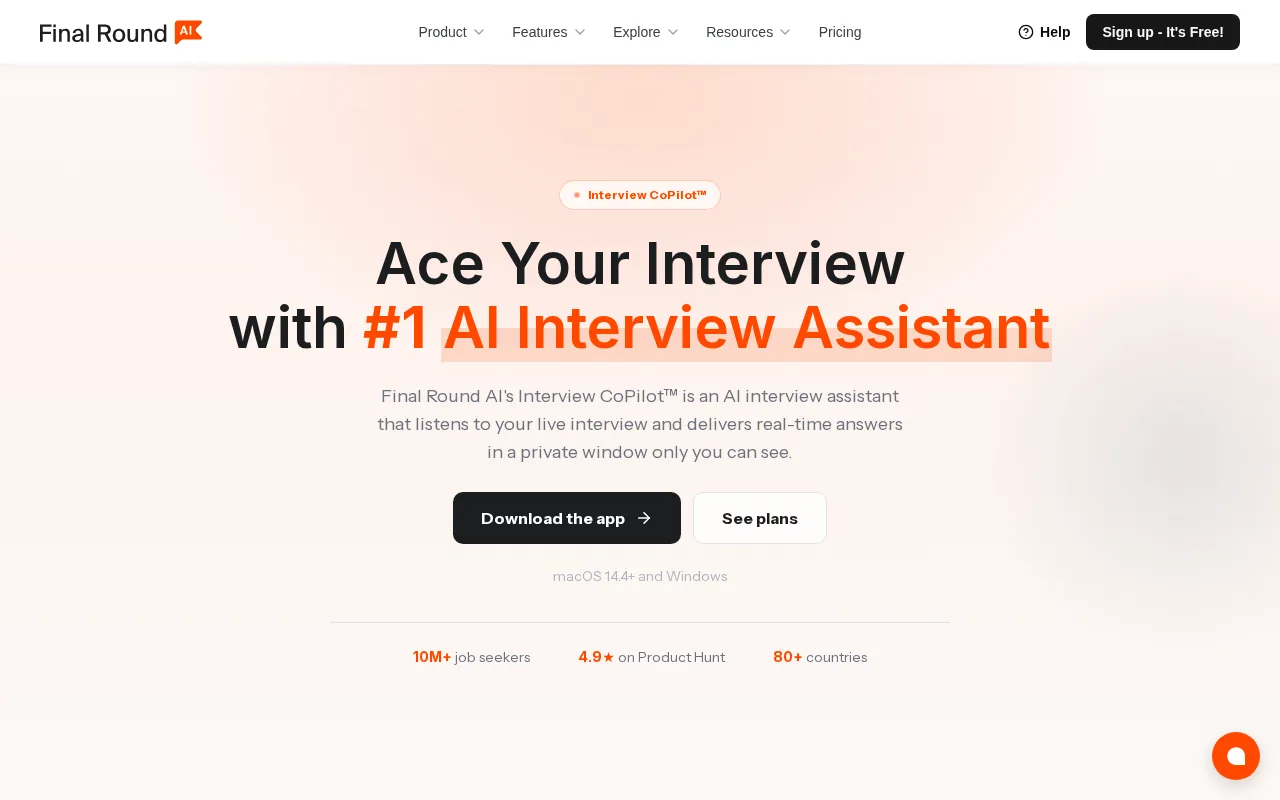
Its stated strength is personalization. The tool uses your resume to shape suggestions, then provides real-time guidance while remaining hidden from interviewers. That combination matters when a question asks about a project that appears briefly on your resume but needs a deeper explanation.
Imagine a bullet that says you cut API latency. A resume-aware coach can help you prepare for follow-ups about the baseline, the bottleneck, the test method, and the final trade-off. Generic behavioral practice rarely goes that far because it doesn't know the bullet exists.
Final Round AI is also worth considering if your prep needs span more than software engineering. Its live guidance can suit behavioral and general interview settings where the main challenge is phrasing, recall, and keeping an answer focused.
Its caveat is fit. Engineers who need deep help with algorithms or system design should test the technical depth before relying on it for an entire loop. Resume personalization does not automatically mean strong coding support.
Choose it when resume-aware live coaching is your first need and technical prep is secondary.
3. Huru: Job-description mock interviews with STAR feedback
Huru is a good choice for candidates who want mock interviews built from a job description and feedback on behavioral structure.
Its key feature is question generation from the job description. That gives your practice a closer link to the role than a random list of common interview questions. If the posting stresses incident response, cross-team work, or mentoring, your mock session can focus on those themes.
Huru also reviews STAR structure and video-call delivery. Feedback can cover eye contact, facial expression, and vocal tone, alongside the content of the answer. That makes it useful for candidates who know their stories but lose clarity on camera.
The STAR framework remains easy to understand because it maps a story to four parts: situation, task, action, and result. You can review the basic framework in Wikipedia's explanation of the STAR interview method, then use a coach to see where your own answer is weak.
Huru's limitation is its center of gravity. It is strongest for behavioral rehearsal and delivery. A software engineer preparing for a hard dynamic programming problem or a distributed systems design should add a technical practice tool.
Use Huru when the job description is your best source of likely questions and your biggest gap is telling clear stories on camera.
4. Big Interview: Framework-led behavioral answer practice
Big Interview is a curriculum-led option for candidates who want to learn interview frameworks before they record practice answers.
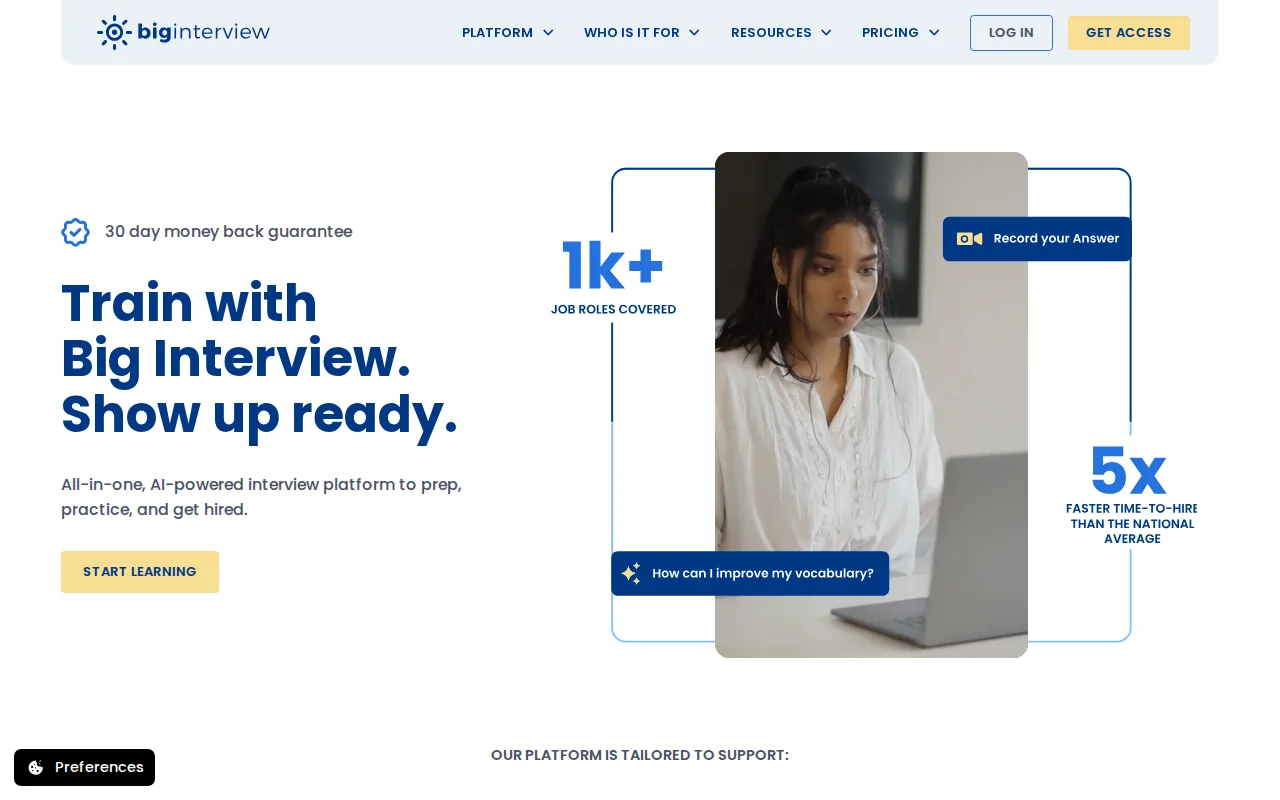
Its strength is teaching the ideas behind behavioral questions. Instead of giving you feedback with no context, it covers STAR and common question types, then applies AI feedback to your practice answers. That sequence helps if you don't yet know what a strong answer should contain.
For example, a candidate might answer “Tell me about a failure” with a long project history and no clear result. Framework-led practice can point out that the story needs a short setting, a specific responsibility, a clear action, and an honest outcome. The lesson gives the feedback a reason.
Big Interview can also help people who prefer recorded practice. You can hear whether your answer sounds rushed or rehearsed, then try again with a tighter structure. That repeat loop is useful before a recruiter screen or a manager conversation.
The trade-off is technical coverage. The platform's behavioral curriculum is the main draw, so it may not be enough for an engineer facing live DSA, SQL, or system design rounds. It also leans toward practice before the interview rather than guidance during a live technical call.
Pick it when you need to learn the language of behavioral interviews, not when your main risk is getting stuck on a coding problem.
5. OphyAI: One platform for behavioral, coding, and system design prep
OphyAI is aimed at candidates who want one preparation platform across behavioral, coding, system design, and case interviews.
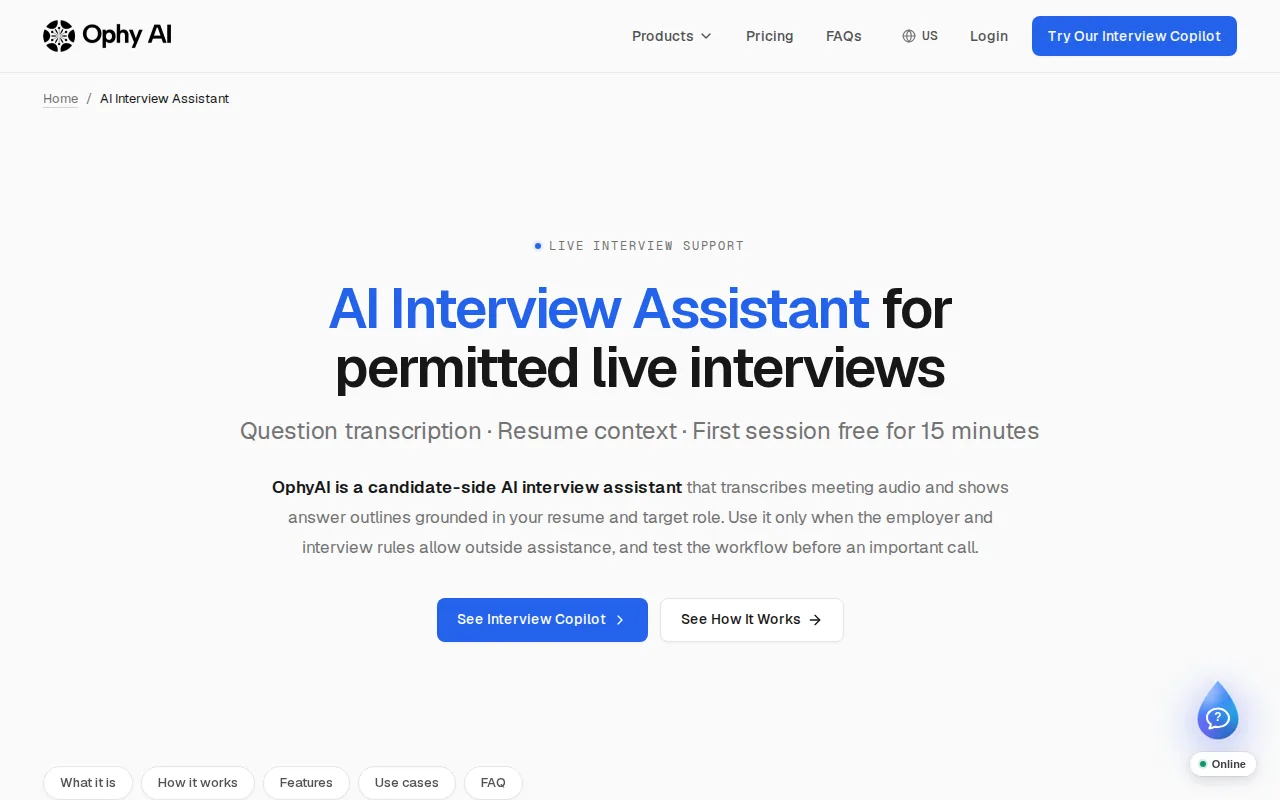
Its broad coverage makes it a useful shortlist option for engineers whose process has several round types. A typical loop might move from a behavioral screen to a coding exercise, then to a high-level design discussion. Keeping those modes together can reduce the work of switching between separate tools.
The main benefit is range rather than a single standout coaching feature. You can use behavioral practice for story structure, coding prep for problem solving, and system design prep for trade-offs. That matters when your weak point is still unclear.
Start by naming the round that causes the most trouble. If you can solve the problem but cannot explain complexity, your need differs from someone who has strong technical skill but gives vague leadership stories. A broad platform helps most when you use that distinction to guide practice.
OphyAI's caveat is depth. A platform that covers four interview types may not give each one the same level of feedback. Test whether its behavioral prompts use your resume and whether its technical guidance matches your target level.
Choose OphyAI when coverage across the full interview loop matters more than a narrow specialty.
Feature comparison: resume tailoring, behavioral feedback, and technical interview coverage
This comparison of resume-tailored behavioral coaching tools comes down to three questions. Does the tool know your background? Can it improve the answer you give? Does it help with the technical round that follows?
The feature gap is easy to miss. Across the current market snapshot, 47% of listed tools mention resume parsing, while 56% mention real-time feedback. Only 34% mention generating interview questions from a resume. In other words, “AI interview coach” does not tell you enough.
| Tool | Resume context | Behavioral feedback | Live guidance | Technical coverage | Best fit |
|---|---|---|---|---|---|
| Phantom Code AI | Resume-aware answers and project framing | STAR-style support and answer coaching | Yes, during mock or live interviews | Coding and system design | Software engineers with mixed interview rounds |
| Final Round AI | Personalized suggestions from your resume | Strong fit for broad interview prep | Yes, with hidden live suggestions | Verify depth for your target role | Resume-led live interview help |
| Huru | Job-description driven prompts | STAR, eye contact, facial expression, vocal tone | Practice feedback | — | Behavioral and video interview practice |
| Big Interview | — | AI feedback plus framework lessons | Practice focused | Limited focus | Learning behavioral answer structure |
| OphyAI | Check during trial use | Behavioral practice included | Check the session type | Coding, system design, and case prep | One platform for several round types |
For engineers, the deciding test is simple: give the tool one resume bullet and one technical project. Ask it to help with a behavioral follow-up, then switch to a system design question. If the answers lose your context during that change, the tool is better for practice than for a full interview loop.
Also check where assistance appears. A recorded mock, a pre-interview answer builder, and live guidance solve different problems. Don't treat them as equal features.
FAQ
What is resume-tailored behavioral coaching?
Resume-tailored behavioral coaching uses details from your resume to shape interview questions, prompts, or feedback. Instead of practicing a generic leadership story, you might rehearse a response about a migration, outage, or system you actually worked on. The best tools connect that context to a clear answer structure without inventing experience.
Which tool is best for software engineers?
Phantom Code AI is the strongest fit when a software engineer needs behavioral coaching beside coding and system design prep. Final Round AI suits resume-led live guidance, while Huru and Big Interview focus more on behavioral rehearsal. OphyAI fits candidates who want broad coverage and are willing to test depth by round.
Does resume parsing guarantee better interview answers?
No, resume parsing does not guarantee better answers. It gives the coach useful context, but you still need accurate stories, clear ownership, and a real result. Check whether the tool asks useful follow-ups about your projects. If it produces polished claims you never made, remove them.
What is the difference between STAR feedback and live interview guidance?
STAR feedback reviews the structure of a behavioral answer, while live guidance helps you respond during an active interview. STAR feedback may show that your action section is vague. Live guidance may remind you to explain your specific decision when the interviewer asks a follow-up. They support different points in the prep cycle.
Should engineers use one interview coach for every round?
Engineers can use one coach for every round, but they should test each mode first. Behavioral coaching needs story and delivery feedback. Coding prep needs problem recognition and explanation support. System design needs trade-offs and clear structure. A single platform is convenient only if it handles your hardest round well.
Conclusion
Choose Phantom Code AI if your interview loop mixes behavioral questions with coding or system design. Start with one resume project and run a short mock session. Review whether the guidance stays true to your experience, then practice the weakest round before your next interview.