
Behavioral interviews can expose a strong engineer who only practiced code. The fix is simple: prepare a small set of stories, then learn to adapt them when the question changes. Here are the best tools and methods for building answers that sound clear, honest, and ready for a technical role.
Table of Contents
- Phantom Code AI, Rehearse Technical and Behavioral Interview Thinking
- Interview Query, Combine Behavioral Preparation With Technical Interview Practice
- Exponent, Use Peer Mock Interviews for Behavioral Delivery
- A Structured Approach to Behavioral Stories
- PAR Method, Give Concise Answers When Time Is Limited
- Story Toolbox, Organize Cue Cards Around Your Engineering Experience
- Job Description Mapping, Match Competencies to Specific Engineering Stories
- Timed Mock Rehearsals, Practice Common Questions and Sample Answers
- Metrics-First Stories, Quantify Results Without Overclaiming
- Level-Specific Delivery, Adjust Stories for Junior and Senior Roles
- Rubric-Aware Follow-Up, Address Gaps and Reinforce Your Narrative
- Comparison Table: Which Behavioral Interview Preparation Option Fits Your Need?
- FAQ
- Conclusion
1. Phantom Code AI, Rehearse Technical and Behavioral Interview Thinking
Phantom Code AI is an invisible AI desktop assistant for software engineers preparing for technical and behavioral interviews. It listens during mock or live technical practice, transcribes the exchange, recognizes problem types, and provides real-time guidance.
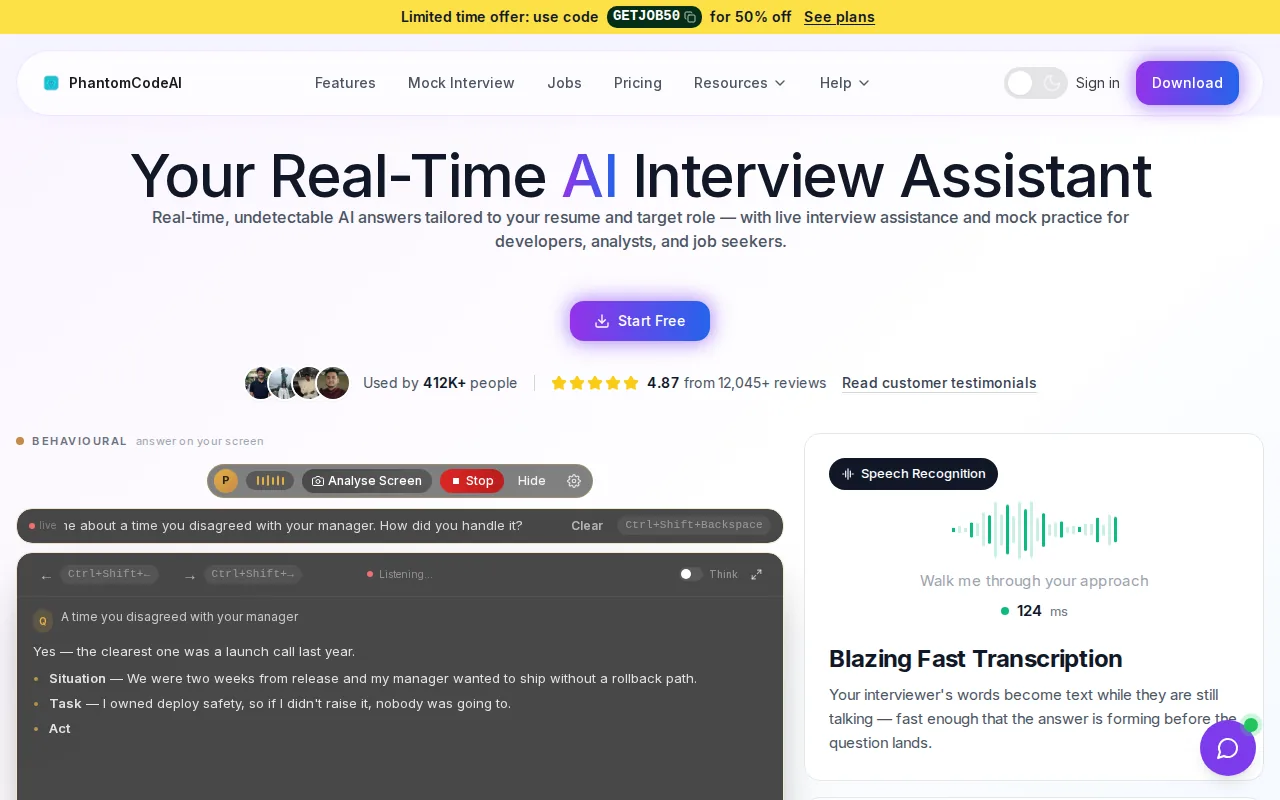
It fits engineers who need to connect coding, system design, and people skills in one practice session. For example, you can rehearse explaining a system tradeoff, then shift into a story about disagreement with a teammate. That change matters because real interview loops often test both technical judgment and communication.
Use Phantom Code AI as a practice aid, not as a script. Your goal is to think more clearly under pressure and explain your own work. Check your employer’s interview rules before using any assistant in a live interview.
2. Interview Query, Combine Behavioral Preparation With Technical Interview Practice
Interview Query suits candidates who want one web resource for technical study and behavioral preparation. Its coverage includes SQL, Python, system design, behavioral topics, and company-specific interview guides.

That mix helps when your prep time is short. You might review a data question in the morning, then build a story about a pipeline failure or a disagreement over database design. You may need a peer or recording tool to judge your delivery.
A small snapshot of visible prep resources found an even split between Interview Query and Exponent. Both were web-based, while only Exponent listed live feedback. Pricing and best-fit audience details were not available in that sample, so check current terms before you commit.
The broader idea is sound: an interview is a structured conversation in which one person asks questions and another responds. Your technical answer still needs a human explanation.
3. Exponent, Use Peer Mock Interviews for Behavioral Delivery
Exponent is best for engineers who know their stories but struggle to tell them aloud. It includes peer-matched video mock interviews for behavioral rounds, plus live peer feedback during practice.
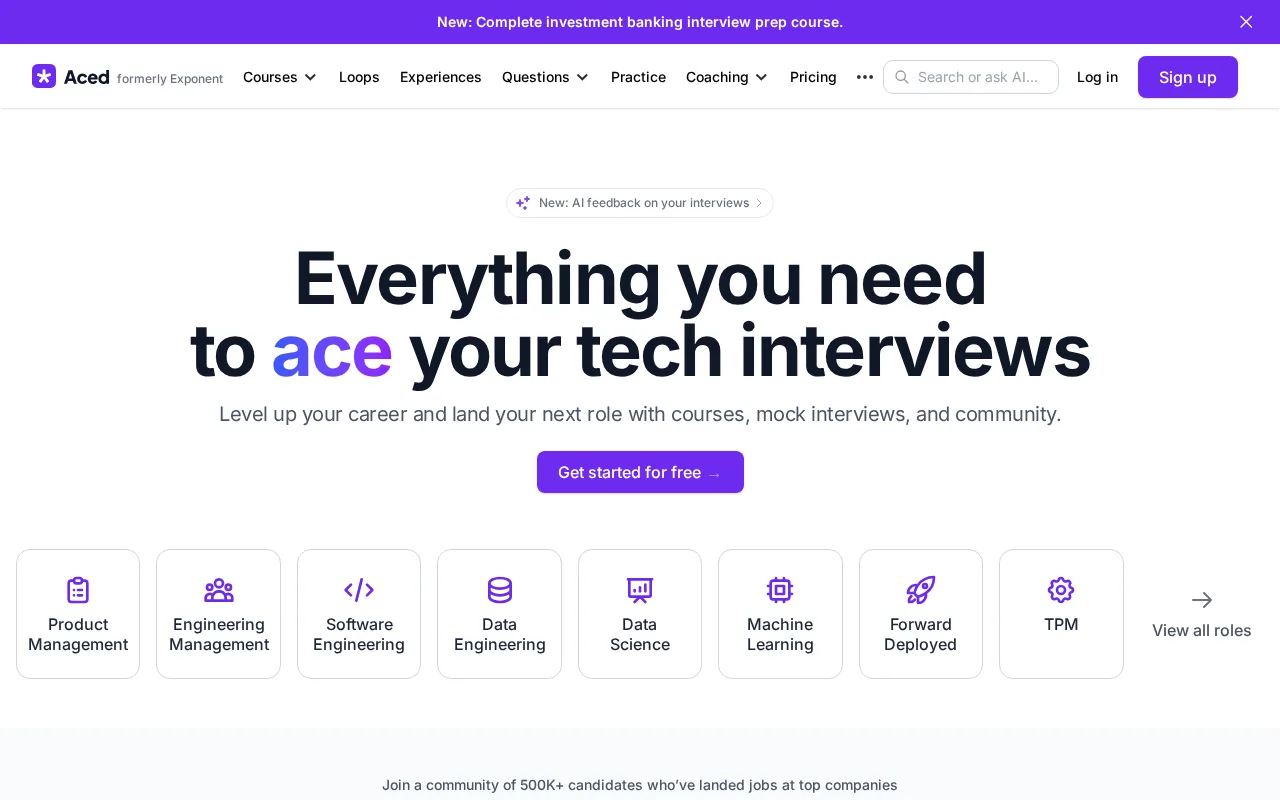
That feedback can reveal habits you miss alone. Perhaps your context takes two minutes, your actions stay vague, or your result disappears at the end. A peer can stop you and ask the same follow-up a hiring manager might ask.
Exponent also includes a system design framework, which makes it useful for candidates preparing for mixed technical loops. Treat the first session as a test of the feedback style.
4. A Structured Approach to Behavioral Stories
A structured approach gives your behavioral answer a clear shape: Situation, Task, Action, and Result. It works well when the question asks, “Tell me about a time you handled conflict,” or “Describe a project that failed.”

Keep the situation short. State your role and the problem. Then spend most of your answer on what you did and why. Finish with the outcome, including what changed or what you learned.
For a software engineer, a strong story might explain a production incident. You could describe the alert, state your responsibility, explain how you traced the failure, then show how the fix changed monitoring or release work. Avoid hiding behind “we.” The interviewer needs to hear your part.
A structure is a guide, not a script. If you memorize every line, a small change in the question can throw you off.
5. PAR Method, Give Concise Answers When Time Is Limited
PAR means Problem, Action, and Result. It is a good choice when STAR makes you spend too long on background or when the interviewer wants a short example.

Start with the problem in one or two sentences. Name the action you took, including your reasoning. End with the result and any lesson that applies to the new role.
Imagine a teammate missed a key handoff before a release. Your action might be a direct conversation, a new request form, and a clear owner for each report. The result could be on-time handoffs in later sprints. Use only outcomes you can support. A clean answer beats a dramatic one.
6. Story Toolbox, Organize Cue Cards Around Your Engineering Experience
A story toolbox is a short set of experience notes that you can adapt to many behavioral questions. It helps you prepare for behavioral interviews without writing a separate answer for every possible prompt.

Build cards around moments such as:
- A difficult bug or incident you resolved.
- A disagreement over architecture or scope.
- A time you led without a manager title.
- A missed goal, mistake, or failed launch.
- A project with unclear requirements.
- A time you gave or received hard feedback.
Each card needs a title, two lines of context, your main actions, the result, and one lesson. Keep prompts short enough to trigger memory. A cue card should not become a page you read aloud.
Prepare three to five strong stories first. One story may answer questions about teamwork, conflict, initiative, or communication, depending on the angle you choose.
7. Job Description Mapping, Match Competencies to Specific Engineering Stories
Job description mapping turns vague prep into a targeted shortlist. Read the role line by line and mark the skills the company repeats.

Look for phrases such as “prioritize competing work,” “partner with product,” “own services,” or “communicate with stakeholders.” Match each phrase to one story. If the role stresses system design, choose an example with a design tradeoff. If it stresses ownership, choose a story where you spotted a risk before someone assigned it.
Also check the level. A junior role may call for clear execution and learning. A senior role may require influence across teams, scope choices, and decisions made with incomplete data. The same project can work for both levels if you change what you emphasize.
If a question feels too broad, ask for focus. “Would you like an example involving a teammate or a partner team?” is a useful clarification.
8. Timed Mock Rehearsals, Practice Common Questions and Sample Answers
Timed mock interviews expose rambling before a real interviewer does. Set a short limit for each answer, record yourself, and review the result after you finish.

Practice common questions such as:
- Tell me about a time you disagreed with a coworker.
- Describe a project that did not go as planned.
- Tell me about a time you managed competing priorities.
- What is the most helpful feedback you received?
- Describe a time you adapted to a new tool or team.
- Tell me about a decision you made with incomplete information.
For a sample answer, consider competing priorities: “I was handling a performance issue while preparing a client install. I mapped both deadlines, agreed on tradeoffs with my manager, and posted status notes. Both projects landed on time, and I learned to flag conflicts before they became urgent.”
After each mock, score yourself on relevance, clarity, ownership, result, and reflection. Fix one weak point in the next round.
9. Metrics-First Stories, Quantify Results Without Overclaiming
Metrics make a behavioral story easier to judge, but only when they are true. Use response time, error rate, incident count, delivery date, scope, or adoption when those figures are part of your work.

Say, “I cut the batch run from about an hour to twenty minutes,” if you can defend the comparison. If you do not know the exact number, use a careful description such as “the next release had fewer repeat alerts.” Do not invent a percentage to make the story sound stronger.
Separate team impact from your contribution. “The team shipped the fix, and I rebuilt the retry logic” gives the interviewer a fair view of your role.
10. Level-Specific Delivery, Adjust Stories for Junior and Senior Roles
Junior candidates should show learning, care, and follow-through. A story about improving a test suite can work well if you explain how you sought feedback and took ownership of the next task.

Senior candidates need wider scope. Show how you set direction, weighed tradeoffs, handled disagreement, or helped others make a decision. The interviewer is listening for judgment, not only task completion.
For an engineering manager or staff-level role, explain how your choice affected people, product goals, and technical risk. Keep the story grounded in one event. Broad claims about being a great leader are weaker than one clear example.
11. Rubric-Aware Follow-Up, Address Gaps and Reinforce Your Narrative
Interviewers often record signals such as ownership, teamwork, judgment, communication, and results. You can support those signals by making your role easy to find in each answer.

After the interview, write down questions that exposed a gap. Maybe you gave the fix but skipped the reason. Maybe you described the team result but not your work. Use that note to improve the story before the next round.
A short thank-you email can also reinforce one relevant point. Mention a topic you discussed, clarify a detail if needed, and restate your interest. Keep it specific. It should add context, not reopen the entire interview.
For engineers preparing for a named company, targeted research can help you choose better examples. A role-specific resource such as the company-specific interview preparation guide can help you connect your stories to a known interview path.
Comparison Table: Which Behavioral Interview Preparation Option Fits Your Need?
The best choice depends on the part of preparation that keeps breaking down. Use this table to choose a starting point, not to replace your own judgment.
| Option | Best use | Main strength | Watch for |
|---|---|---|---|
| Phantom Code AI | Mixed technical and behavioral rehearsal | Real-time guidance during technical practice | Check employer rules before live use |
| Interview Query | Technical study with behavioral coverage | SQL, Python, system design, and company guides | No feedback mechanism published |
| Exponent | Behavioral delivery practice | Peer video mocks with live feedback | Pricing and audience details were not listed |
| STAR | Detailed story answers | Clear four-part structure | Can cause too much background |
| PAR | Short answers and follow-ups | Fast problem-to-result flow | May need more context for complex events |
| Story toolbox | Flexible question coverage | Reusable experience prompts | Needs regular practice |
FAQ
How do I prepare for behavioral interview questions?
Start by choosing three to five stories from your engineering work. Shape each with STAR or PAR, then practice aloud with a timer. Match every story to a skill in the job description. Record one mock answer and fix the biggest issue you hear, such as weak results or too much background.
What is the best format for a behavioral interview answer?
STAR is the best format for a detailed behavioral answer, while PAR works well when you need to stay brief. In both formats, give enough context to explain the problem, focus on your own actions, and finish with a clear result or lesson.
How many stories should I prepare for a behavioral interview?
Prepare three to five strong stories, then adapt them to different questions. Include examples about conflict, failure, teamwork, initiative, ambiguity, and competing priorities. You do not need a separate story for every prompt. One honest incident can show several skills when you change the emphasis.
What if I do not have a work example for a behavioral question?
Use a school project, internship, volunteer role, or group project if it shows the skill the interviewer wants. Say why the example is from another setting. If you still lack a direct example, explain how you would approach a similar situation, then be clear that it is hypothetical.
How long should a behavioral interview answer be?
Aim for about one to two minutes before inviting a follow-up. Keep the setup short and spend most of the time on your actions. If the interviewer asks for more detail, add it. A timed mock interview will show whether you are giving useful context or simply circling the point.
Should I memorize behavioral interview answers?
Do not memorize full answers. Memorize story titles, key facts, your actions, and the result. This keeps your delivery natural when the interviewer changes the wording. Notes can help during video practice, but you should use them as memory cues rather than read a script.
Conclusion
Start with a five-card story toolbox, map each card to the job description, and rehearse one answer aloud today. Use Phantom Code AI when you want help joining technical reasoning with interview communication, then test your delivery with a timed mock and refine the weakest part.