Best AI Mock Interview Tools: 7 Picks for 2026
Compare seven AI mock interview tools for software engineers, with options for coding, system design, behavioral practice, live guidance, and answer feedback.
Interview practice gets more useful when the questions match the role and the feedback shows what to fix. An AI mock interview tool can simulate questions, while some tools also give guidance during live conversations. Here are seven options for software engineers, with a clear look at what each one does best.
We analyzed 58 YouTube comments about AI mock interview tools and found that 19% mentioned confidence and preparation support.
Table of Contents
- Phantom Code AI
- OfferGoose: Personalized interview follow-ups
- Final Round AI: Structured practice sessions
- My Interview Practice: Repeatable mock interview sessions
- Interview Sidekick: Mock and real-time interview assistance
- Yoodli: Communication and behavioral roleplay practice
- Huru: Role-based practice with answer feedback
- Frequently asked questions
- Conclusion
1. Phantom Code AI
Phantom Code AI is an invisible desktop assistant for coding interviews. It listens, transcribes, recognizes problem types, and gives real-time guidance during mock or live technical interviews. It’s built for engineers who want help across data structures and algorithms, system design, and behavioral questions.
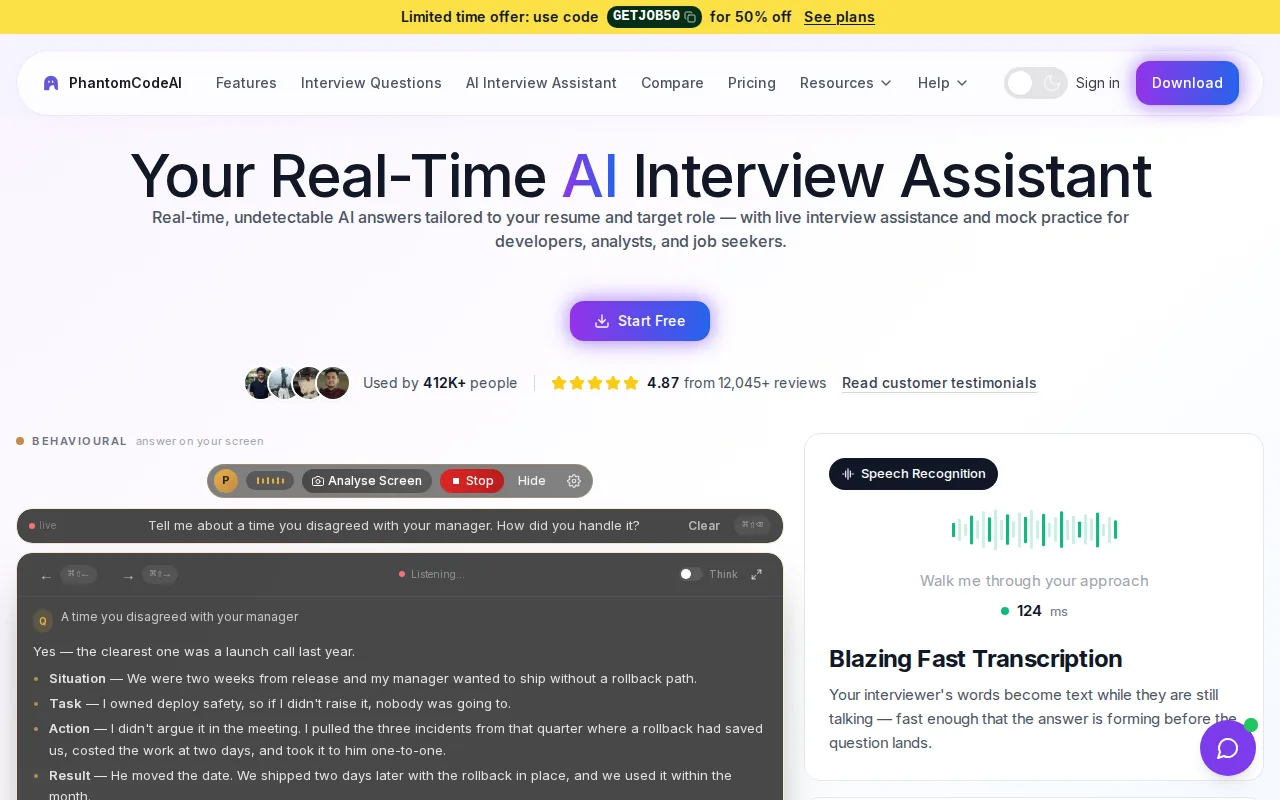
Its desktop format sets it apart from practice tools that only run a simulated interview. Phantom Code AI runs on macOS and Windows, and new accounts get free credits at signup without a card. Paid plans start at $19. Check an employer’s AI policy before using live assistance, and use mock sessions to rehearse explaining your own reasoning.
For interview rehearsal, the AI mock interview practice rounds let you work through a simulated conversation before an actual interview. That’s useful when you want to practice speaking through an approach, not only solve a problem quietly.
2. OfferGoose: Personalized interview follow-ups
OfferGoose provides live interview assistance and dedicated modules for behavioral and technical interviews. It suits engineers who want practice questions to respond to what they’ve already said, rather than stop after one fixed prompt.

OfferGoose uses RAG-driven personalized follow-up chains and a six-dimension structured debrief. In practice, that points to a useful rehearsal pattern: explain a project, answer a follow-up about a tradeoff, then review the debrief for gaps in the account. For a behavioral answer, STAR prompts can help keep the story focused on the situation, task, action, and result.
OfferGoose also describes zero-pressure AI practice and a real-time copilot with prompts during live interviews. Treat suggested wording as a draft, not a script. Your answer should still reflect what you did and what you can explain under follow-up questions.
3. Final Round AI: Structured practice sessions
Final Round AI is a real-time interview assistant that listens to questions and generates suggested responses. Its structured, consistent STAR-style answers may suit candidates who want a clear frame for behavioral responses or concise prompts during practice.
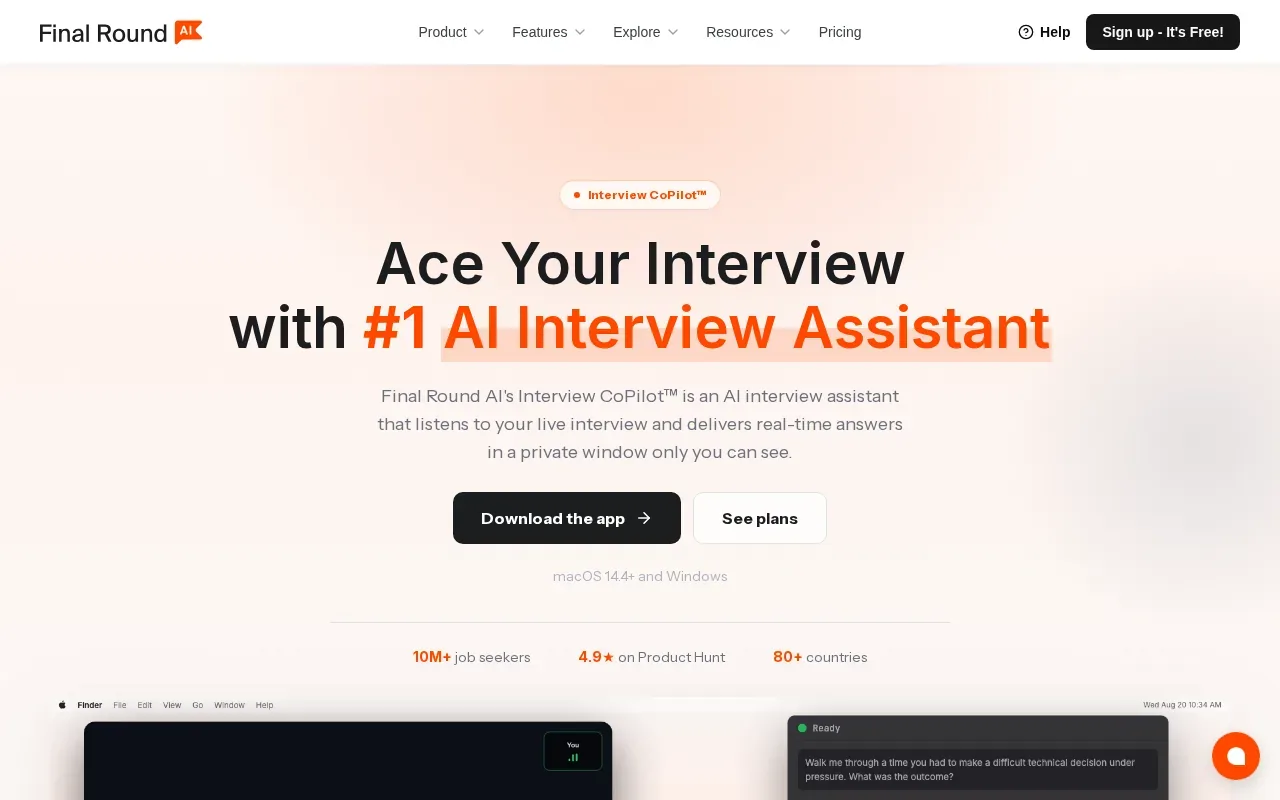
For example, if an interviewer asks how you handled a production issue, a STAR-style outline can help you state the context, your role, the action you took, and the result. The tool also provides reasoning prompts alongside suggestions, giving you a cue to think through the answer rather than repeat it word for word.
One stated limitation is that responses can become repetitive during longer interviews. Higher subscription tiers may also lack the variation and customization some users expect. Try a longer practice session before relying on the tool for a full interview loop.
4. My Interview Practice: Repeatable mock interview sessions
My Interview Practice is an interactive interview simulator with unlimited mock interviews and tailored feedback. It fits job seekers who want to repeat practice sessions and review where an answer needs work.
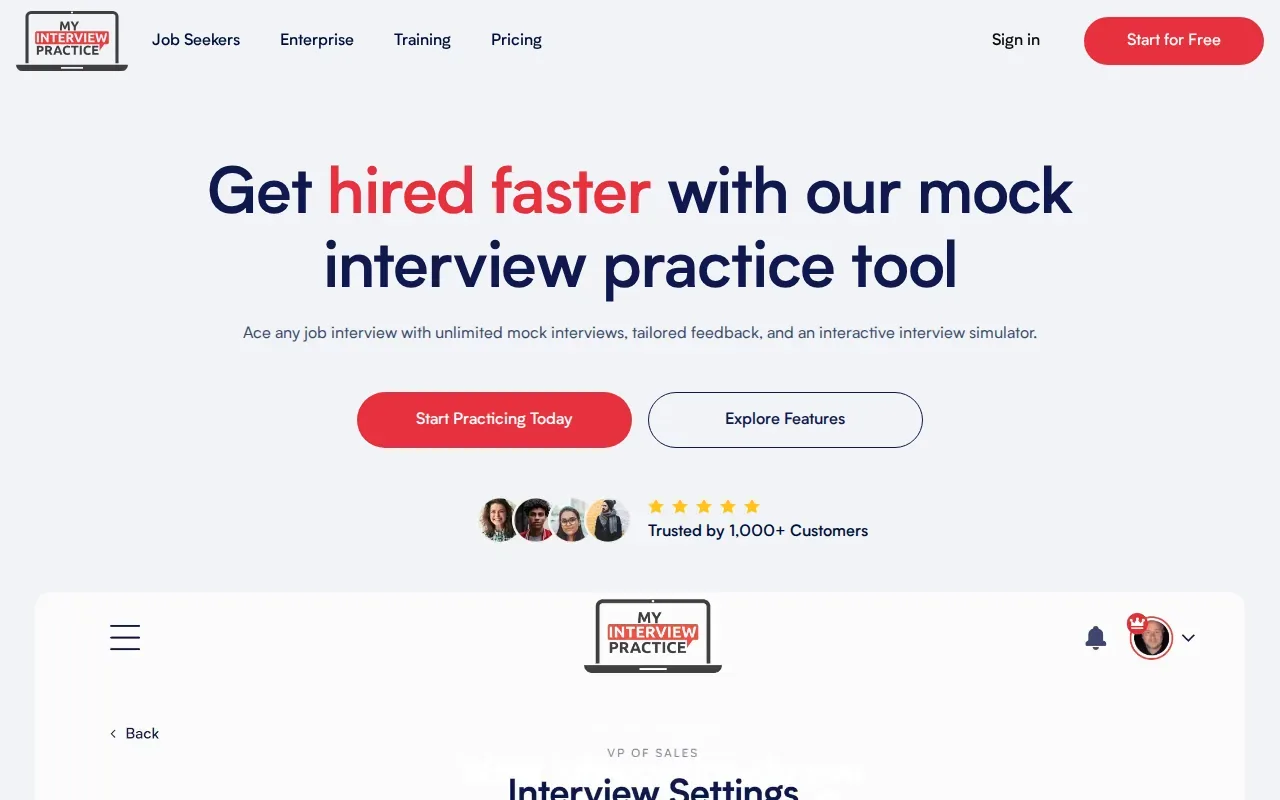
Use a repeatable session to work on one weak area at a time. For example, if your answer to “Tell me about a project you’re proud of” wanders, give a shorter version on the next attempt and compare the feedback. That makes the practice loop more useful than collecting model answers without speaking them aloud.
For behavioral questions, the STAR method can give your answer a simple shape. STAR stands for situation, task, action, and result. Use that as a prompt, not a rigid script. Engineering answers still need the technical choices and tradeoffs that show how you approached the work.
5. Interview Sidekick: Mock and real-time interview assistance
Interview Sidekick is an AI interview assistant for coding, behavioral, and technical interviews, with mock interviews as well. It may fit engineers who want one tool for both rehearsal and real-time answer support.
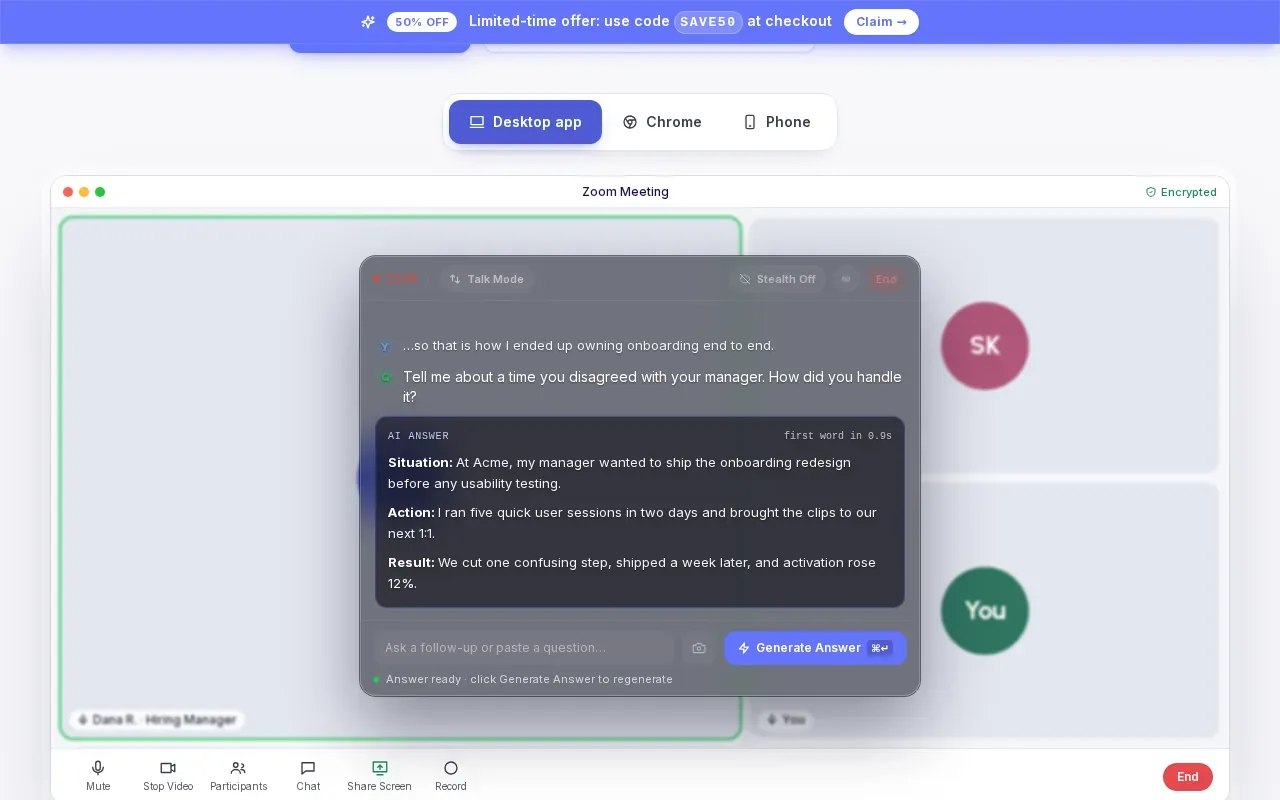
For coding practice, use a prompt to rehearse how you’d explain a solution before writing code. For a behavioral question, focus on the specific part of your work that shows your role. These are different skills, so check that your practice time includes both, rather than using one answer style for every round.
Live assistance raises a separate question from mock practice: what does the interviewer or employer allow? Confirm the rules before using any assistant during an actual interview. A mock session is a safer place to test whether suggested answers help you think clearly or distract you from the question.
6. Yoodli: Communication and behavioral roleplay practice
Yoodli is an AI roleplay and coaching tool for human skills. Its interview preparation roleplays let you choose a role, answer questions, and handle dynamic follow-ups without another person watching.
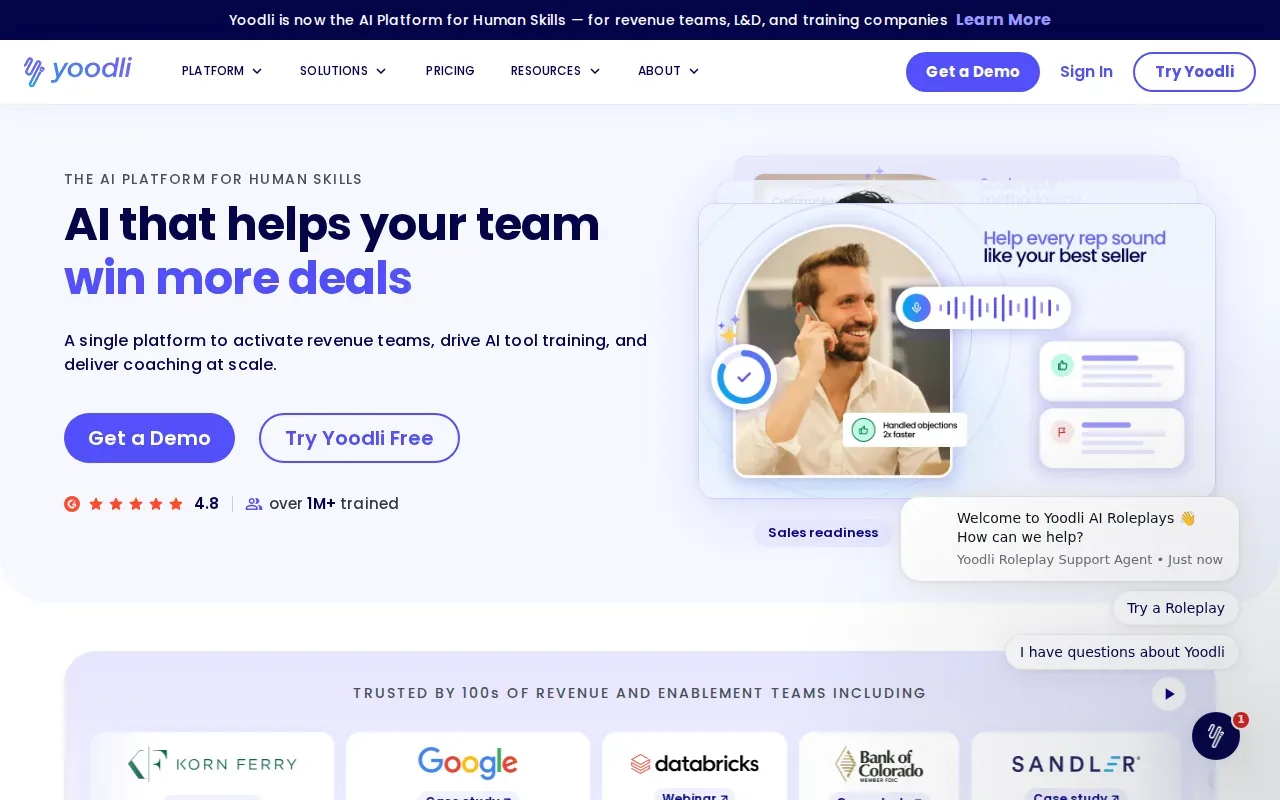
Its feedback covers answer structure, clarity, conciseness, pacing, and filler words. That can help when you know the technical answer but struggle to explain it in a steady, easy-to-follow way. A practice plan can help you choose what to work on next and track your progress.
For a system design answer, you might practice stating the key requirements before discussing a design choice. Then listen for places where the explanation becomes hard to follow or too long. Avoid canned responses; keep roleplay practice grounded in your own experience.
7. Huru: Role-based practice with answer feedback
Huru is an AI interview coach with mock interviews for more than 242 roles. It scores each answer and gives feedback on what to fix next, which may suit candidates who want a role-focused warm-up and a clear review after each response.
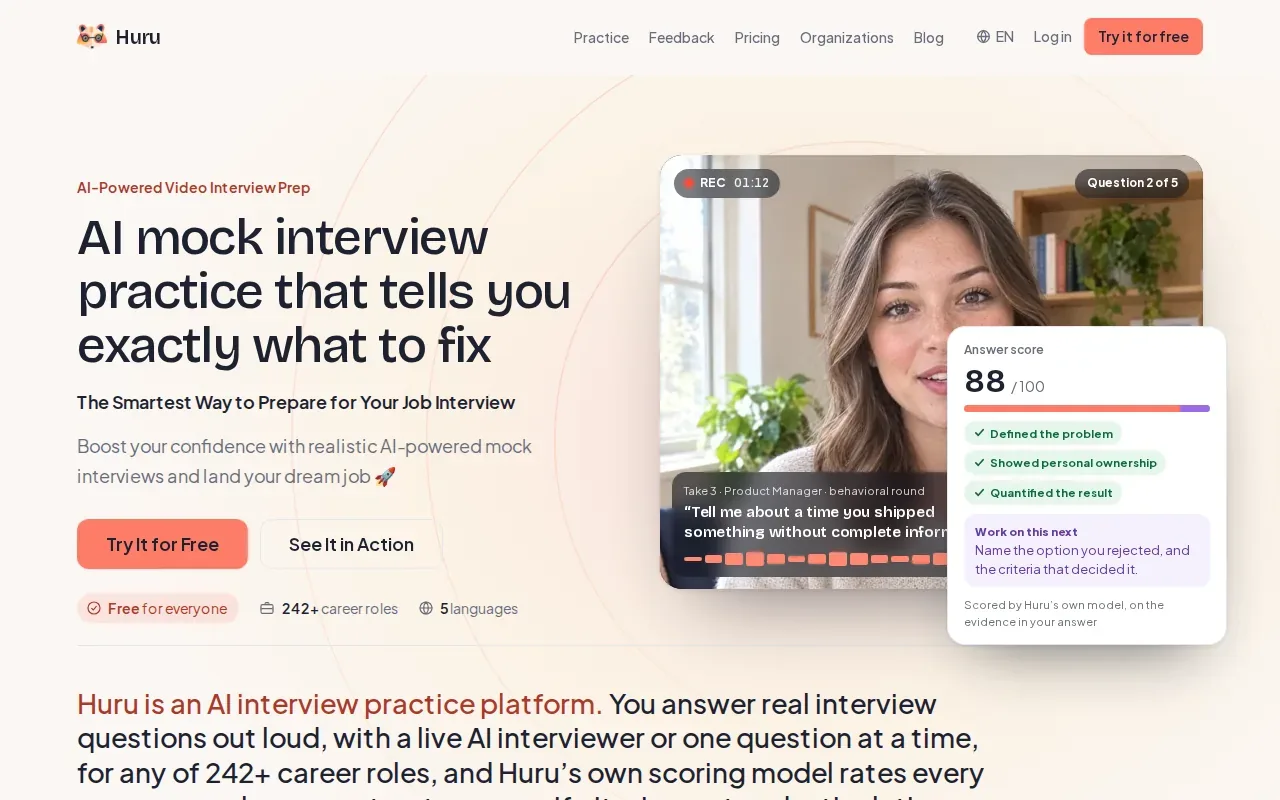
Huru describes its practice as free. The role count gives you a way to start with a job type that resembles the opening you’re pursuing. After each answer, use the score and feedback to choose one change for the next attempt, such as adding a clearer result or cutting a long lead-in.
| Practice need | What Huru provides | Good next move |
|---|---|---|
| Role-based warm-up | Mock interviews across 242+ roles | Choose the role closest to the job you’re targeting |
| Answer review | A score for every answer | Use the feedback to pick one change for your next response |
| Focused improvement | Feedback on what to fix next | Retake practice after working on that point |
Huru’s strengths center on role-based practice and answer feedback. If your target is a technical engineering round, check that your practice also covers the coding or system design work you expect to face.
Frequently asked questions
What does an AI mock interview tool do?
An AI mock interview tool simulates interview questions and gives you a way to practice answers. Depending on the product, it may ask questions aloud, respond to your answers with follow-ups, score responses, or provide written feedback. For software roles, check whether its practice fits the round you need, such as coding, system design, or behavioral questions.
Can AI mock interviews help with coding interviews?
Yes, they can help you rehearse explaining your thinking while you solve a problem. Use practice to say your assumptions aloud, describe a possible approach, and explain tradeoffs. The tools in this shortlist vary, so check the specific product’s stated interview coverage before relying on it for a coding round.
How should I use AI feedback after a mock interview?
Pick one point to improve, then try the question again. If the feedback says your answer lacks a clear result, add the outcome to your next version. If it flags pacing or filler words, slow down and make the answer shorter. Don’t treat a score as a hiring prediction; use it as a prompt for focused practice.
Can I use an AI assistant during a real job interview?
Only use one if the employer and interview rules allow it. Policies can differ by company and interview format, so ask or check the instructions before the call. Mock practice is a good place to test a tool’s prompts and build your own answers. Don’t share confidential interview material with an AI service unless you’re allowed to do so.
Conclusion
For software engineers who want desktop guidance across technical and behavioral rounds, start with Phantom Code AI and use a mock session to test your workflow. Before a live interview, check the employer’s AI rules and rehearse explaining answers in your own words.