Best Technical Interview Coaching Options for Engineers

Compare technical interview coaching options for engineers, including live mock interviews, expert mentorship, AI practice, and focused prep for data roles.
Technical interviews can feel like a string of tests, but good practice makes them feel more like a clear conversation. Technical interview coaching can mean live feedback, expert mentorship, or an AI assistant during a practice round. Here are six options and the kind of prep each one fits.
We analyzed 67 YouTube comments about technical interview coaching and found that 31% mentioned preparing and practicing interview responses.
Table of Contents
- Interviewing.io: Realistic mock interviews with experienced engineers
- Prepfully: Choose an expert for focused mock interview practice
- Formation: Ongoing mentorship for engineers targeting a level jump
- Hello Interview: Courses and AI mocks for structured self-study
- Interview Query: Interview preparation for data science and analytics roles
- Frequently asked questions
- Conclusion
1. Interviewing.io: Realistic mock interviews with experienced engineers
Interviewing.io provides live mock interviews with FAANG-level engineers. It’s a strong fit when you need a person to watch how you solve a problem and respond to your explanation in the moment.
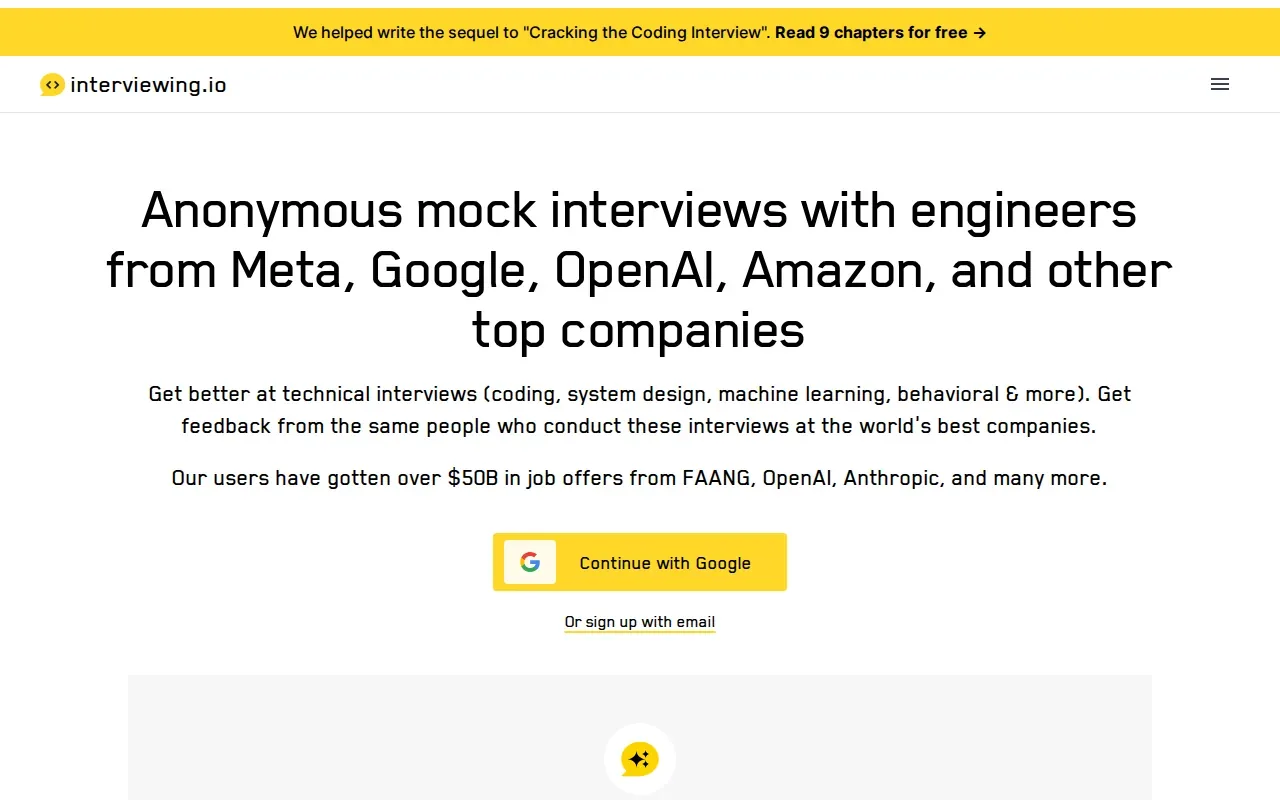
Its listed coverage includes coding and system design. That makes it useful for rehearsing the full interview exchange: ask clarifying questions, describe an approach, then talk through tradeoffs as you work. For a coding mock, you might explain why a hash map gives a faster lookup before writing the code. For design, you can state an assumption about traffic and see how the discussion develops.
Human feedback can catch habits that are hard to notice alone, such as going quiet while coding or skipping edge cases. It also gives you a chance to practice staying calm when an interviewer asks you to change your approach. A mock is most useful when you review one or two specific points afterward, then retry the same skill on a new problem.
Pick this option when your main gap is speaking through a solution with another engineer in the room. It’s a live human coaching format, so the session itself gives you a more direct back-and-forth than solo drills.
2. Prepfully: Choose an expert for focused mock interview practice
Prepfully offers anonymous mock interview sessions with experts and lets you choose your coach. It’s suited to candidates who want a human practice session and prefer to select someone for the role or skill they’re working on.
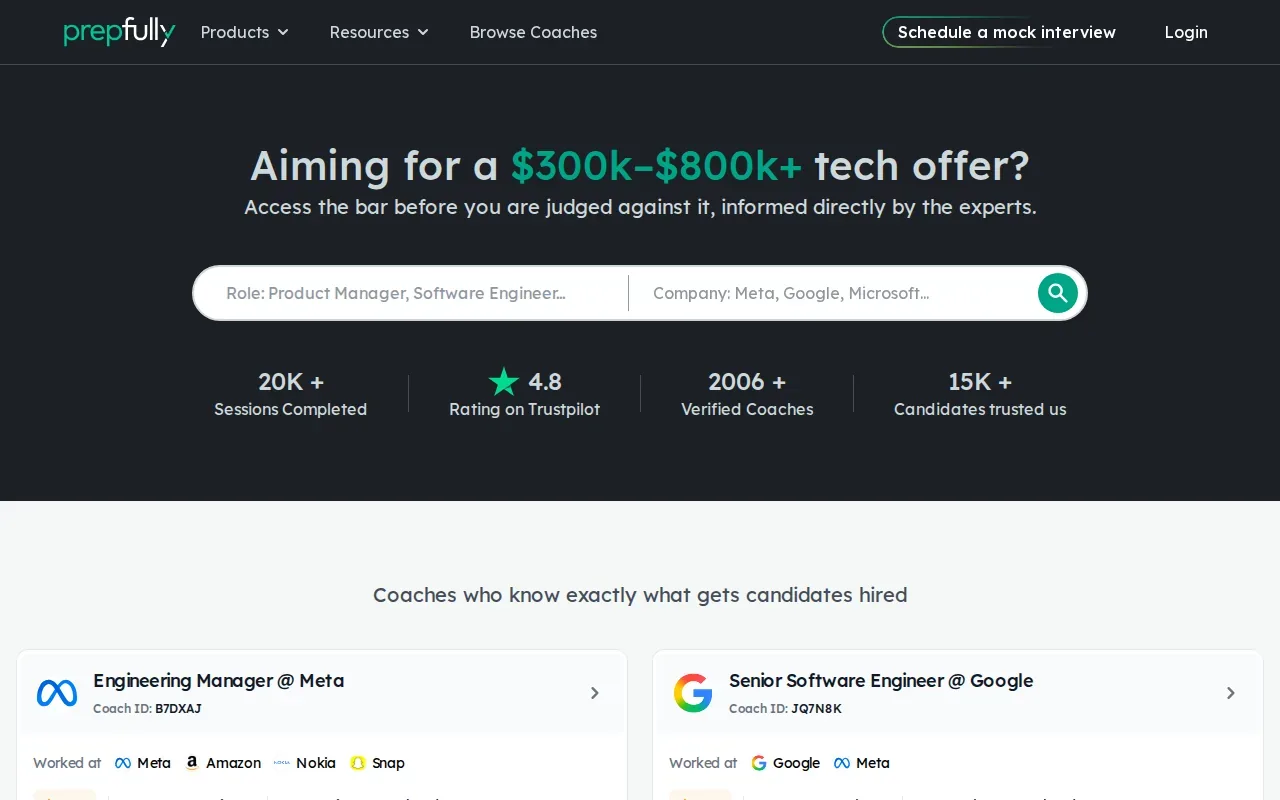
The service describes itself as a one-stop shop for interview preparation, with interview guides, question banks, operational practice interviews, and expert advice. That mix can help you set up a focused prep cycle. Pick a question bank to find a topic, attempt it aloud, then use a mock session to test how clearly you explain your choices.
For example, if you tend to jump straight into code, use the session to practice stating inputs and constraints first. Then explain a simple approach before discussing a faster one. That change makes it easier for the interviewer to follow your reasoning, even if you need to correct a bug midway.
Anonymous practice may feel less tense than a first mock with someone you know. Still, treat it like an interview: say what you’re thinking, ask clarifying questions, and leave time to discuss feedback. A coach is most helpful when you bring a clear goal, such as improving how you explain complexity or handle a follow-up question.
3. Formation: Ongoing mentorship for engineers targeting a level jump
Formation pairs engineers with FAANG+ senior and staff-level engineers, tech leads, and hiring managers for unlimited mocks and mentorship. It’s aimed at engineers making a level jump who want months of structured support and can fund that commitment.
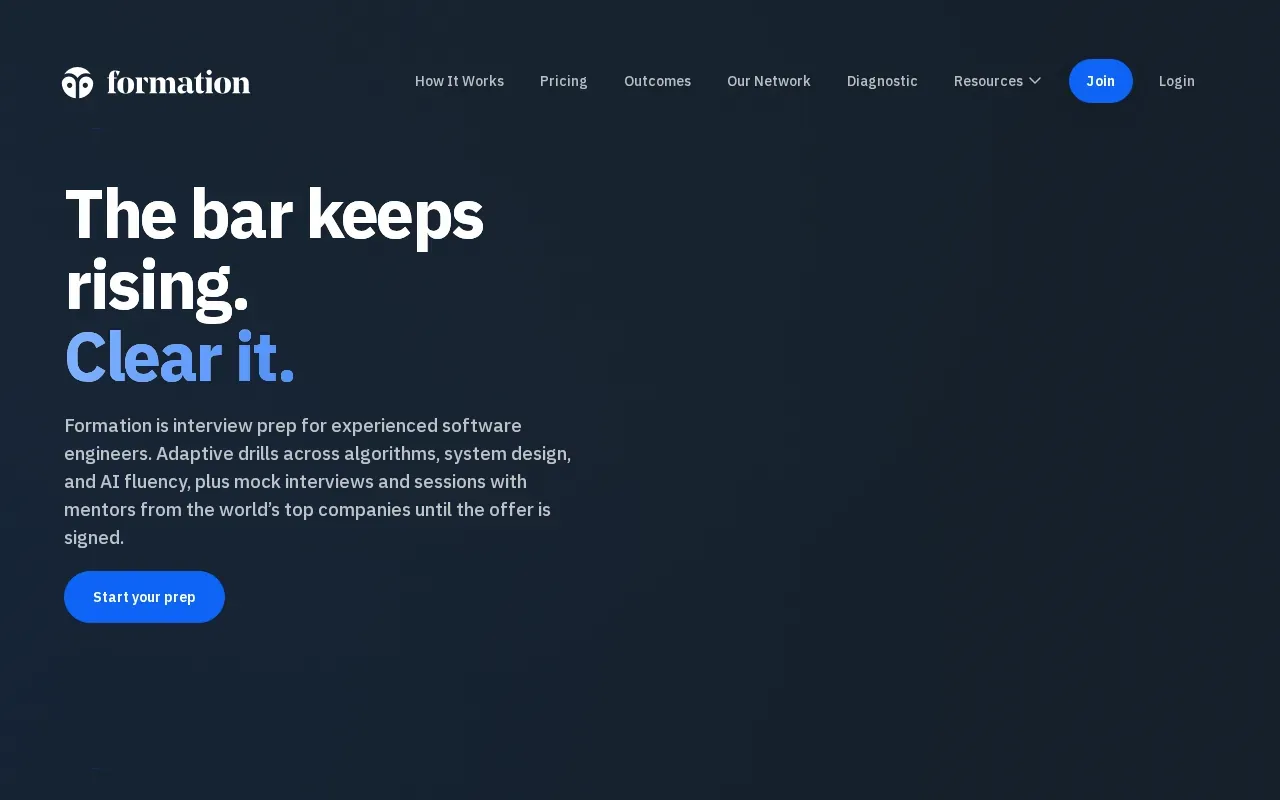
The longer format can suit a senior engineer preparing for staff-level interviews. A system design mock might expose a gap in how you frame tradeoffs; mentorship gives you room to work on that skill over time, rather than treating each session as a one-off. Formation lists system design among its coverage areas.
For a higher-level role, practice more than the diagram. Explain which parts of a design you’d build first, what can fail, and how you’d spot that failure. Then connect the choice to a project you’ve worked on. A personal example gives your answer context without turning it into a list of claims about yourself.
Choose ongoing mentorship if you want repeated human feedback while preparing for a more senior role. If you mainly need a short burst of timed coding practice, this longer support model may not match your goal.
4. Hello Interview: Courses and AI mocks for structured self-study
Hello Interview sells a premium content subscription with system design, coding, and behavioral courses, plus AI mock interviews. It fits engineers who prefer to study on their own schedule and want lessons paired with practice.
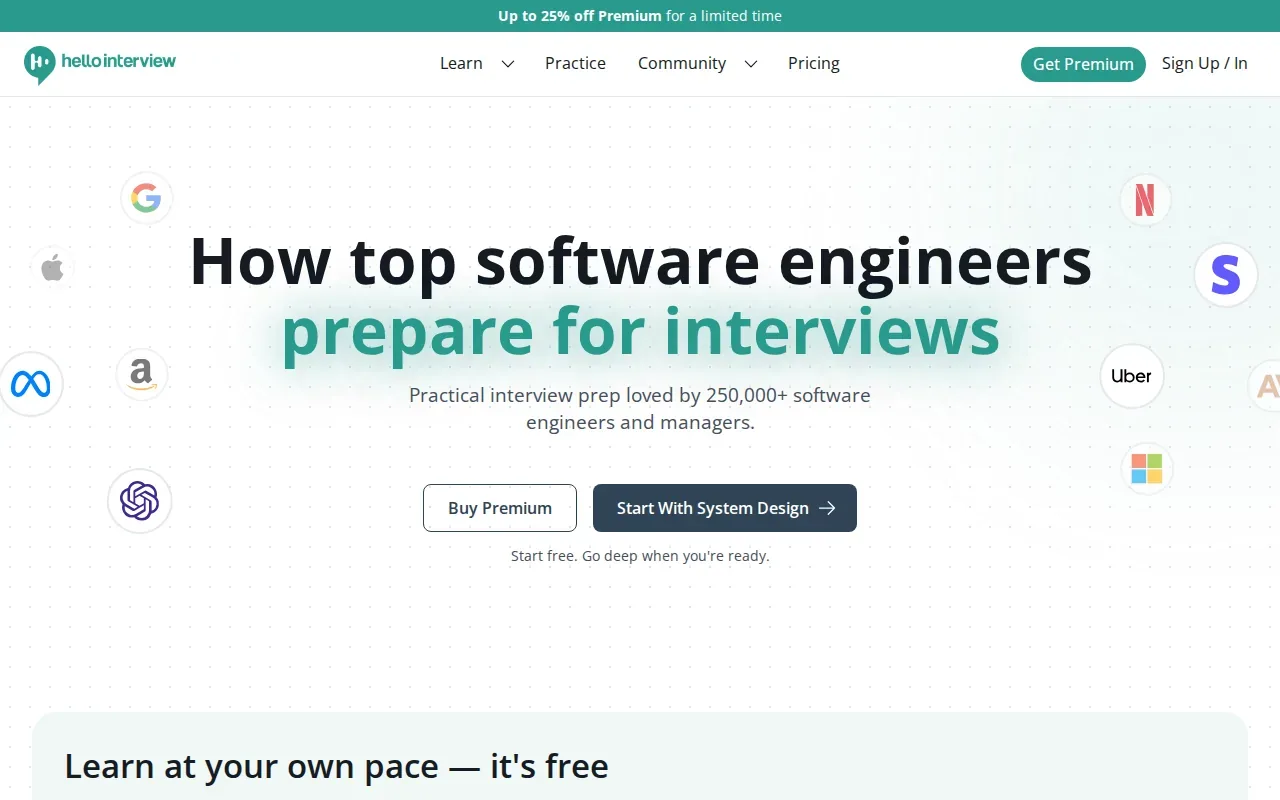
The materials include guided practice problems and an AI tutor that answers questions while you study. That format can help when you know the subject but need a stronger way to explain it. For example, after studying a design pattern, try recalling the key steps without looking at the lesson. Then use a mock to practice presenting the design in a timed conversation.
Hello Interview’s starting price is $47 per month. Its mix of courses and AI practice can give self-directed learners a clear structure, but you’ll still need to set aside time to work through the lessons and apply them to fresh problems.
This option is a good match when your prep needs a course-like path. It can also help you prepare for behavioral rounds by practicing a project story alongside your technical work. Keep the story specific: describe your role, the decision you made, and what changed as a result.
5. Interview Query: Interview preparation for data science and analytics roles
Interview Query is designed for data science and analytics interview preparation, with AI or peer practice. It’s the most role-specific choice in this shortlist for people whose interviews center on data work rather than general software engineering.
Before choosing a prep format, name the task you need to rehearse. A data role may call for explaining a metric or walking through an analysis, while a software engineering role may focus more on code or system design. A peer session adds another person to the practice; AI practice lets you rehearse on your own.
| If you need… | Practice format to consider | What to rehearse |
|---|---|---|
| Feedback on how you explain a data problem | Peer practice | State the question, your assumptions, and why your method fits. |
| More repetition on your own | AI practice | Work through a prompt, then check whether your explanation answers the question. |
| Broader software engineering prep | Another option on this list | Match the practice to coding, system design, or behavioral rounds. |
Interview Query stands apart because it targets data science and analytics work. If you’re applying for a general software engineering role, check that the practice task matches the interview you expect instead of choosing a service based on its name alone.
Frequently asked questions
What does technical interview coaching include?
Technical interview coaching can include live mock interviews, one-to-one mentorship, courses, or AI practice. The right format depends on the gap you’re trying to close. A live coach can respond to your choices in the moment, while self-study can help you revisit a topic at your own pace. Check that the option covers the interview type you need.
How do I practice for a technical interview?
Practice with the same kind of task you expect in the interview. For coding, say your assumptions aloud before writing code, then test edge cases. For system design, explain the tradeoffs behind a choice. After each mock, write down one change to try next time. That feedback loop helps turn a single practice session into a useful next attempt.
Are mock interviews worth it for software engineers?
Mock interviews can help you practice explaining your thinking under interview conditions. They’re especially useful if you solve problems well alone but struggle to communicate while someone watches. A live mock gives you direct human interaction; AI or peer practice can give you more chances to rehearse. Review each session and pick a clear skill to work on.
How can I feel less nervous in a coding interview?
Repeated practice can make the interview format feel more familiar, though it can’t guarantee you’ll feel calm. Try a timed mock and practice saying your reasoning even when you’re unsure. If you hit a blocker, describe what you’ve tested and what you’ll check next. That gives you a clear action instead of leaving a long silence.
How should I answer behavioral interview questions?
Use a short story that shows what you did and why. The STAR format organizes an answer around situation, task, action, and result. Keep the focus on your own choices, then connect the example to the role. Rehearse the story aloud so it sounds like you, not a memorized script.
Conclusion
Choose the format that matches your biggest gap: live feedback, longer mentorship, structured lessons, or practice for a data role. If you want in-session AI guidance across coding, system design, and behavioral interviews, start with Phantom Code AI’s free signup credits and try a practice round focused on one skill.