Best Technical Interview Coach Options for Engineers

Compare technical interview coach options for coding, system design, and behavioral prep, including AI guidance, expert mocks, and ongoing mentorship.
A strong technical interview coach can help you spot where your answer breaks down before the interview does. The right fit depends on whether you need live coding guidance, a human mock interviewer, or steady support across several months. Here are five options, starting with Phantom Code AI.
We analyzed 56 YouTube comments about Technical interview coaching and found that 32% mentioned an authentic personable interview style.
Table of Contents
- Phantom Code AI
- Formation: Ongoing mentorship and unlimited mock interviews
- Tech Interview Coaching: Vetted coaches from major tech companies
- AI Interview Trainer: Personalized, resume-aware mock practice
- ParakeetAI: Real-time interview prompts plus mock practice
- FAQ
- Conclusion
1. Phantom Code AI
Phantom Code AI is a desktop assistant for engineers preparing for coding, system design, and behavioral interviews. It listens to interview audio, transcribes the discussion, recognizes problem types, and gives real-time guidance during mock or live interviews.
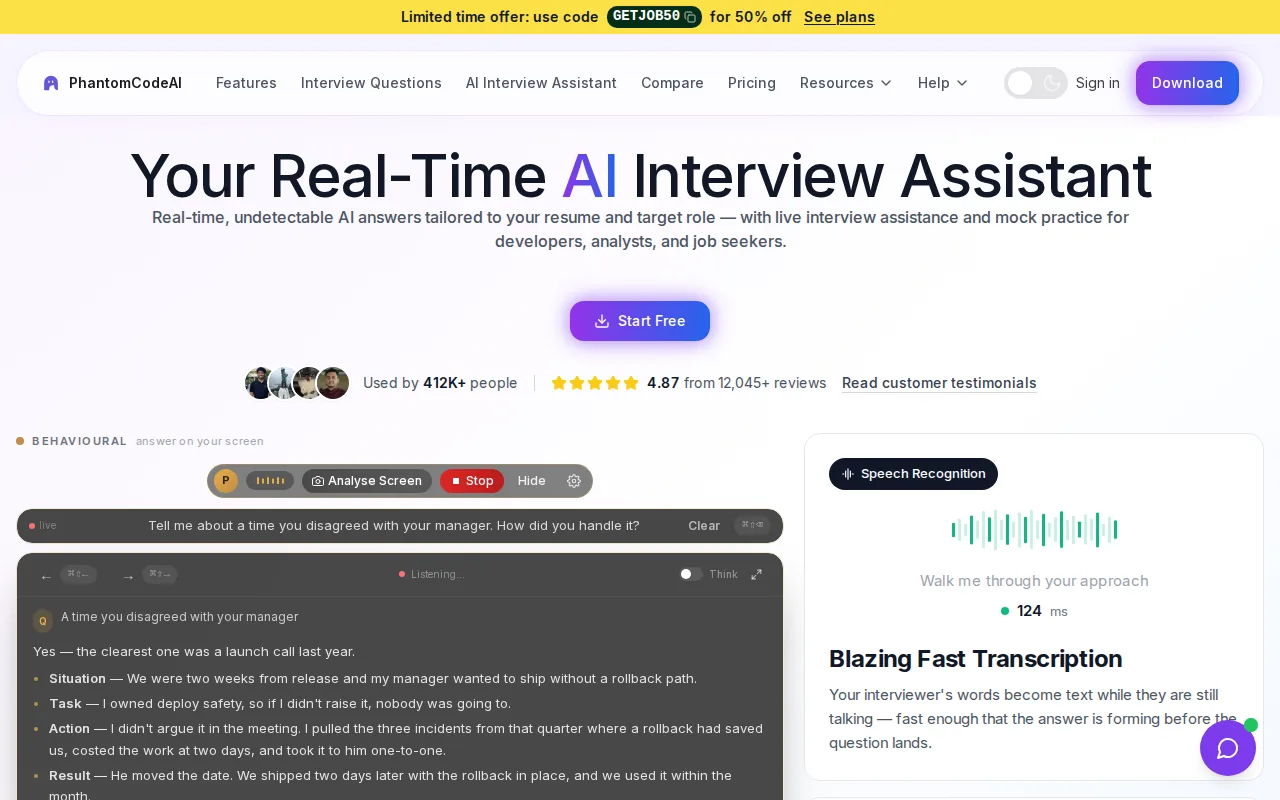
It fits candidates who want one tool for spoken prompts and technical problem solving. Say an interviewer asks you to design a rate limiter. Problem recognition can help frame the prompt, while transcription gives you a written record to review. For a coding question, live guidance can support your reasoning as you work through an approach.
Interview prep still needs independent practice. Try solving a problem before you look at any guidance, then explain your choices aloud. When you review the transcript, look for places where you skipped an assumption or moved to code before clarifying the input. That kind of review helps turn a tool's feedback into a skill you can use on your own.
Phantom Code AI runs on macOS and Windows. New accounts get free credits at signup, and paid plans start at $19. Its AI interview coach with live feedback is relevant if you want to pair practice with live assistance. During an actual hiring interview, use any live support only when the employer's rules allow it.
For engineers who want an assistant that can follow the spoken interview and recognize the question type, this is the most direct match on the list.
2. Formation: Ongoing mentorship and unlimited mock interviews
Formation pairs engineers with senior and staff-level engineers, tech leads, and hiring managers for mentorship and unlimited mock interviews. It is best suited to engineers making a level jump who want structured support over several months and can fund that level of coaching.
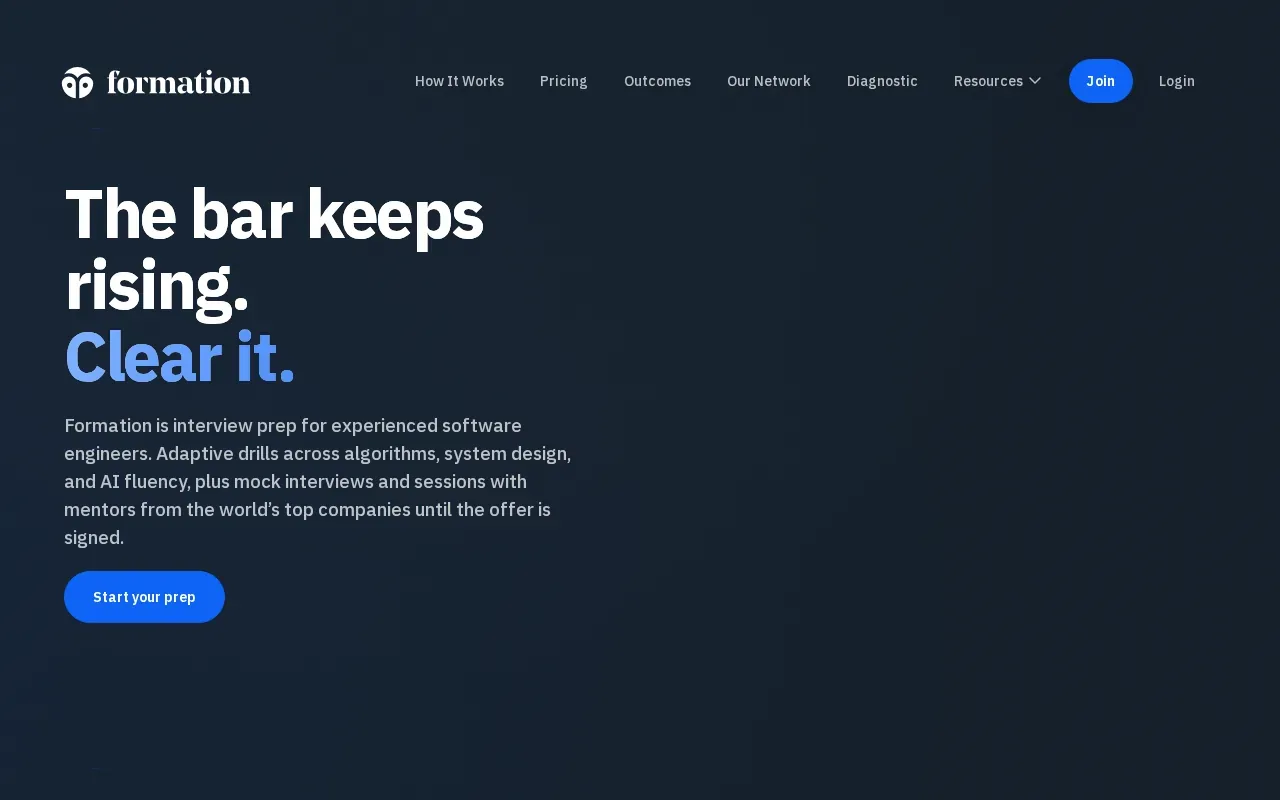
The repeated mock format can help when one session is not enough to fix a pattern. A senior engineer might ask you to explain a design choice, then change a requirement and see how you adjust. You can also use sessions to rehearse the scope expected at a higher level, such as how you describe technical trade-offs or work across teams.
For useful feedback, bring a target role and a real gap to each session. If you are aiming for a staff-level role, you might ask the coach to test how you explain an architecture decision beyond your own team. For a coding round, ask for feedback on your reasoning as well as the final answer. Then use the next mock to check whether you made the change.
Formation's distinctive strength is the ongoing access to senior and staff-level mentors, along with unlimited mocks. Its stated constraints matter: it is the most expensive option in this group, and candidates need work eligibility in the United States or Canada.
Human feedback can also surface habits that a score may miss. A coach can tell you when your explanation became hard to follow, then ask you to try it again in plain language.
3. Tech Interview Coaching: Vetted coaches from major tech companies
Tech Interview Coaching is a service where candidates can browse vetted coaches from Amazon, Google, Meta, and other companies. It suits engineers preparing for interviews at major technology firms who want to speak with a coach before booking.
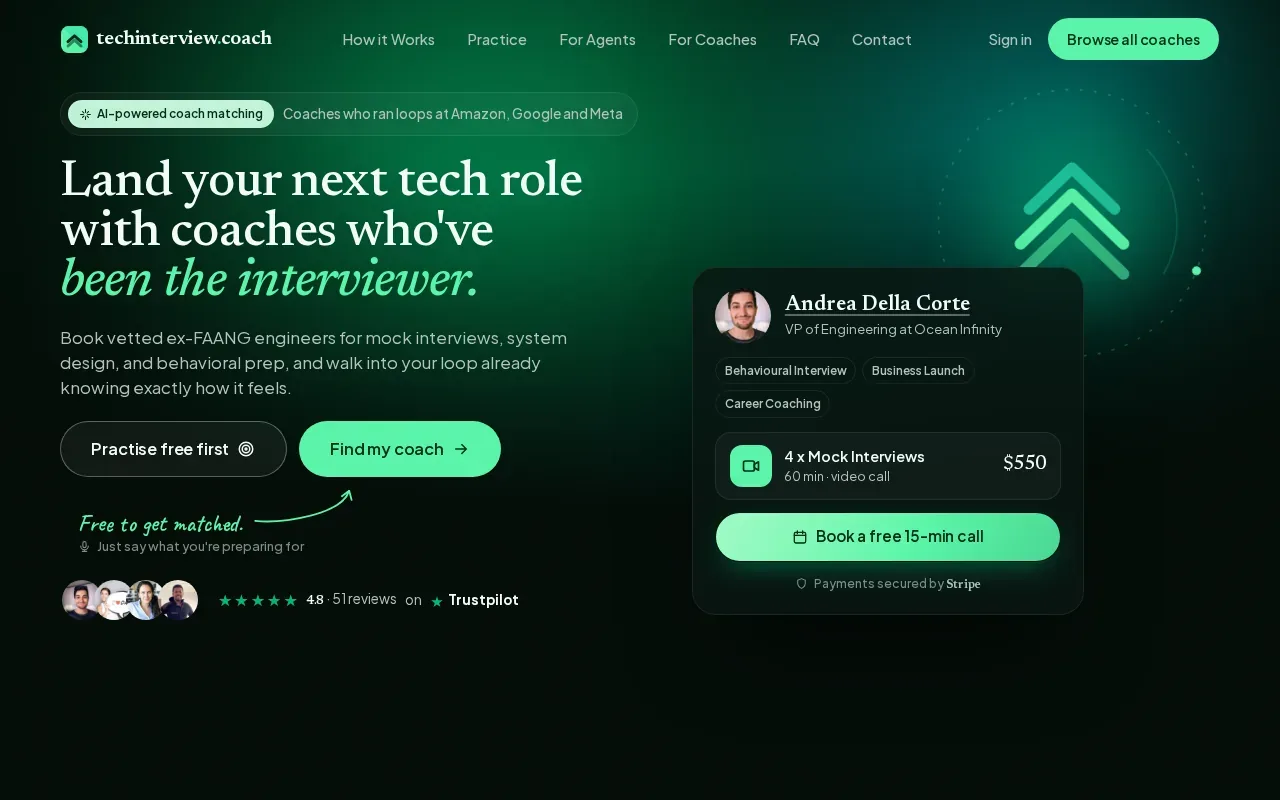
Its key distinction is coach vetting: each coach is described as a hand-verified engineer or manager who has run interview loops at companies such as Google, Meta, and Amazon. That background can help when you want a person who understands the work of conducting technical interviews, not only solving the question.
Use the chance to message a coach before you commit. Ask whether they can run a mock for the round you face, such as data structures and algorithms, system design, or behavioral questions. A clear request helps you use the session well. For example, ask the coach to interrupt when your explanation skips a trade-off, then give feedback after the mock.
Don't treat a large-company background as a promise of a particular outcome. A coach can help you prepare, but the value depends on how well their experience matches your level and target role. Check that fit in your conversation before scheduling.
This option is a natural fit when you want a human interviewer and the ability to discuss the match before your first session.
4. AI Interview Trainer: Personalized, resume-aware mock practice
AI Interview Trainer is a mock interview environment that uses candidate context to personalize practice. It is best for candidates who want resume-aware simulations across technical, behavioral, and HR interviews.
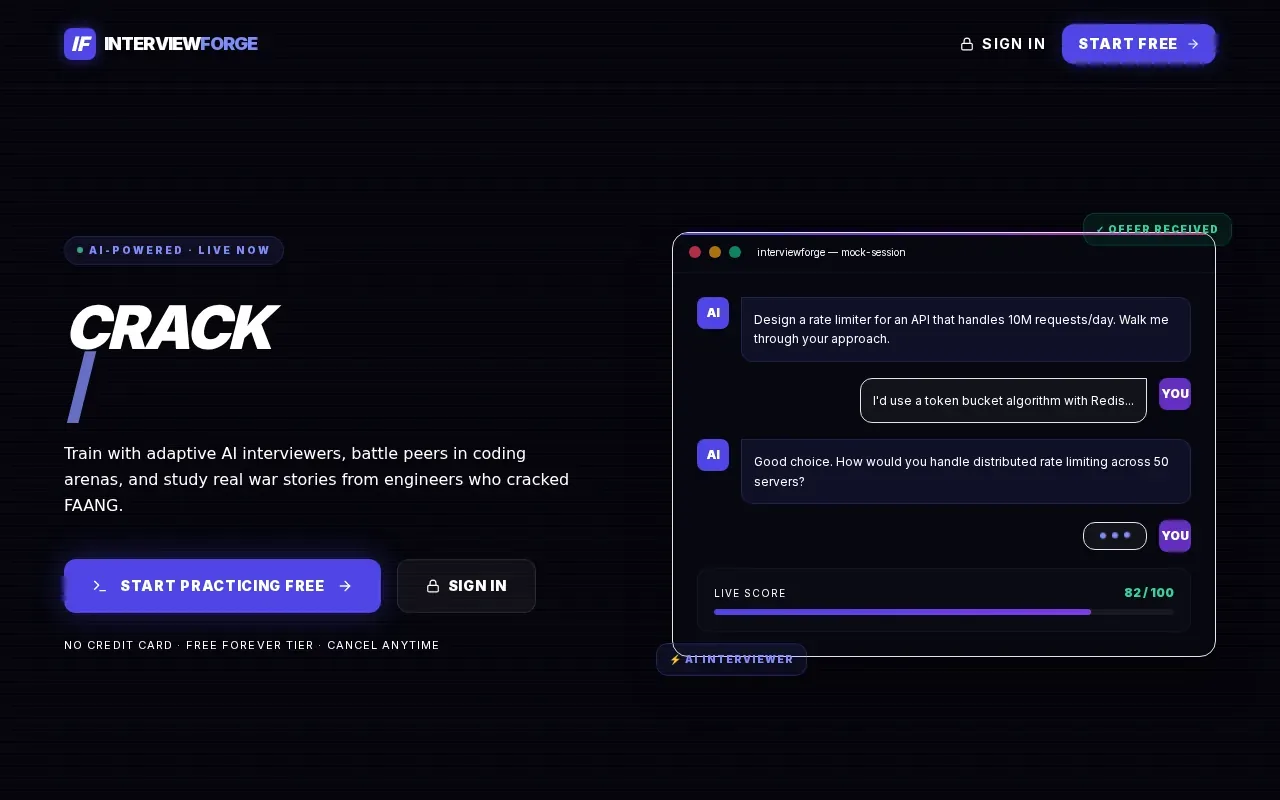
The project describes an interview agent configured in IBM watsonx Orchestrate. It uses resume information and role context to shape one-question-at-a-time practice. After each response, it provides multi-rubric evaluation and feedback. That format can make a practice round feel more focused than answering a general question list.
For example, if your resume mentions improving a service's reliability, prepare to explain the problem, your role, and how you judged the result. A resume-aware prompt can help you rehearse that story. But the answer still needs to be yours. Check that any feedback matches the work you actually did, and don't repeat model wording that overstates your role.
The tool is presented as an independent educational project, not an official IBM product. Keep that distinction in mind when assessing its role in your prep. It may work well for repeated solo practice, while a person can provide follow-up questions based on your delivery.
For behavioral answers, try a short opening line that states the problem and your role. Then use STAR: situation, task, action, result. Add a lesson when it helps, but don't force one into every answer. A mock is useful when it shows where you became vague or spent too long on background.
5. ParakeetAI: Real-time interview prompts plus mock practice
ParakeetAI combines mock interview practice with real-time prompts, a resume maker, and other interview support. It is suited to candidates who want those functions together and are willing to pay a premium.
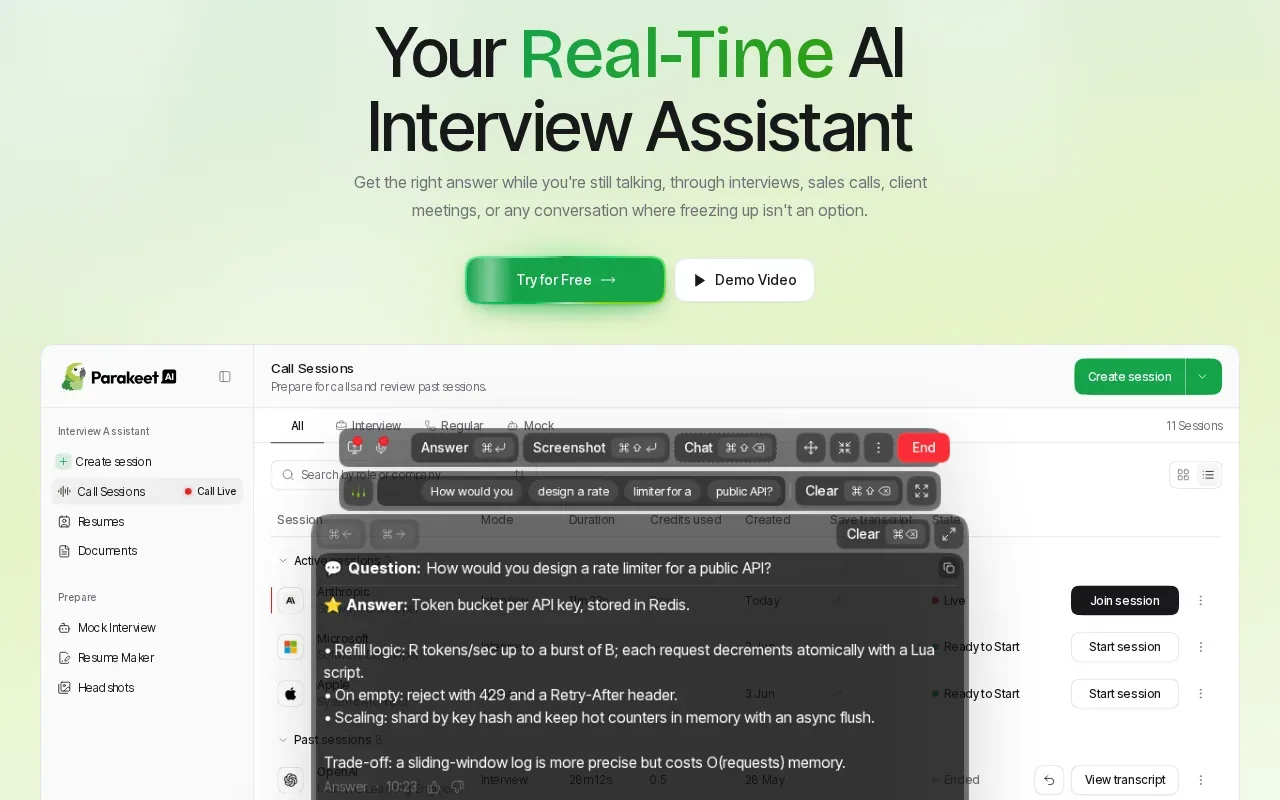
During a call, the tool can listen for an interviewer's question and suggest an answer in real time. It also supports multiple AI models, including Gemini, GPT, and Claude. That can suit someone who wants prompt support during a mock or, where permitted, a live interview.
Check how its credit use fits the length of your practice. Each call uses half a credit and covers up to 30 minutes regardless of how long the call lasts. If you plan to run a longer mock, factor that rule into your session plan before starting.
Real-time suggestions can be a prompt to organize your thoughts, but they are not a substitute for being able to explain a solution. In a coding round, practice tracing the algorithm yourself. In a behavioral round, make sure the example reflects your actual work rather than a polished answer that you can't defend in follow-up questions.
| What you need most | Option to consider | Decision point |
|---|---|---|
| Live transcription and problem-type recognition | Phantom Code AI | Useful when spoken prompts and technical questions are part of the same practice session. |
| Long-term human mentorship with repeated mocks | Formation | Consider the cost and eligibility requirements alongside the ongoing support. |
| A vetted human coach for major tech interview prep | Tech Interview Coaching | Message coaches to check fit for your role and interview round. |
| Personalized mock practice based on your resume | AI Interview Trainer | Review feedback against your real experience before using it. |
| Mock practice plus real-time prompts and resume support | ParakeetAI | Plan around the half-credit use per call and the 30-minute coverage. |
FAQ
What does a technical interview coach help with?
A technical interview coach helps you practice the skills an interview tests and shows you where to improve. A session may focus on explaining a coding solution, discussing system design trade-offs, or shaping a behavioral answer around your own work. Before booking, ask how the coach gives feedback and whether they can practice the type of round you expect.
Are AI interview coaches as useful as human coaches?
AI and human coaches help in different ways. An AI tool can make solo practice easier to repeat and may give prompt-based feedback. A human coach can respond to your delivery and ask follow-up questions in the moment. Choose based on the feedback you need, and use both if each fills a clear gap in your preparation.
How should I prepare for a technical mock interview?
Read the job description and note the skills or responsibilities it stresses. Review the company and role, then practice likely question patterns for your interview stage. For a coding mock, explain your plan before coding and test edge cases aloud. For behavioral practice, prepare a few honest STAR stories and keep each answer focused.
How do I get better at behavioral interview answers?
Use a clear structure, such as STAR, and keep the focus on your actions and the result. Start with a brief logline that connects your experience to the role. Include a specific example rather than describing what you would usually do. Practice with follow-up questions so you can explain your choices without memorizing a script.
Can I use an AI assistant during a real job interview?
Only use live assistance if the employer's interview rules allow it. Policies can vary, so check before the interview rather than assuming a tool is permitted. You can use mock mode to practice without relying on live prompts. The goal is to build explanations you can give clearly on your own when the actual interview begins.
Conclusion
If you want live technical guidance alongside transcription and problem recognition, start with Phantom Code AI. Try a mock round first, then review where your reasoning or explanation needs work before choosing any live support.