Best Software Engineering Interview Prep Course Options

Compare software engineering interview prep courses for DSA, JavaScript, system design, and interview practice. Find a fit for your goals.
Technical interviews can make a strong engineer feel like a beginner. These five options focus on different needs, from DSA drills to system design study.
We analyzed 48 comments and questions from YouTube and Quora about software engineering interview preparation courses and found that 25% mentioned excessive interview difficulty.
Table of Contents
- NeetCode: Structured DSA practice with video explanations
- Coding Interview Preparation by Meta: Interview-focused coding practice
- JavaScript Interview Challenges by Scrimba: A focused option for frontend engineers
- Formation: Adaptive practice across coding, design, and behavioral interviews
- ByteByteGo: System design preparation with subscription or lifetime access
- Compare these software engineering interview prep courses
- FAQ: Software Engineering Interview Prep Courses
- Conclusion
1. NeetCode: Structured DSA practice with video explanations
NeetCode is a pattern-based video course built around data structures and algorithms, including the NeetCode 150 and 75 problem lists. It’s a strong fit for self-learners who want to study a pattern, try related problems, then review a worked explanation.
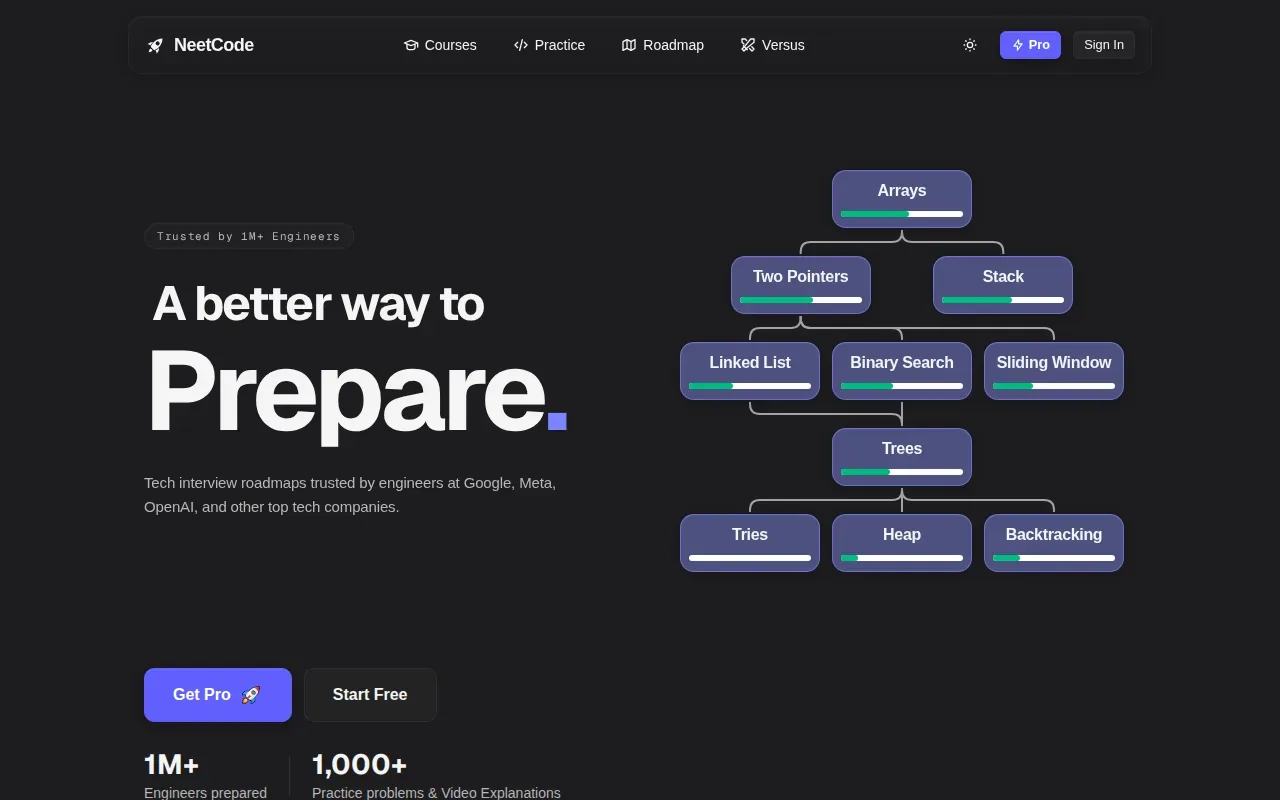
The course materials include video lessons, visual explanations, and coding examples. Problems can be grouped by topic, which helps when you keep missing the same kind of question. For instance, if a graph problem keeps slowing you down, you can focus your practice on graph patterns instead of choosing questions at random.
That structure is useful, but don’t turn the list into a box-ticking exercise. After solving a problem, explain why the pattern fits, state the time and space costs, then test an edge case such as an empty input. If you only watch a solution, you may recognize it later without being able to build it yourself.
NeetCode Pro costs $119 for one year or $297 for lifetime access. Choose it when you want a guided DSA path and video explanations. If your main gap is system design or behavioral answers, pair it with focused practice in those areas.
2. Coding Interview Preparation by Meta: Interview-focused coding practice
Coding Interview Preparation by Meta is a course for learners who want to practice the interview process alongside coding topics. It’s best for people who know some programming but need to get clearer at explaining a solution and making choices under interview pressure.
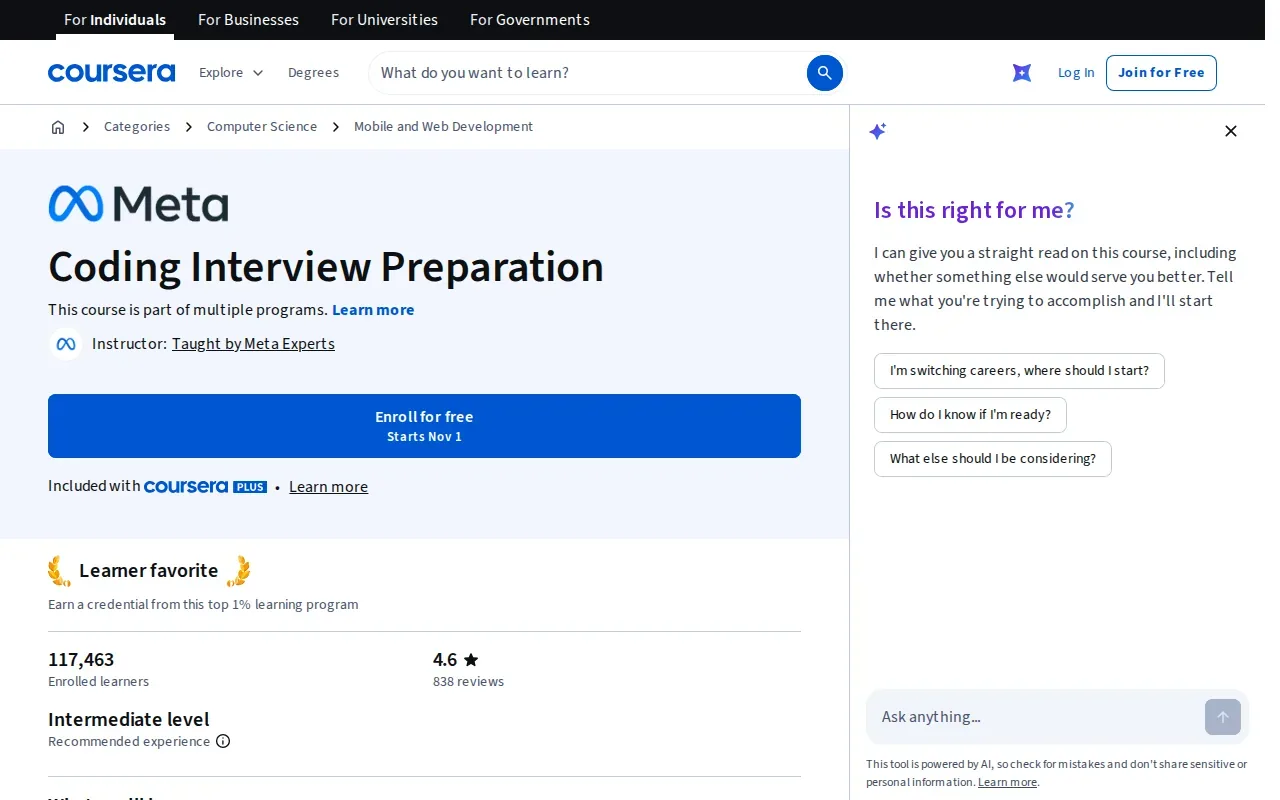
Its coverage includes data structures, algorithms, Big O notation, communication strategies, and pseudocode. That mix addresses a common weak spot: a candidate may find a correct approach but struggle to explain why it works before writing code. Practicing pseudocode first can help separate the logic from syntax.
The course also covers how to visualize an algorithm and combine coding patterns. Try that with a familiar task. For an array question, clarify what the input can contain, talk through a small example, then outline the approach before coding. Afterward, check whether your explanation matched the implementation.
It doesn’t replace repeated timed practice, though. Use the lessons to build a process, then solve new questions without following a walkthrough.
Pick this option when interview communication is as important to your prep as data structures and algorithms. It gives those skills a place in the study plan rather than treating the interview as silent coding.
3. JavaScript Interview Challenges by Scrimba: A focused option for frontend engineers
JavaScript Interview Challenges by Scrimba is a focused course for frontend developers preparing for JavaScript interviews. It suits learners who want to write code as they study rather than watch a broad set of lessons first.
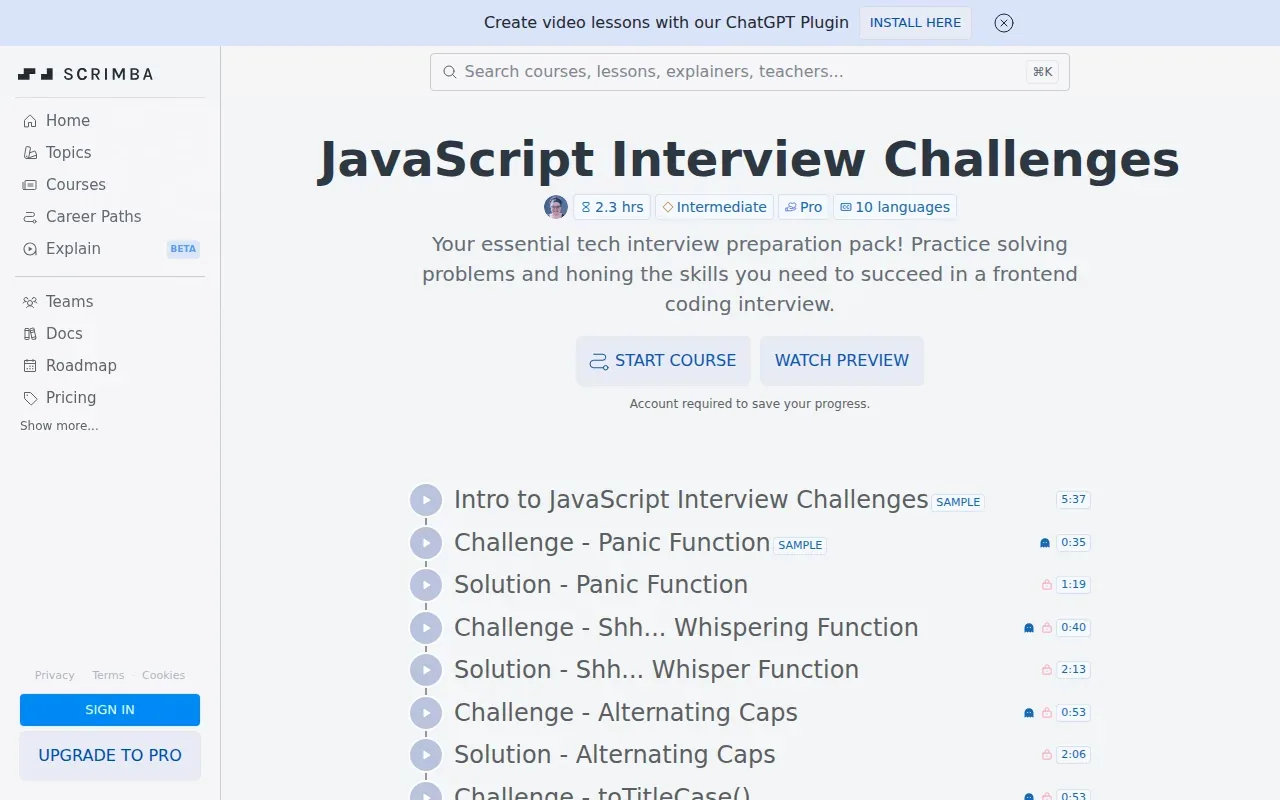
The course centers on frontend JavaScript, string manipulation, array operations, and object or data transformation. Its interactive scratchpad includes an embedded code editor. You can pause at a challenge, attempt it in the editor, then compare your work with the solution walkthrough.
That format can help you spot small gaps that are easy to miss while reading a solution. For example, when transforming an array of objects, check how your code handles a missing field or a repeated value. Then explain the choice you made, not just the final output.
It’s a narrower pick than a general DSA course. That’s useful if JavaScript is central to the role you’re targeting, but it shouldn’t be your only prep if the interview also tests graphs, trees, or system design. Keep the scope in mind before you add it to a larger study plan.
Use it to sharpen JavaScript problem-solving and practice talking through code. If you can solve the exercise only after seeing the walkthrough, revisit it later without the prompt and explain each step aloud.
4. Formation: Adaptive practice across coding, design, and behavioral interviews
Formation covers coding, system design, behavioral interviews, and hiring-manager interviews. Its adaptive daily drills and live mocks make it a fit for engineers who want guided practice across more than coding screens.
The broad scope matters when your interview loop has several different rounds. A coding screen asks you to reason through a problem and implement an answer. A system design round asks you to frame a larger problem and defend tradeoffs. A behavioral round asks you to explain past work with a clear account of your role.
Formation’s practice spans those areas, so it may suit a candidate who needs more than a question bank. Before committing, name the gaps you want to fix. For example, if your code is sound but your design answers get vague, use a mock to test whether you can state the main requirements and explain why one design choice fits them.
Cost is a major part of the decision. Formation’s Fellowship starts with $5,000 down, then a share of any salary gain once you are placed; a Monthly membership costs $2,500 a month. That makes it a different kind of commitment from a self-study course, so read the terms closely and weigh them against the coaching and practice you need.
Consider Formation when you want adaptive practice and live mocks across several interview types. If you mainly need to revisit DSA patterns on your own, a self-study option may be a better match.
5. ByteByteGo: System design preparation with subscription or lifetime access
ByteByteGo focuses on system design. It’s a good fit for engineers who need to study architecture concepts and want illustrated, text-based lessons rather than a course centered on coding drills.
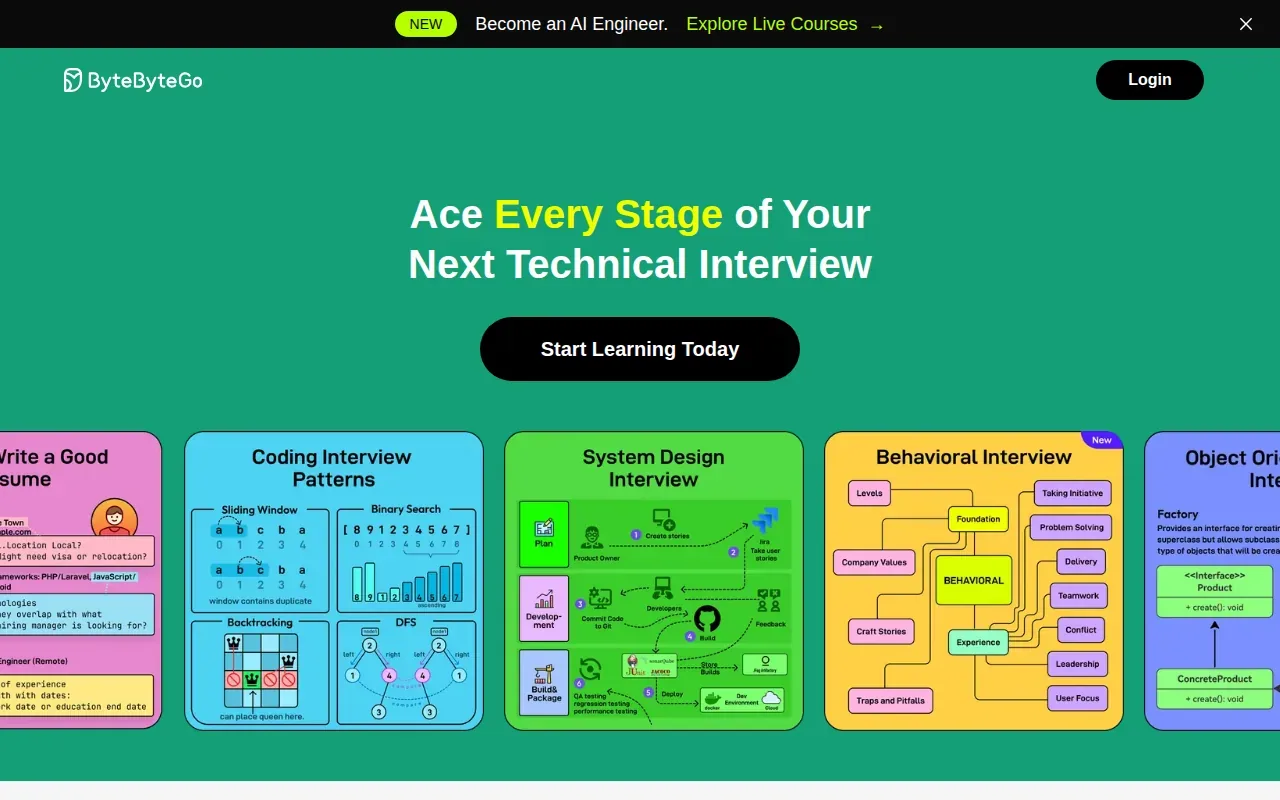
Its courses use detailed illustrations to explain interview topics step by step. That can help you see how parts of a design connect, but reading alone won’t show whether you can make decisions under questioning. After studying a concept, sketch a design from memory and explain what tradeoff you’d make if traffic or data needs changed.
ByteByteGo sells yearly and lifetime access. Read its free preview chapters to check that the lesson style works for you before buying, since its courses are not refundable.
This isn’t a substitute for DSA or behavioral practice. Treat it as a focused system design resource, then test what you learn by talking through a design out loud. Can you state the requirements, identify the main components, and defend the tradeoffs? That’s a more useful check than recognizing an architecture diagram on the page.
Compare these software engineering interview prep courses
These courses solve different prep problems, so start with the round that gives you the most trouble. For readers who want AI guidance during mock or live interviews instead of another course, Phantom Code AI is a separate kind of tool. Its AI interview preparation tool covers practice and live interview support.
| Option | Best fit | Practice style | Focus |
|---|---|---|---|
| NeetCode | Self-led DSA study | Pattern-based problems with video explanations | Data structures and algorithms |
| Coding Interview Preparation by Meta | Interview process and communication practice | Course lessons and assignments | DSA, Big O, pseudocode, communication |
| JavaScript Interview Challenges by Scrimba | Frontend engineers using JavaScript | Interactive coding scratchpad | JavaScript challenges |
| Formation | Guided practice across interview rounds | Adaptive drills and live mocks | Coding, design, behavioral, hiring-manager interviews |
| ByteByteGo | System design study | Text lessons with detailed illustrations | System design |
Price also changes the choice. NeetCode Pro is $119 a year, ByteByteGo sells yearly or lifetime access, and Formation is a much higher commitment. Meta’s course can suit learners who prefer a program structure, while Scrimba is the most specific match for frontend JavaScript.
FAQ: Software Engineering Interview Prep Courses
Which course is best for coding interview practice?
NeetCode is a strong fit for structured DSA practice with video explanations. Coding Interview Preparation by Meta is another choice if you want to work on interview communication and problem-solving alongside core coding topics. Choose based on your main gap, then practice solving unfamiliar problems without relying on a solution walkthrough.
Can one course prepare me for coding, system design, and behavioral interviews?
Formation covers coding, system design, behavioral, and hiring-manager interviews. The other options in this shortlist focus on a narrower area or format. Even with broad coverage, make time to practice each round type separately, since explaining an algorithm differs from defending a system design or telling a work story.
What should frontend developers use to prepare for JavaScript interviews?
JavaScript Interview Challenges by Scrimba is aimed at frontend developers preparing for JavaScript interviews. It covers string and array work plus object or data transformation, with an embedded editor for trying challenges. Use it for language-focused practice, and add DSA or system design study if those topics appear in your target interview loop.
Are interview prep courses enough without mock interviews?
Courses can build knowledge, but mock interviews let you test how you explain and apply it under questioning. Formation includes live mocks, while other options emphasize lessons or individual practice formats. You can also rehearse aloud with a peer. Review where you paused, missed an edge case, or struggled to explain a decision.
Conclusion
Match your course to the round you need to improve: NeetCode for structured DSA, Scrimba for frontend JavaScript, or ByteByteGo for system design. If you need support during mock or live interviews, consider Phantom Code AI as a separate tool. Start by choosing one weak area and scheduling your first focused practice session.