Best Coding Interview Coaching Options

Compare coding interview coaching for DSA, system design, and behavioral prep, with live AI guidance, human mock interviews, study tools, and pricing.
Solving more problems doesn’t always make interviews feel easier. The missing skill may be explaining your plan while you work. These coding interview coaching options range from live AI help to human mock interviews and self-paced study, so you can match your prep to the gap you need to fix.
We analyzed 52 YouTube comments about coding interview coaching and found that 17% mentioned reliance on AI tools.
Table of Contents
- interviewing.io: Anonymous mock interviews with calibrated feedback
- Prepfully: Coach-matched sessions for a focused diagnostic
- I Got An Offer: Credit-based mock interviews for targeted practice
- Formation: Intensive support for engineers seeking deeper preparation
- NeetCode: Structured DSA study with Blind 75 and NeetCode 150
- ByteByteGo: System design preparation from an interview-focused author
- Compare the coding interview coaching options at a glance
- FAQ: Coding Interview Coaching
- Conclusion
1. interviewing.io: Anonymous mock interviews with calibrated feedback
interviewing.io connects candidates with senior engineers from top companies for anonymous, recorded mock interviews and calibrated feedback. It covers coding interviews along with system design, machine learning, and behavioral rounds. You pay per session, so check its site for the current rate.
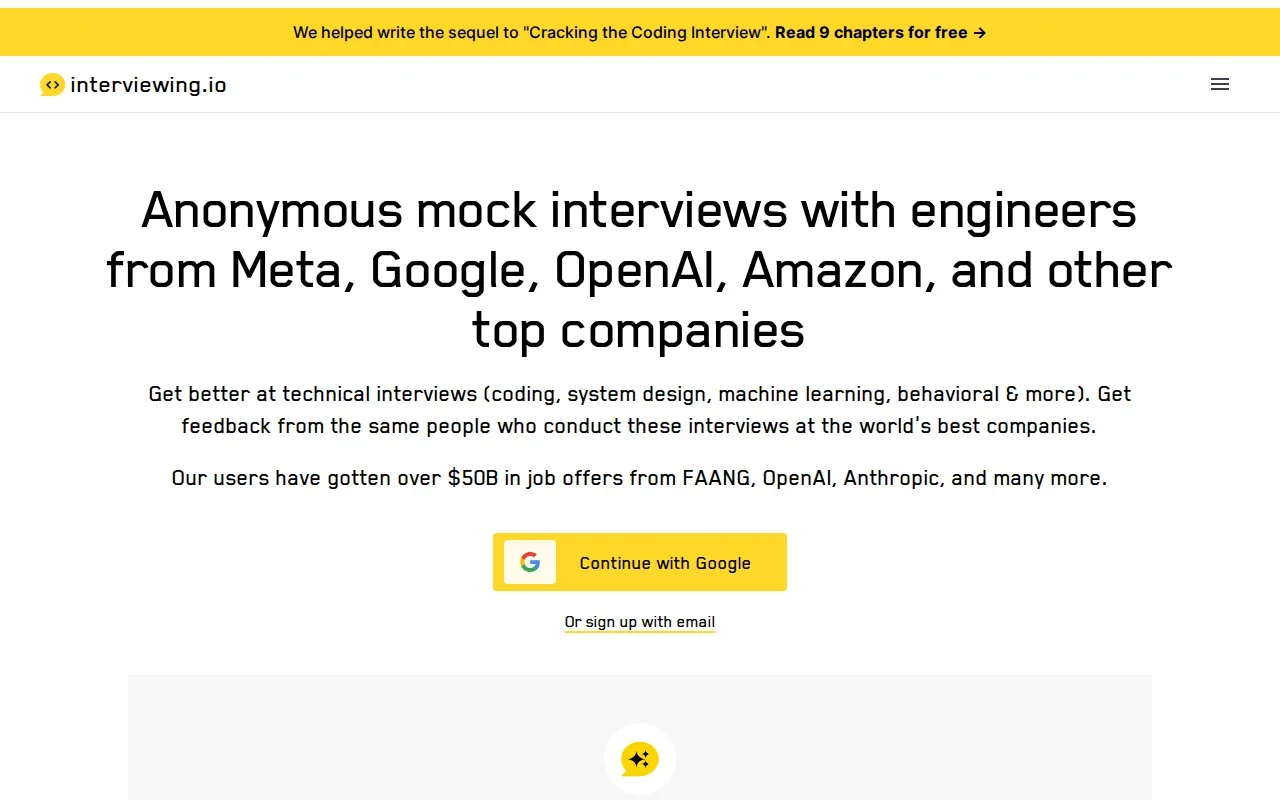
This is a strong match for candidates who can solve problems alone but want a closer test of how they perform in a high-stakes loop. A recorded mock can help you review whether you clarified the prompt, shared your plan, and checked edge cases before wrapping up. The anonymity may also help you focus on the interview itself rather than on who is evaluating you.
Use the session as a diagnosis, not as a substitute for ongoing study. Before the mock, pick one question you want answered: Do you explain tradeoffs clearly? Do you start coding too soon? Can you recover when your first idea fails? Afterward, turn the feedback into a short practice plan and test one change in your next round.
Because the feedback comes after the mock, it’s best when you want an outside view of a full attempt. If you’re still learning core data structures, pair a mock with focused study rather than expecting one session to teach every pattern.
2. Prepfully: Coach-matched sessions for a focused diagnostic
Prepfully is a coaching marketplace where you can book sessions for interview practice and other career support. Coaches listed on its site charge about $169 to $679 a session, depending on whom you book.
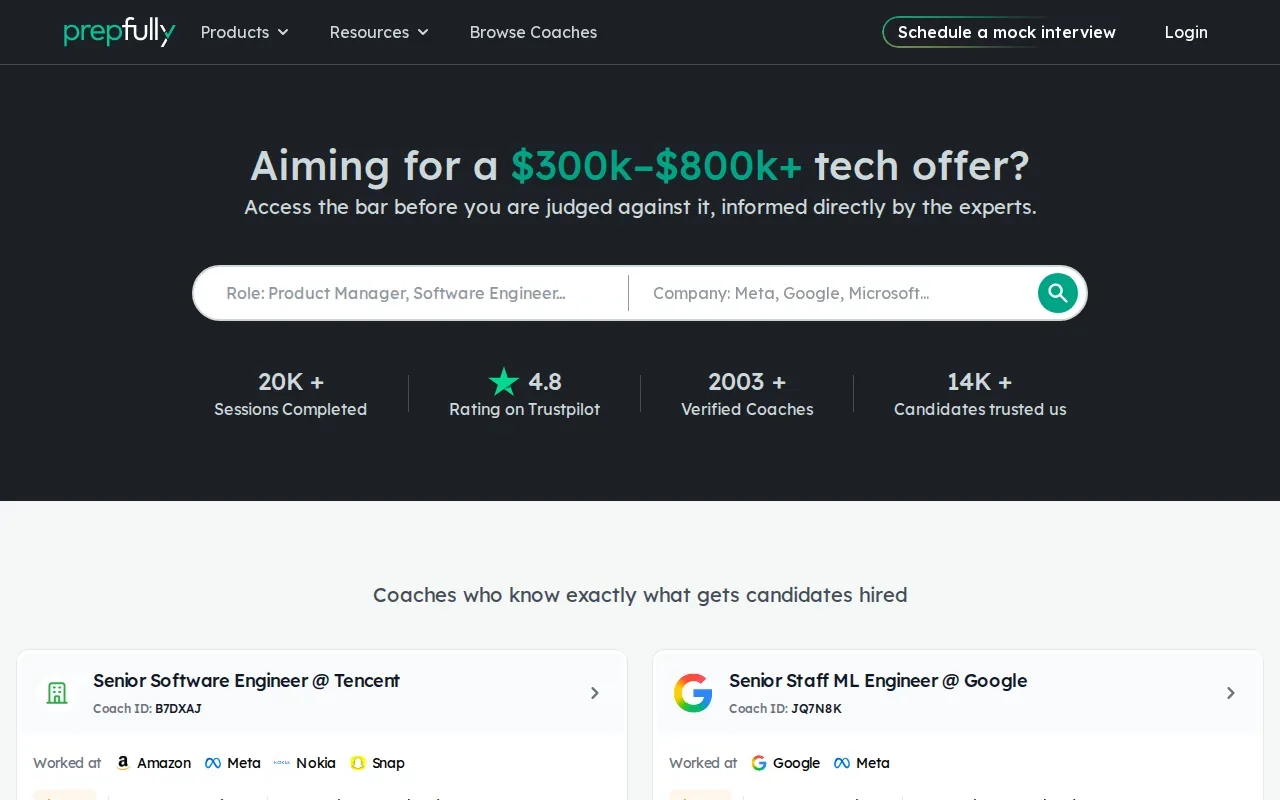
Consider Prepfully when you want to choose a coach around a specific interview need. A focused session could center on a system design prompt, a coding round, or how you explain a project. Before booking, check the coach’s listed background and make sure the session topic matches the role and interview stage you’re preparing for.
Bring a job description and a clear goal. If your main issue is that you spend too long exploring approaches, ask the coach to watch your pacing. If you’re unsure how to handle a behavioral round, prepare one story and ask for feedback on how clearly you explain the situation, your actions, and the result.
One session is most useful when it ends with a specific next step. Write down the feedback in your own words, then practice the same skill in a later mock. Since coach rates vary, compare the person’s expertise and session focus alongside the cost, rather than choosing by price alone.
3. I Got An Offer: Credit-based mock interviews for targeted practice
I Got An Offer sells one-hour coaching sessions with an interviewer, and the rate depends on the coach you book. This format suits candidates who want a diagnostic mock and a chance to focus on a particular interview round.
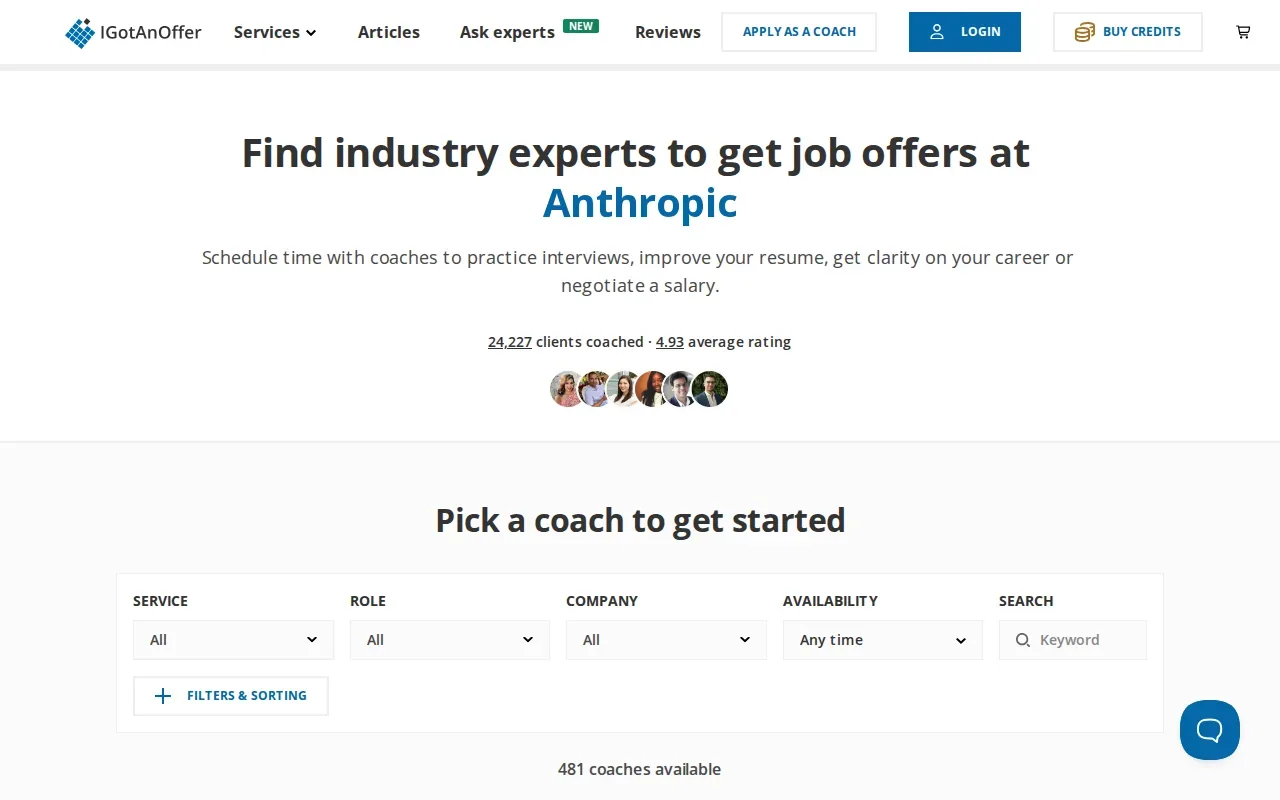
A one-hour session can work well when you arrive with a narrow question. For instance, ask the coach to focus on how you handle an ambiguous prompt, or whether your explanation of a design tradeoff is clear. Share your focus before the session so you can use the time to practice a specific skill.
Before booking, consider which interview round you want to practice and what feedback would be most useful. Bring a concrete example, such as a problem where you found it difficult to explain your approach, and ask for feedback on that explanation.
Use the debrief to build your next practice session. If the coach flags a weak explanation of time complexity, solve a related problem while saying the complexity out loud. If you struggle to answer behavioral questions, rehearse one work story with a clear beginning, action, and outcome.
4. Formation: Intensive support for engineers seeking deeper preparation
Formation provides ongoing interview preparation with adaptive drills and live coaching. Its Fellowship is $5,000 down, then a portion of your salary gain once you land a role, and it also lists a $2,500-a-month membership and a $299 one-time diagnostic mock. The service is aimed at engineers who want deep support across interview types, including coding and system design, rather than a single mock session.
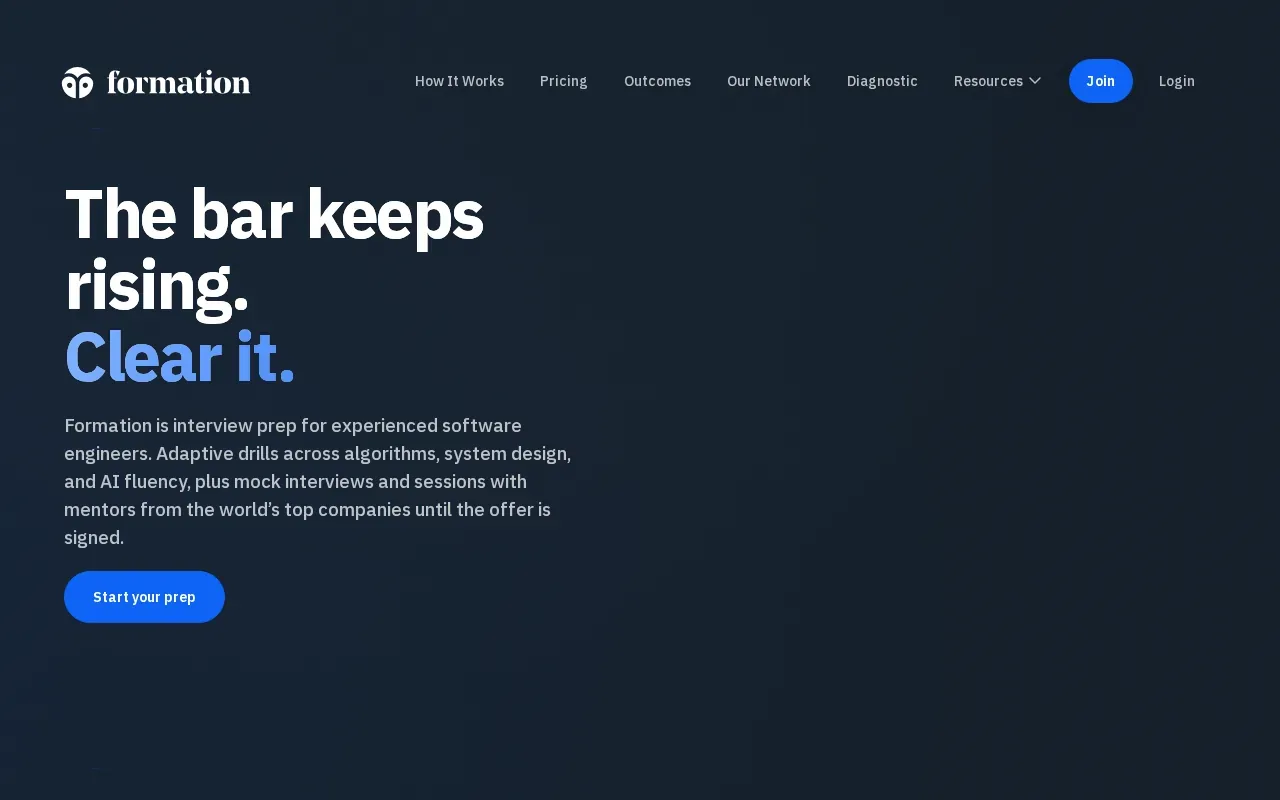
Its preparation can adapt to target companies, interview timing, mentor feedback, and mock performance. That setup may suit an experienced engineer who has reached several interviews but still sees a pattern in the rounds that go poorly.
Before taking on a high-cost program, name the gap you need it to close. A useful case for deeper support is repeated difficulty across different interviews, even after focused study and a few mocks. A less clear case is simply feeling unprepared before your first technical screen. In that situation, structured self-study or one diagnostic session may help you decide what to work on next.
The down payment makes the financial commitment worth examining closely. Read the terms and ask how payment changes under the plan you’re considering. Choose this route when you need sustained coaching and a clear plan, not just a quick confidence boost.
5. NeetCode: Structured DSA study with Blind 75 and NeetCode 150
NeetCode is a self-study option built around data structures and algorithms. Its NeetCode 150 adds 75 problems to the Blind 75 and is intended for people who already know basic algorithms and data structures. It has a free tier.
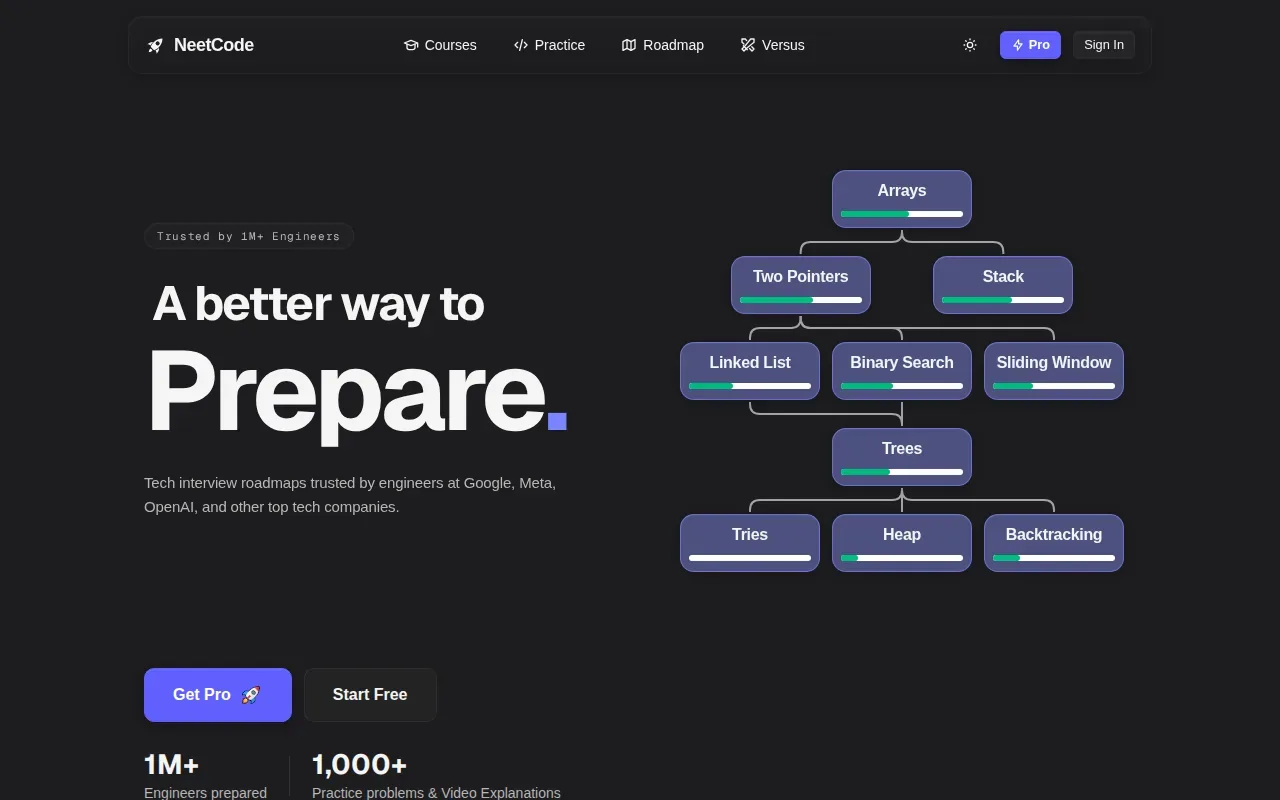
Choose it if you know the basics but need an ordered way to practice patterns instead of picking problems at random. When working through a problem, pause before coding. State what the input means, outline a possible approach, and consider a small test case. That habit helps turn a question list into interview practice.
Self-study costs less than live coaching, but it won’t give you the same human response to your explanation. You can still build communication practice into a solo session: speak your approach out loud, explain why a data structure fits, then walk through the code with an edge case.
A study list is most useful when you review mistakes rather than count completed questions. If you miss a problem, note the pattern you overlooked and try a related one later. Add a mock interview when you want someone else to judge your pacing or communication.
6. ByteByteGo: System design preparation from an interview-focused author
ByteByteGo is a self-paced resource for system design interview preparation. Its courses use text and detailed illustrations to explain interview concepts step by step. It sells yearly or lifetime access.
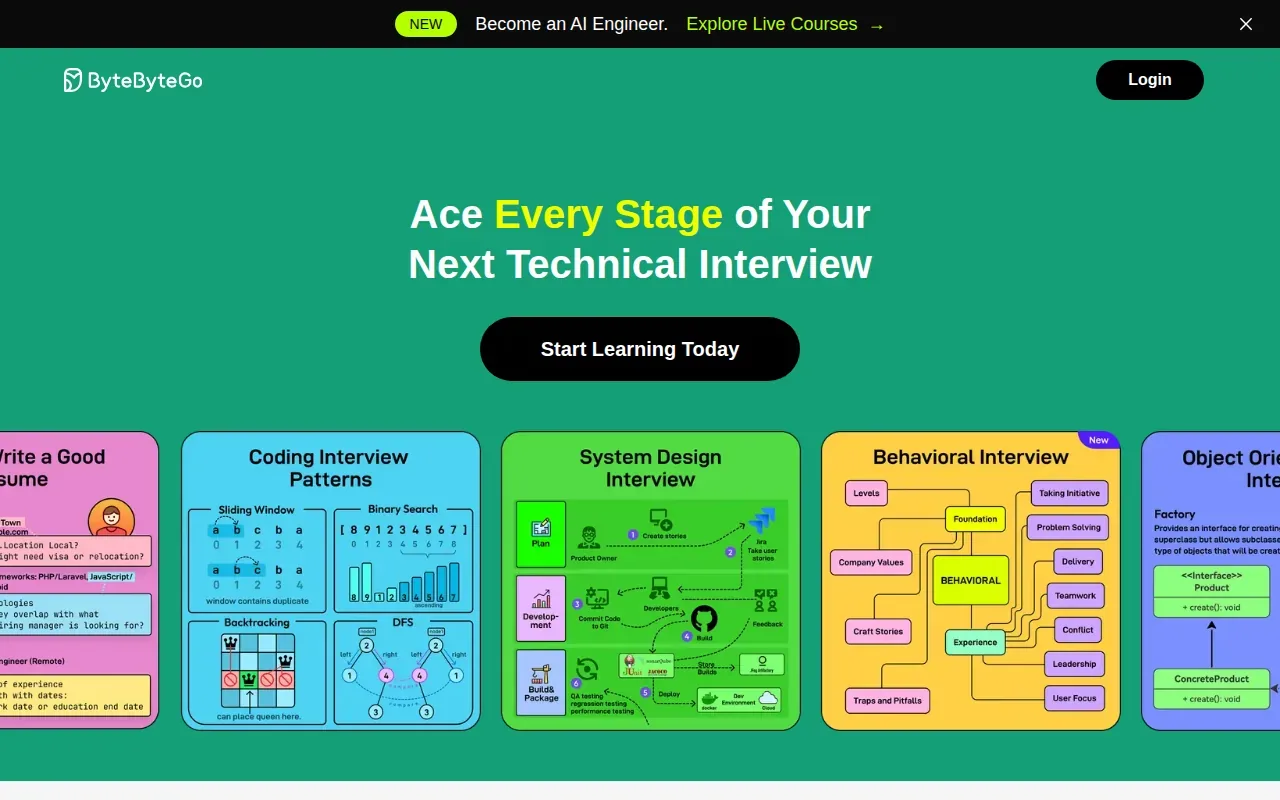
This is a useful fit if system design is the round you need to prepare for. Work through a design prompt by first clarifying what the system must do. Then sketch the main parts and explain why you chose them. For a feed or messaging system, for example, discuss how requests move through the system and where you’d need to make tradeoffs.
Self-paced lessons let you stop and review a concept before applying it. But reading a design walkthrough is different from defending your choices in a conversation. After studying, close the material and explain the design aloud. Notice where you rely on terms without explaining what they mean.
Compare the coding interview coaching options at a glance
The right fit depends on the kind of feedback you need. A practice list can help you learn patterns. A human mock can show how your reasoning lands with another person. Live AI guidance is a different kind of support, aimed at the moment you’re working through an interview problem.
| Option | Starting price | Live session | Best fit |
|---|---|---|---|
| interviewing.io | Per session, see website | Yes, anonymous mock | Recorded mock and calibrated feedback |
| Prepfully | $169 | Yes, coach sessions | Focused coach-led diagnostic |
| I Got An Offer | Per session, see website | Yes, coach sessions | Targeted one-hour mock |
| Formation | $2,500 a month, or $5,000 down plus a salary share | Yes, coach support | Deeper, ongoing preparation |
| NeetCode | Free tier | No, self-paced | Ordered DSA study |
| ByteByteGo | Yearly or lifetime, see website | No, self-paced | System design study |
For many engineers, several focused weeks of practice are easier to manage than a last-minute problem binge. Set aside time to study a pattern, then solve a timed problem while explaining your plan. Add a mock when you want direct feedback. Include system design and behavioral practice if those rounds are part of your loop.
Keep a short review log. After each practice round, record one thing that worked and one change to test next time. If stress makes you freeze, take a brief break between sessions and use a few slow breaths before restarting. The point is to make practice repeatable, not to fill every free hour.
FAQ: Coding Interview Coaching
Is coding interview coaching worth it?
It can be worth it when you know what feedback you need and can use it in later practice. A coach may spot unclear reasoning or weak pacing that’s hard to notice alone. If you’re still learning basic DSA concepts, begin with structured study. Add a mock once you can solve problems and want feedback on how you communicate.
How many weeks should I prepare for a coding interview?
There isn’t one timeline that fits every engineer. A few focused weeks can give you time to review DSA patterns, practice explaining solutions, and run mock rounds. Start with the date of your interview and the gaps you’ve noticed. Spend more time on weak areas instead of trying to complete a fixed number of questions.
What should I say during a coding interview?
Say what you understand about the prompt, then ask about unclear inputs or constraints. Explain a possible approach before coding, including why it fits. As you work, describe important choices and test the result with an example. If you get stuck, say what you’ve tried and ask a focused question instead of going silent.
Can AI coaching replace a human mock interview?
No single format covers every need. AI guidance can help while you work through a problem, while a human mock gives you a person’s response and feedback after the session. Self-study helps build knowledge between them. Choose based on the gap you’re trying to address, and practice without assistance too.
Conclusion
Pick the format that matches your current gap: self-study for DSA patterns, a human mock for outside feedback, or Phantom Code AI for real-time guidance. Choose one option and schedule a focused practice round this week. Afterward, write down one change to test in your next session.