
A timer can show whether you can solve a problem under pressure. A hint can help you learn when you get stuck. The platforms below balance those needs in different ways, while Phantom Code AI can add real-time guidance during mock or live technical interviews.
Table of Contents
- HackerRank: Pattern-focused hints for timed coding practice
- CodeSignal: Algorithm hints with interview-style assessment practice
- NeetCode: Curated interview roadmaps with AI hints and debugging
- AlgoMonster: Pattern-based learning beyond rote memorization
- Pramp: Built-in timers for peer-to-peer mock interviews
- Compare the platforms: hint support, timing, and best fit
- Frequently Asked Questions
- Conclusion
1. HackerRank: Pattern-focused hints for timed coding practice
HackerRank gives data structures and algorithms practice with hints tied to common patterns. It suits candidates who want to work on core topics, then review where their approach went off track.
Hints can point toward a pattern such as sliding window, DFS or BFS, or dynamic programming. They can also nudge you to check edge cases or think about time and space complexity. That kind of prompt is useful when you need a clue, but want to write the solution yourself.
The developer side is free. Without a plan, it can be harder to pick the next problem.
One caveat: the information here confirms hint support, but not a built-in timer for every practice problem. If you need timed rounds, set a separate clock and keep it fixed. For a closer look at assessment pacing, read advice for HackerRank and CodeSignal online assessments.
2. CodeSignal: Algorithm hints with interview-style assessment practice
CodeSignal combines algorithm practice with hints about common problem patterns. It may suit candidates who want to build their pattern recognition before an assessment-style session.
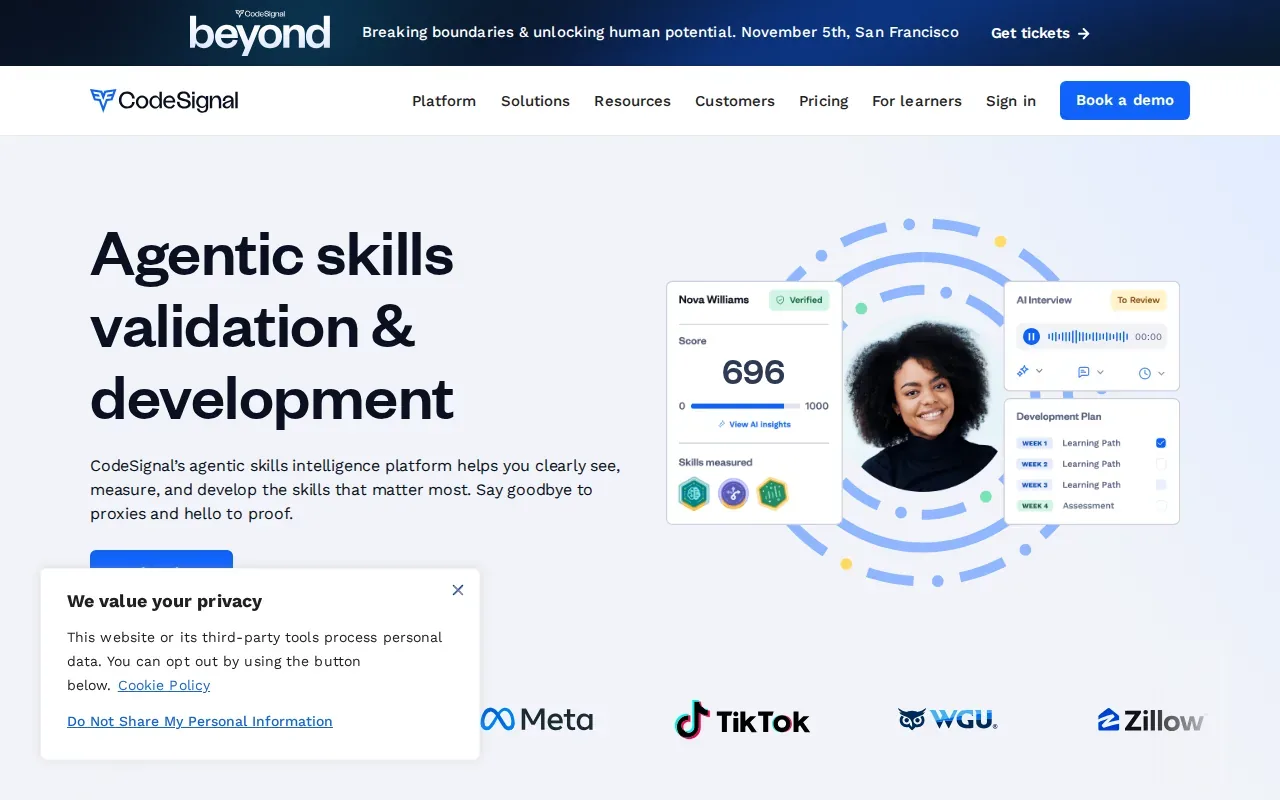
You may get a nudge to check an edge case or consider time and space complexity. These prompts can help you choose a direction without spelling out the full solution.
That difference matters during practice. If an array problem stalls you, a cue toward a sliding window can help you test an approach. You still need to decide what the window tracks and how it changes when the next value arrives. Use the hint to restart your reasoning, not to skip it.
The documented material doesn't establish a built-in timer for each practice problem. So if your goal is timed algorithm practice with hints, treat the hint and the clock as separate parts of your routine unless the session itself provides a timer. Keep a note of whether you solved the problem alone or after a clue. That makes it easier to choose what to retry later.
CodeSignal is a better fit when guided pattern work matters more than a confirmed in-platform timer. Check the assessment format you expect before relying on it for a timed simulation.
3. NeetCode: Curated interview roadmaps with AI hints and debugging
NeetCode pairs a curated set of interview problems with AI hints and debugging support. It suits candidates who want a clear study path rather than an open-ended problem bank.
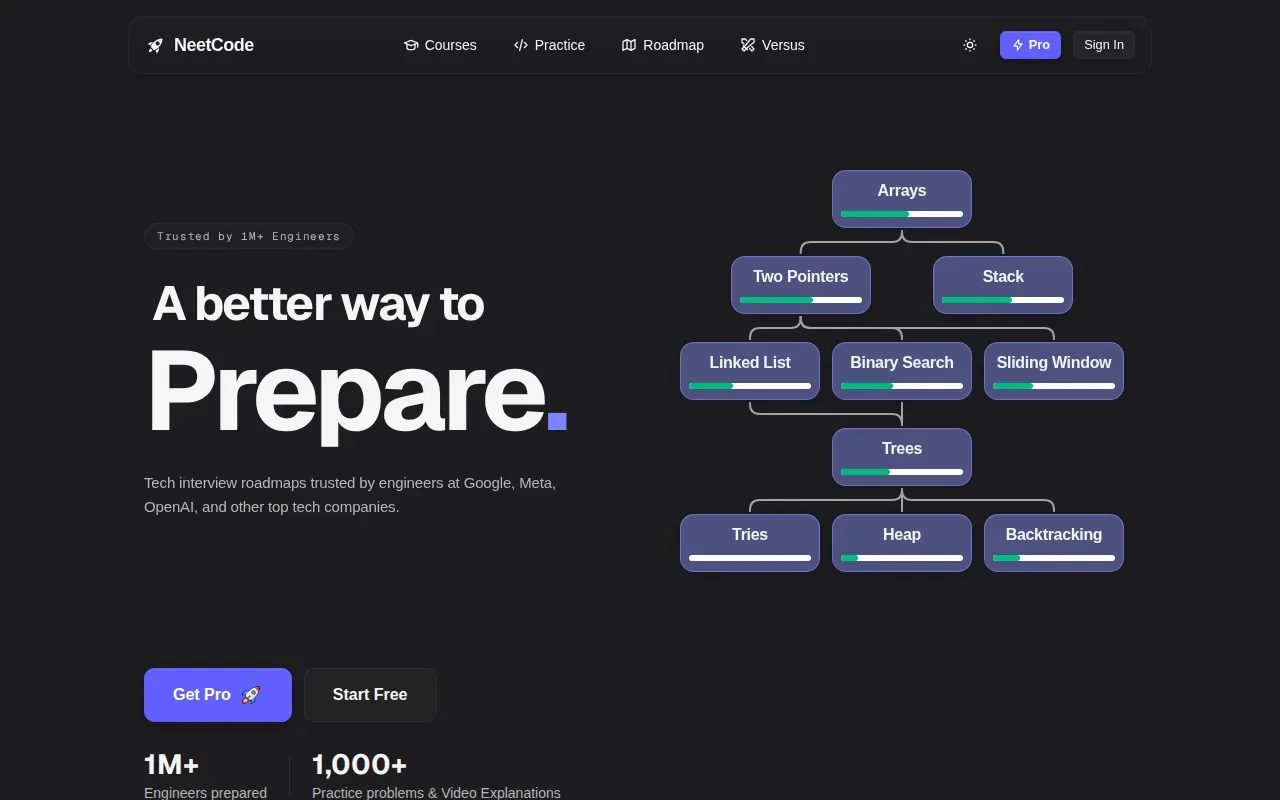
NeetCode 150 and Blind 75 are well-known study lists among candidates preparing for technical interviews. A roadmap can make focused practice easier to plan.
AI hints and debugging support can help when you have made a real attempt but can't spot the bug or the likely pattern. For example, if your graph traversal misses a disconnected node, use the guidance to inspect your visited-state logic. Then close the hint and explain the fix in your own words. Reading the answer without re-solving can make a familiar problem feel easier than it is.
The main trade-off is timing. The information available here doesn't confirm a built-in timer, so use a separate clock for timed drills. Phantom Code AI addresses a different practice moment: its desktop assistant is described as providing real-time guidance during mock or live technical interviews.
Choose NeetCode when structure and guided review are the priority. Add a timer when you want to test how well that learning holds up under pressure.
4. AlgoMonster: Pattern-based learning beyond rote memorization
AlgoMonster focuses on building problem-solving skills through pattern-based learning. It suits candidates who want to understand why an approach works instead of memorizing a finished answer.
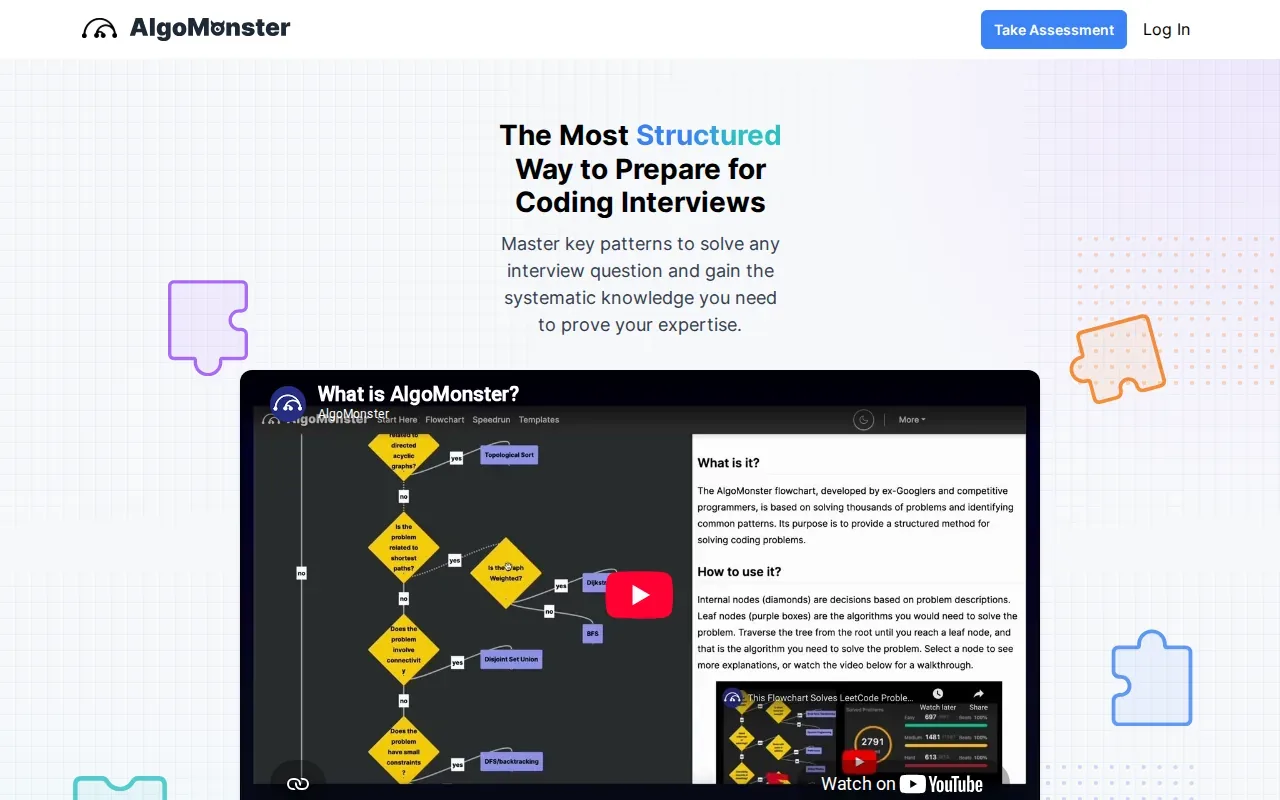
That focus helps when two questions look different but rely on the same idea. A learner who understands how to recognize a pattern can test whether it applies to a new prompt, rather than trying to recall one exact solution. AlgoMonster is positioned as a structured option for coding interview preparation.
There is a limitation for this specific search. The available details don't list a built-in timer or a hint mechanism for AlgoMonster. That doesn't prove the platform has no such features, but it means you shouldn't choose it on the assumption that guided, timed drills are included. Confirm the current practice tools before making it your main timed resource.
If your study time is mostly about learning a topic, pattern-focused instruction may be a good fit. If you need to rehearse a strict clock, plan a separate timed session and see whether you can apply the pattern without prompts.
5. Pramp: Built-in timers for peer-to-peer mock interviews
Pramp pairs candidates for peer mock interviews with a built-in timer. It's the clearest choice here for practicing the feel of a live session with another person.

A session runs 30 to 45 minutes, according to the available description. That window gives you a chance to work through a problem while speaking to a peer, rather than solving silently in an editor. The format can help you notice when you stop explaining your reasoning as soon as the code gets difficult.
Pramp is described as a free peer-to-peer mock interview option. The trade-off is that peer practice is different from a hint system that guides you through algorithm patterns. You may get discussion from your partner, but the listed details don't establish built-in algorithm hints. Use it to practice communication and pacing, then review the problem afterward if you still need topic guidance.
Pick Pramp when you need another person and a clock more than an on-demand hint. Before a session, choose one topic to focus on, such as stating your assumptions before coding. A clear focus makes the debrief easier to use.
Compare the platforms: hint support, timing, and best fit
The best platform depends on what you want the session to train. Some give pattern cues, while Pramp is described with a built-in timer for peer mock interviews. Where the available details don't confirm timing, treat that as something to verify rather than assume.
| Platform | Hint approach listed | Timer detail listed | Best fit |
|---|---|---|---|
| HackerRank | Pattern cues, edge-case suggestions, complexity nudges | Not confirmed in the available details | Broad data structures and algorithms practice with hints |
| CodeSignal | Pattern cues, edge-case suggestions, complexity nudges | Not confirmed in the available details | Guided pattern practice |
| NeetCode | AI hints and debugging support | Not confirmed in the available details | Curated roadmaps and guided review |
| AlgoMonster | Not confirmed in the available details | Not confirmed in the available details | Pattern-based interview learning |
| Pramp | Not confirmed in the available details | Built-in timer for 30 to 45 minute mock interviews | Peer practice under a clock |
For a focused solo drill, start with the platform whose hint style matches your sticking point. For live pacing and verbal practice, try a peer session. If you need both, combine a guided problem session with a separate mock interview instead of expecting one tool to cover every part.
Phantom Code AI is another option when you want real-time guidance during a mock or live technical interview. It's distinct from a curated problem bank or peer-matching session, so compare it based on the kind of practice you need.
Frequently Asked Questions
Which platform is best for timed algorithm practice with hints?
HackerRank is a strong fit for pattern hints, while Pramp has a listed built-in timer for peer mock interviews. The available details don't confirm that every platform combines both features in one problem session. Decide whether you need solo guidance or live pacing first, then add a separate timer or mock if needed.
Which platform gives AI hints for coding problems?
NeetCode is the option in this shortlist with AI hints and debugging support listed. Its curated roadmaps can help you keep practice focused, while the hints can give you a nudge when you get stuck. Try to solve the problem again without the hint before moving on.
Can I practice coding interviews with a timer and a partner?
Yes. Pramp pairs candidates for peer mock interviews and includes a 30-to-45-minute timer, based on the available details. This can help you practice explaining your thinking while working under a clock. It isn't described as an algorithm hint system, so plan a separate review if you need help with the underlying pattern.
How can I use hints without relying on them?
Make an initial attempt before opening a hint. Write down the pattern you suspect and one approach you could test. If you need help, use the smallest clue available, then hide it and continue. Afterward, solve the problem again without help and note which step caused trouble.
Conclusion
For pattern cues, start with HackerRank; for timed peer practice, try Pramp. If you want real-time guidance during a mock or live technical interview, consider Phantom Code AI as a separate aid. Pick one problem today, set a firm time limit, and record whether you needed a hint.