Best Coding Interview Prep: 6 Tools Compared

Compare coding interview prep tools for DSA, system design, and mock interviews. Find a fit for your experience, practice style, and budget.
The best coding interview prep tool depends on the work you need to do: learn patterns, solve more problems, or practice speaking under pressure. Phantom Code AI is built for live guidance, while the other picks focus on lessons, question practice, or peer and engineer-led mocks. Here are six options and the role each can play.
We analyzed 31 YouTube comments about coding interview preparation and found that 26% mentioned stressful and unfair interview practices.
Table of Contents
- Phantom Code AI
- Educative
- LeetCode Premium
- Interviewing.io
- AlgoExpert
- Pramp
- Compare the Six Options and Build a Balanced Prep Plan
- FAQ: Best Coding Interview Prep
- Conclusion
1. Phantom Code AI
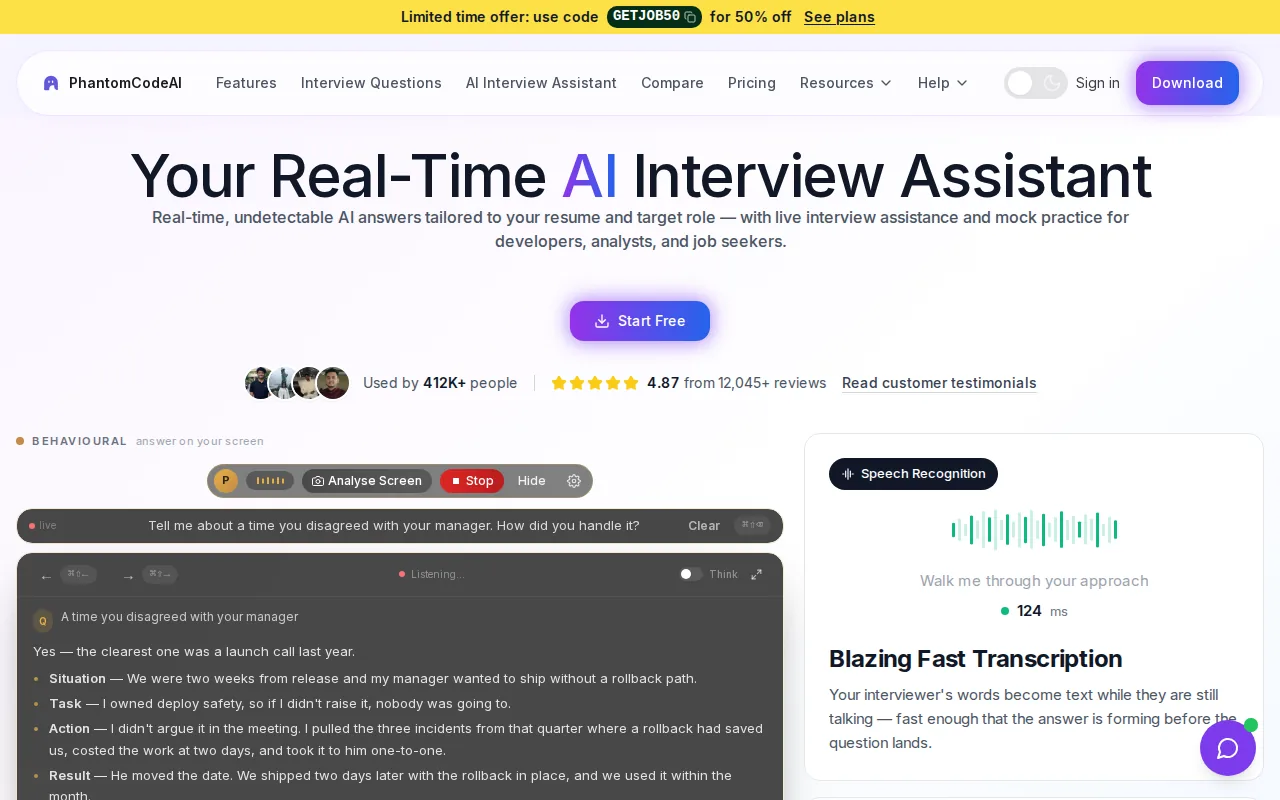
Phantom Code AI is a desktop assistant for software engineers preparing for technical interviews. It listens to interview dialogue, transcribes speech, recognizes problem types, and gives real-time guidance. That makes it a fit for candidates who want support while explaining an approach or working through a coding prompt.
Ready to practice with live guidance?Learn about Phantom Code AI →
For example, if an interviewer asks you to find a pair of values that meet a target, you still need to talk through the input and your plan. The assistant can follow the spoken exchange and identify the problem type. That differs from a question bank, where you choose a prompt and work through it on your own.
Phantom Code AI runs on macOS and Windows. Its website lists weekly, monthly, and yearly subscriptions, along with one-time credit packs. Paid plans start at $19. The best fit is a candidate who wants live assistance during practice or interview scenarios, rather than only a library of problems.
Live guidance should support your thinking, not replace it. Use it to notice a pattern or regain your footing, then make sure you can explain the choice and test your code yourself.
For a broader view of the product, read an overview of Phantom Code AI.
2. Educative
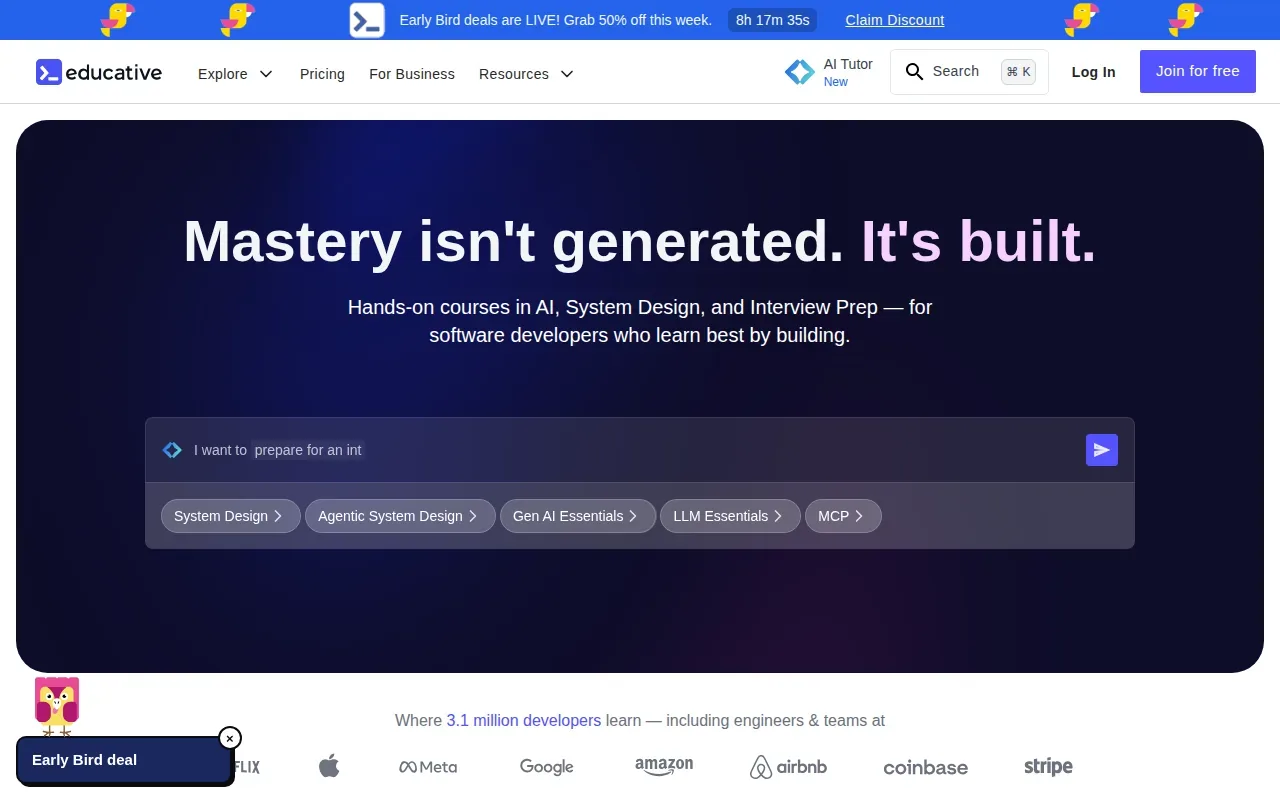
Educative is a structured, pattern-based learning platform for coding interview preparation. It suits candidates who want a guided path through problem types, especially when a large, open-ended problem bank feels hard to organize.
A pattern approach helps you ask what shape a problem has before writing code. A prompt about a moving range of values may suggest a sliding window. A tree question may call for depth-first or breadth-first search. Learning these patterns gives you a way to compare new prompts with techniques you already know.
Educative is also a fit for candidates who want to build volume and work on company-specific problems. Rather than jump between random questions, you can use a structured course as the learning layer, then test yourself with mixed questions where the topic label is hidden.
That second part matters. If you always know the chapter’s pattern, the lesson can give away the main decision. After you study a topic, solve a new problem without hints. Explain why the technique fits, then check the edge cases. For a refresher on complexity language, Wikipedia’s overview of Big O notation defines how it describes an algorithm’s growth as input size changes.
Educative is best used to learn and connect ideas. Add timed practice or a mock interview when you need to show that you can find a pattern without the course title pointing you toward it.
3. LeetCode Premium
LeetCode Premium is a paid option for candidates who want a large question collection organized by topic and company. It works well for focused practice when you already know what to review, or when you want to align your study with target employers.
A company-tagged prompt can help you narrow a broad library into a more targeted session. Topic sorting also lets you spend time on one weak area, such as arrays or dynamic programming, before switching to mixed practice. Keep a short error log: note the pattern you missed, the bug you made, and the test case that would have caught it.
Premium includes AI tools that can brainstorm approaches, optimize code, generate test cases, and help debug. It also provides priority judging, with judging up to 10 times faster during peak hours. The product lists a limit of up to 30 solution analyses per day, so plan those analyses around questions where feedback will help you make a decision.
Use the AI features after making your own attempt. First write down a likely approach and its time complexity. Then compare your reasoning with the feedback. That keeps the tool from doing the core interview work for you.
LeetCode Premium is strongest as a question-practice layer. It is less like a course or a live mock interview, so pair it with a way to explain your thought process aloud.
4. Interviewing.io
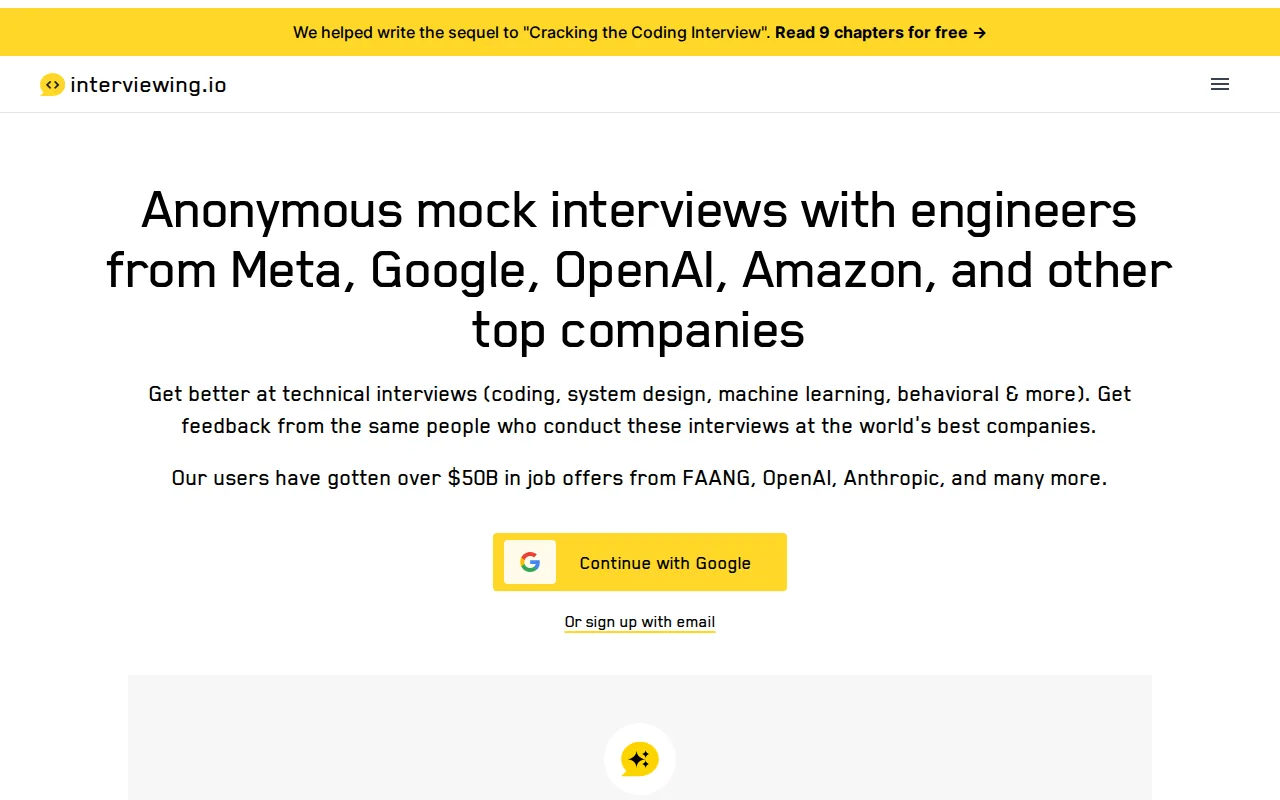
Interviewing.io gives candidates a chance to practice whiteboard-style interviews with actual engineers while staying anonymous. It is best suited to senior engineers preparing for FAANG or other top-tier companies who want the feel of a live technical conversation.
Solving a problem alone can hide gaps in communication. A live session makes you state assumptions, describe trade-offs, and respond to follow-up questions as they come. That’s useful when your code is sound but your explanation becomes hard to follow once someone asks you to change a constraint.
Before a mock, pick one goal. You might work on asking clarifying questions before coding, or narrating the reason for a data structure choice. Afterward, write down one change to make next time. A short review turns the session into a clear practice loop instead of a one-off performance.
The format differs from an automated problem set. You’re practicing with an engineer, so reserve it for a point when you can already attempt common DSA questions and want feedback on how you handle an interview exchange.
5. AlgoExpert
AlgoExpert combines video explanations with coding environments. It suits visual learners who prefer curated question sets and step-by-step walkthroughs over an unfiltered list of prompts.
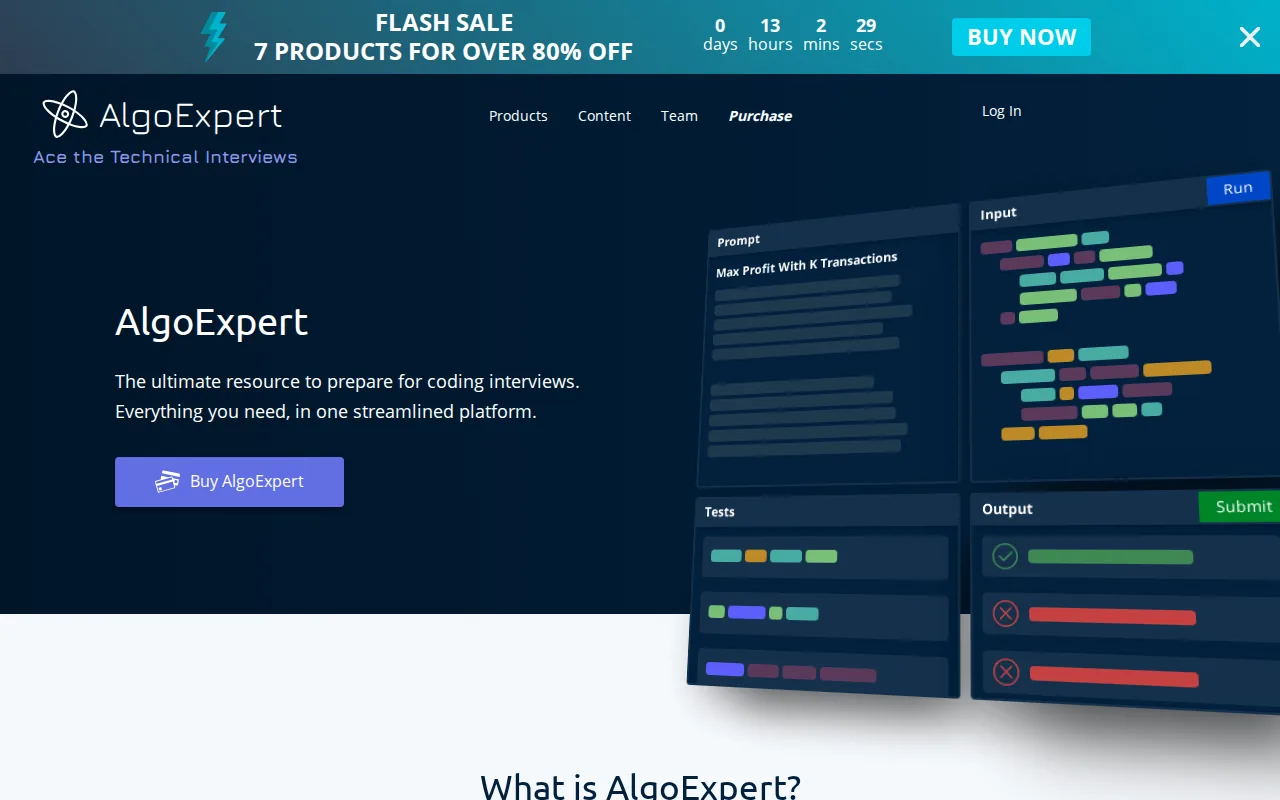
Diagrams and voiceovers can make a solution easier to follow, especially when a problem has several moving parts. Watch how the explanation moves from the prompt to a data structure choice, then to the code. Pause before the solution appears and try to name the next step yourself.
That pause is important. Following a clear walkthrough can feel like solving the problem, but recognition is different from recall. After the lesson, close the explanation and solve the same problem from a blank editor. Then change an input condition or test an edge case to see whether you understand the logic.
AlgoExpert’s curated format can help you keep practice bounded. It is a learning resource, so candidates who need live feedback on communication should add mock sessions. For graph or dynamic programming problems, sketch the state or traversal before coding; the diagram can help you check whether your implementation matches your plan.
6. Pramp
Pramp is a free, structured peer-to-peer mock interview service. It matches learners so they can take turns interviewing each other, which makes it a good choice when you want live practice without paying for an engineer-led session.
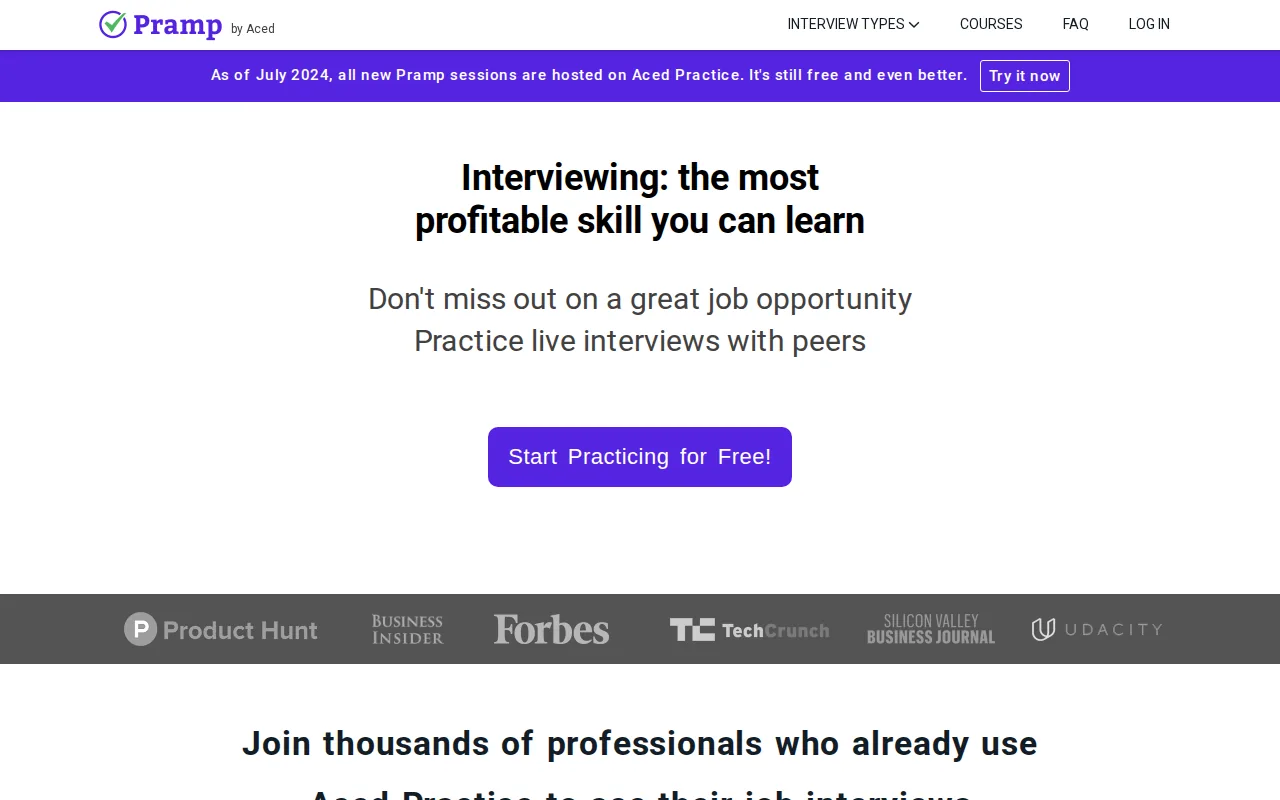
The two-way format gives you practice on both sides of the conversation. As the candidate, you work through a prompt and explain your choices. As the interviewer, you learn to listen for assumptions, ask useful follow-ups, and give clear feedback. Those skills can sharpen your own sense of what makes an answer easy to assess.
Pramp’s sessions use a collaborative environment over video. Partners interview each other for 30 to 45 minutes, then provide feedback. The service describes its peer matching as based on factors such as availability, experience, education, topics, and target companies.
Peer feedback can vary with the other person’s experience, so treat it as one signal rather than a final verdict. Ask your partner to focus on a specific behavior, such as whether your explanation was clear before you began coding. For a technical mock, also review whether you tested the result and discussed complexity.
Compare the Six Options and Build a Balanced Prep Plan
These six options cover different parts of interview preparation. A platform that teaches patterns won’t replace a live mock, and a mock won’t fill every gap in DSA knowledge. Choose a main tool for your current weakness, then add a second format only when it addresses a different need.
| Option | Best fit | Practice format | Cost |
|---|---|---|---|
| Phantom Code AI | Live interview guidance | Desktop assistant with real-time guidance | Paid plans start at $19 |
| Educative | Pattern learning and company-specific practice | Structured learning platform | — |
| LeetCode Premium | Company- and topic-sorted questions | Question library with AI tools | — |
| Interviewing.io | Senior candidates seeking engineer-led mocks | Anonymous interviews with engineers | — |
| AlgoExpert | Visual learners who want curated problems | Videos and coding environments | — |
| Pramp | Free peer mock interviews | Reciprocal video interviews | Free peer-to-peer practice |
Build a study week around the gap you can name. If you’re new to interview-style problems, spend time learning a pattern, then solve a related question without looking at the answer. If you’ve solved many problems but freeze when the topic is unlabeled, mix question types and set a timer. If you’re comfortable coding but struggle to explain decisions, make a mock your next session.
Cover common patterns in a sensible order. Arrays and strings give you a base for hash maps and two pointers. Trees and graphs add traversal. Dynamic programming asks you to define a state and understand how one result builds on another. For the latter, Wikipedia’s explanation of dynamic programming describes the general method of breaking a problem into overlapping subproblems.
For a four-week schedule that includes algorithm practice, system design, behavioral questions, and timed mocks, use this coding interview preparation plan as a starting point. Adjust the time spent on each area to match the rounds in your interview loop.
When you do a timed session, save a few minutes to test edge cases and explain complexity. In a mock, practice clarifying the prompt before coding. For behavioral rounds, prepare brief stories about a hard decision or a project setback. Senior candidates should also set aside time for system design, since DSA drills alone won’t prepare them for that format.
The useful measure of progress is what you can do without a hint: choose an approach, explain it, implement it, and check it. Start with one tool that targets the step where you get stuck most often.
FAQ: Best Coding Interview Prep
What is the best tool for coding interview prep?
The best tool depends on what you need to improve. Phantom Code AI is for live guidance, Educative focuses on structured pattern learning, and LeetCode Premium supports topic- and company-based question practice. For live practice, consider Interviewing.io or Pramp. Pick the format that addresses your current gap instead of trying to use every tool at once.
Can I prepare for coding interviews for free?
Yes. Pramp provides free peer-to-peer interview practice. You can also study with any materials you already have and practice explaining solutions aloud. A free option can help with mock practice, but it doesn’t automatically give you a full study path. Decide which topics to cover, then track the problems you can solve without hints.
How should I prepare for a coding interview if I’m a beginner?
Start with core patterns and easy-to-medium problems in one language you know well. Educative can provide a structured way to learn patterns. After each lesson, solve a fresh question without the topic label. Once you can explain your approach, add timed practice and a peer mock so you get used to speaking while you code.
How do I practice explaining my coding solutions?
Say your plan before you write code. Explain what you understand about the input, name the approach, and discuss its time and space costs. Then walk through a small example and test an edge case. A peer mock with Pramp or an engineer-led session with Interviewing.io can help you practice this in conversation.
Do I need system design practice as well as DSA practice?
If your interview loop includes system design, yes. DSA practice trains you to solve focused coding problems, while system design asks you to discuss how a larger system should work. Split study time according to your role and interview rounds. Senior candidates should make room for design and behavioral practice alongside coding.
Conclusion
For live guidance while you practice, start with Phantom Code AI; for pattern lessons, question volume, or human mock feedback, choose the option built for that task. Try a short practice session this week, note where you get stuck, then see Phantom Code AI’s plans if live guidance fits your needs.