
One-on-one coaching can give you live feedback, but it isn’t the only way to rehearse behavioral answers. Alternatives to one-on-one coaching for behavioral practice range from AI interview simulations to recorded speaking drills. Here are six named options, with notes on who each suits and what kind of feedback you can expect.
We analyzed 34 comments and questions from Reddit, Quora and YouTube about alternatives to one on one coaching and found that 53% raised ethical and licensing concerns. Check the professional credentials and licensing requirements of any substitute coach or program before committing.
Table of Contents
- Phantom Code AI
- OphyAI — Resume-grounded AI behavioral simulations
- Google Interview Warmup — Free, low-pressure question practice
- VMock — Timed video responses with rubric-style feedback
- Yoodli — Speaking drills for pacing and filler-word awareness
- Big Interview — Structured, repeatable mock interview sessions
- FAQ
- Conclusion
1. Phantom Code AI
Phantom Code AI is a desktop assistant for software engineers preparing for coding, system design, and behavioral interviews. It listens to interview audio, transcribes it, identifies the problem type, and provides real-time guidance during mock or live interviews.
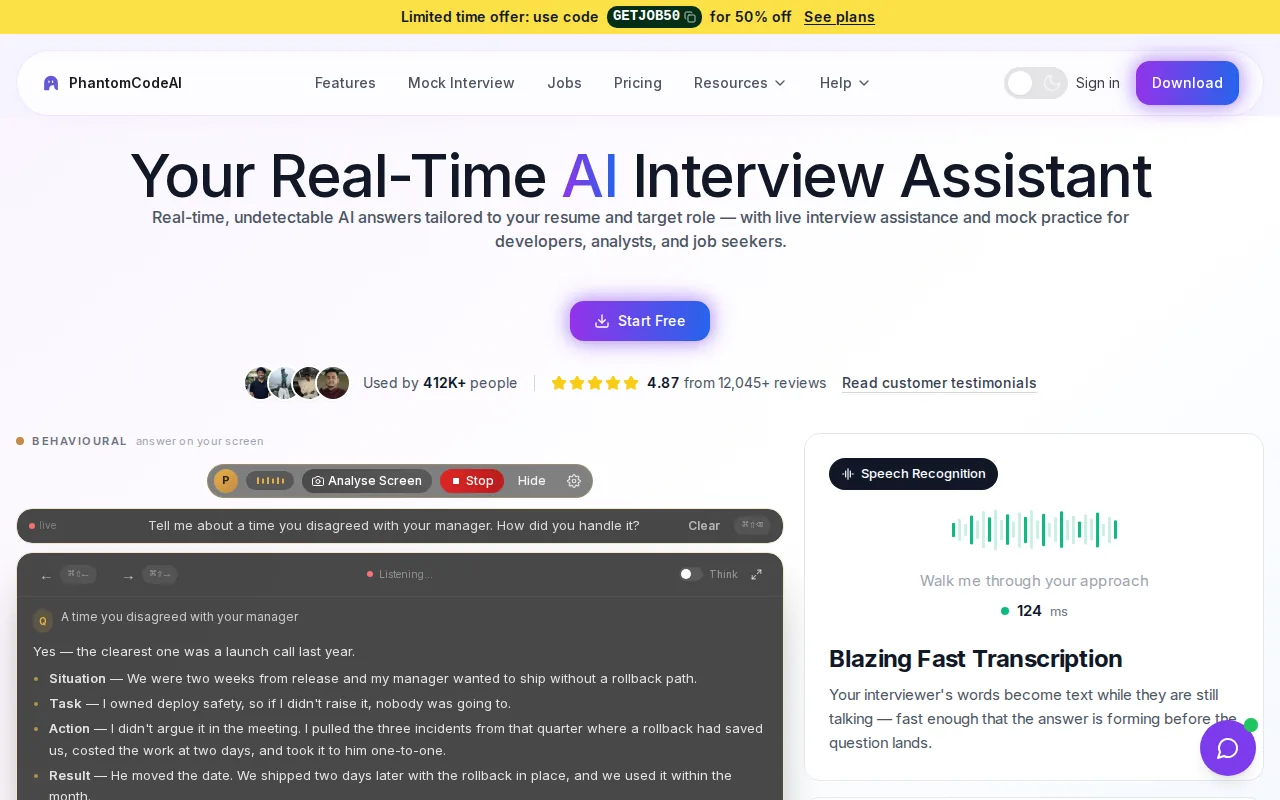
It’s a fit for engineers who want interview support alongside technical practice, rather than a behavioral-only course. For a mock behavioral round, you can use it to work through an answer to a prompt about a project setback, then consider how clearly you explained your role and decisions. The same tool is designed to cover technical prompts and system design discussions, which can help when your interview prep spans more than one round.
There’s an important distinction: real-time assistance is different from coaching after a recorded answer. It may help you respond in the moment, but that alone doesn’t give you the same review loop as a detailed rubric. And live assistance should only be used when the interview rules allow it. For solo rehearsal, Phantom Code AI is one option among the alternatives to one-on-one coaching, not a replacement for every kind of feedback.
Use a mock session to spot where you need more practice. Then rehearse the same story on your own so your answer still sounds like you.
2. OphyAI — Resume-grounded AI behavioral simulations
OphyAI runs AI interview practice in voice or text, with questions grounded in your resume. It suits job seekers who want solo behavioral practice tied to their own work history, rather than a fixed set of generic prompts.
Resume context can make practice feel closer to the questions your experience may invite. For example, if your resume describes a service migration, a session can prompt you to explain your part in it. OphyAI’s listed features include STAR coaching, a transcript, feedback for each answer, and a rubric. That gives you more to review than simply deciding whether an answer felt smooth.
That review can help you catch a common gap: describing what the team did without making your own actions clear. Read the transcript after each session and mark the sentence where you explain the choice you made. Then try the answer again with that point stated plainly.
One caveat: AI feedback is a prompt for revision, not proof that an answer will land well with a specific hiring team. Check the feedback against the job description and your actual experience. OphyAI may suit self-paced practice; candidates who want a human to challenge their assumptions may still prefer peer or coach feedback.
3. Google Interview Warmup — Free, low-pressure question practice
Google Interview Warmup is a free practice option with a fixed question bank and no scoring. It suits candidates who want to get used to answering questions aloud before paying for more detailed feedback.
Its strength is low friction. Pick a question and answer it, then use the attempt to notice where you paused or went off track. That’s useful when you’re new to interview practice or simply need to say a story out loud before a live round.
The tradeoff is depth. The research context identifies Interview Warmup as a tool without scoring, so don’t expect a rubric that tells you whether your answer showed clear ownership or explained a hard technical choice. You’ll need to review your own response or ask someone you trust to listen.
For example, after a prompt about a disagreement, check whether you explained the other person’s concern before describing your response. Keep a short note on what you want to change next time. This makes free practice more useful, even without automated scoring.
When your main goal is simply to build speaking comfort, this is a straightforward place to start. If you need detailed notes on each answer, look at tools built around recorded responses or rubric feedback instead.
4. VMock — Timed video responses with rubric-style feedback
VMock uses recorded video answers and rubric-style scoring. It suits candidates who want time-boxed practice with improvement notes tied to stated expectations.

Recording changes the task. You have to answer in a set practice window, then review how you came across. VMock’s listed features include role-focused prompts and specific notes tied to expectations. Rubric-style feedback can make a revision more focused than a vague sense that an answer “needs work.”
Suppose you’re asked to describe a project that went wrong. On playback, check whether you name the problem, explain the tradeoff you faced, and show what you did. Then compare the answer with the feedback and decide which one change to test in your next attempt.
Video practice can also reveal habits you may not notice while speaking, such as long pauses or an answer that takes too long to reach the point. Don’t treat a score as a hiring prediction, though. A practice rubric can guide revisions; it can’t tell you exactly how a particular interviewer will judge the story.
VMock is a stronger fit for candidates who will use the playback and feedback loop. If you dislike reviewing recordings, a live peer mock may keep you more engaged.
5. Yoodli — Speaking drills for pacing and filler-word awareness
Yoodli focuses on speaking drills with feedback on recorded responses. It may suit engineers who know their story but want to work on delivery, such as speaking too quickly or leaning on filler words.
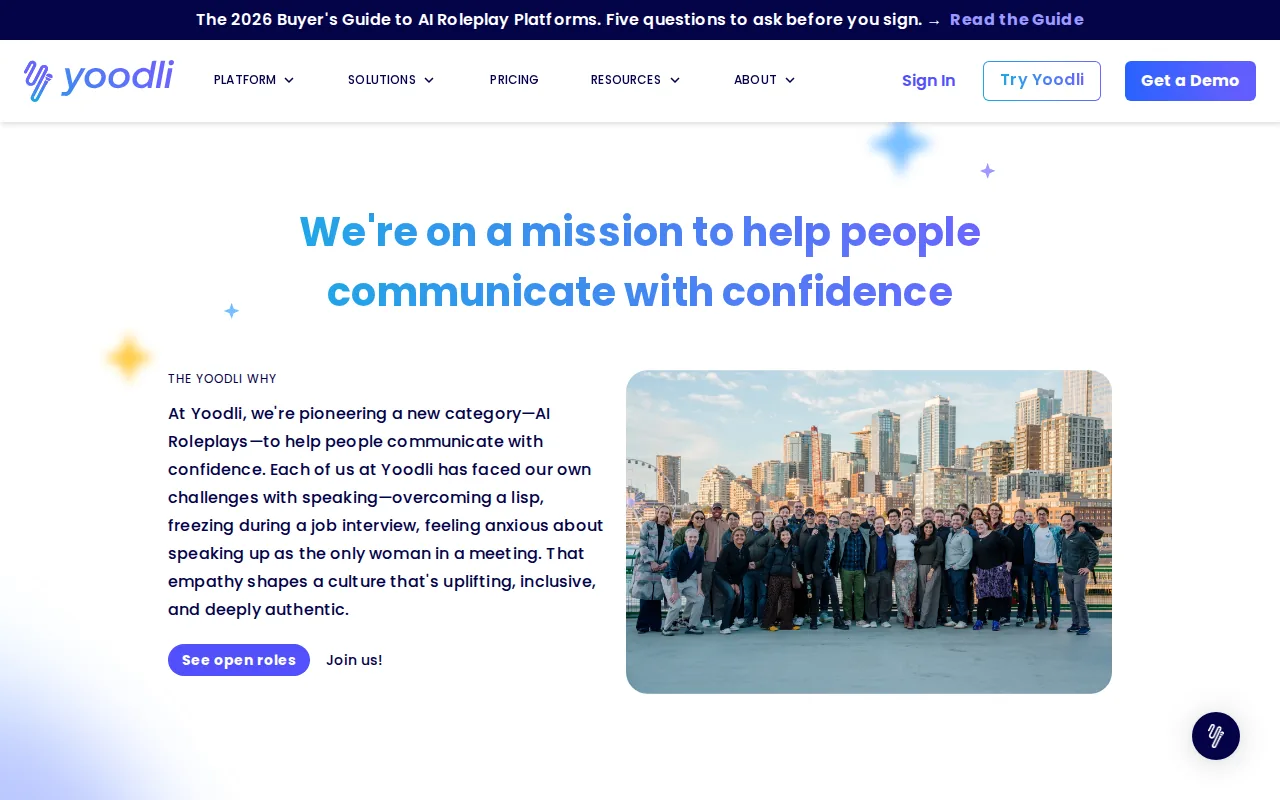
That focus matters when a good technical example gets buried in a long answer. A speaking drill gives you a chance to hear how your words land, then try a shorter version. Yoodli’s listed features include feedback on filler usage and pacing signals, as well as guided drills and role-focused prompts.
Try it with a project explanation you already know. First, give your full answer. Then repeat it with a clear opening sentence that names the project and your role. Compare the two recordings for pace and ease of following the main point.
Yoodli’s listed focus is delivery. Don’t assume that speaking feedback checks the technical accuracy of a system design story or whether your example shows sound judgment. If the issue is answer structure, pair speaking practice with a rubric or ask a peer to assess the substance.
This is a useful distinction when weighing alternatives to one-on-one coaching: a tool may help with how you speak without judging what your answer says.
6. Big Interview — Structured, repeatable mock interview sessions
Big Interview is a guided interview practice option with recorded sessions and scoring guidance. It suits candidates who want a structured way to repeat interview prompts and review their answers.
Its listed features include role-based practice, timed prompts, answer-scoring guidance, and feedback summaries. That structure can help you move past rehearsing only the questions you find easy. You can work through a prompt, record an answer, then use the summary to choose what to improve in another attempt.
For a technical role, keep the practice tied to your own work. Use a story about a production issue, for instance, and check whether you explain the impact and your part in the response. The practice flow can organize repetition, but you still need to confirm that your examples are accurate and relevant to the role.
The table below separates the main use from the kind of review you can expect. It can help you pick based on the gap you want to address, not on a broad claim that one tool is best for everyone.
| Option | Best fit | Feedback focus | Watch for |
|---|---|---|---|
| Phantom Code AI | Engineers preparing across interview types | Real-time guidance in mock or live sessions | Live help is not the same as a post-session rubric |
| OphyAI | Resume-based solo behavioral practice | Answer feedback, transcript, and rubric | Check feedback against your real experience |
| Google Interview Warmup | Free, low-pressure question practice | No scoring | Self-review is needed |
| VMock | Timed video practice | Rubric-style notes | A score is not a hiring prediction |
| Yoodli | Speaking and delivery drills | Filler usage and pacing | Delivery feedback may not assess answer substance |
| Big Interview | Structured, repeatable practice | Scoring guidance and summaries | Keep examples role-relevant and accurate |
Big Interview makes most sense when a guided practice flow will help you stick with repetition. If you mainly need feedback on spoken delivery, a speaking-focused tool may be a closer match.
FAQ
What are good alternatives to one-on-one coaching for behavioral practice?
AI simulations, recorded video drills, and peer practice are common alternatives to one-on-one coaching for behavioral practice. Choose based on the feedback you need. A fixed question bank can help you get started, while a rubric or recorded response can give you more to review. A peer can add human follow-up questions and challenge unclear details.
Can I practice behavioral interviews for free?
Yes, Google Interview Warmup is listed as free and uses a fixed question bank without scoring. You can also rehearse with a peer, but agree on the prompt and feedback criteria first.
Are AI interview tools as useful as a human coach?
AI tools can make solo practice easier to repeat, but they don’t offer every benefit of a human coach. A transcript or rubric can help you review a response; a person can ask an unexpected follow-up and question a vague claim. Use AI to rehearse, then ask a peer for feedback when you need another person’s judgment.
How do I check whether an interview coach is acting within their scope?
Interview preparation usually focuses on job-search skills, such as explaining work examples and practicing answers. Be cautious if a provider presents the service as mental health care or makes claims outside their stated training. Rules vary by location and service, so check your state’s relevant licensing board if you have concerns. Ask what the service covers and how it handles your personal information.
How can I get accountability without hiring a coach?
Set a recurring practice time and ask a peer to review one answer against a short rubric. For example, ask whether you made your role clear and explained the result. Recorded drills can also give you a session to revisit. Pick a method you’ll repeat, then make one change per attempt instead of rewriting the whole story every time.
Conclusion
Choose the option that matches your biggest gap: answer structure, delivery, or support across technical and behavioral rounds. If you’re preparing for a software interview, start with one mock behavioral prompt, record or review your response, and decide what specific feedback you still need. Phantom Code AI can be part of that preparation when real-time guidance fits your practice and the interview rules.