Top Prompts for Practicing System Design Tradeoffs

Practice system design tradeoffs interactively with prompts on scale, consistency, APIs, sharding, observability, security, AI agents, and interview feedback.
A strong system design answer explains why one choice fits the stated limits, and what it gives up. To practice system design tradeoffs with interactive prompts, work through these ten scenarios aloud, then ask a partner or AI interviewer to challenge your assumptions.
Each prompt names a design tension to test, not a single correct architecture. Use feedback to check whether your reasoning holds when a requirement changes.
Table of Contents
- Latency, Throughput, and Scalability Tradeoff Prompt
- Consistency Versus Availability Scenario
- Full Interview Simulation: High-Level Design, Deep Dive, and Wrap-Up
- API Design Debate: REST, GraphQL, Versioning, and Request Shape
- Consistent Hashing and Composite Partitioning Challenge
- Observability and Incident-Response Tradeoff Prompt
- Security and Compliance Constraint Scenario
- AI-Agent Architecture Prompt: Function Calling, Tools, and Orchestration
- Operational Architecture Case Prompt: CDN Versus Origin and Multi-Region Replication
- Flashcard-to-Q&A Feedback Loop for Tradeoff Recall
- Frequently Asked Questions
- Conclusion
1. Latency, Throughput, and Scalability Tradeoff Prompt
Prompt: Design a service that processes user activity events. It must respond quickly to incoming writes while supporting traffic spikes and later queries over the stored events.
Start by asking what a fast response means. Does the caller need the event durably stored before getting a success response, or can the service accept it and process it later? That one answer changes the write path. A synchronous database write can make durability easy to explain, but it may raise response time during load. A queue can return sooner, though now you must explain what happens if a worker falls behind or an event is delivered twice.
Estimate average and peak request rates before adding servers. Then distinguish latency, the time a request takes to complete, from throughput, the volume handled over time. Horizontal scaling can add capacity, but the database or a shared hot key may still cap throughput. Every network hop adds to the request path.
Practice changing one constraint at a time. Ask for ten times the traffic, then require a durable acknowledgment before success. Explain which component becomes the bottleneck and what new cost your fix brings. A useful large-scale system design prompt routine also tests load estimates and failure paths.
2. Consistency Versus Availability Scenario
Prompt: Design a URL redirect service. A newly created link should work soon after creation, while existing links should keep redirecting during a network problem between regions.
First, clarify what users can tolerate. A redirect that briefly points to stale data may be acceptable for some services. A redirect that fails entirely may not be. By contrast, a bank transfer or inventory reservation may need stricter guarantees because stale reads can lead to an incorrect outcome.
Then walk through a partition: two regions can’t talk to each other. If both regions answer requests, they can stay available, but a read may not include the latest write. If the service refuses some requests until it can confirm the newest value, it favors consistency at the cost of availability for those requests. The CAP theorem is a useful shorthand for this conflict during a network partition. Avoid saying a system simply chooses any two properties in all conditions. State what it does when communication breaks.
Make the prompt interactive by asking what changes if the redirect data is cached, or if a user expects read-after-write behavior. A cache can lower read latency, but then you need a plan for invalidation or expiration. Replication can improve availability, but asynchronous replication may leave a recent write absent from a replica for a short time.
Close with a decision rule: name which requests can use stale data and which must wait or fail safely. That’s stronger than saying the system uses eventual consistency without tying it to a user action.
3. Full Interview Simulation: High-Level Design, Deep Dive, and Wrap-Up
Prompt: Design a group chat service. Users can send messages, see recent history, and receive new messages while connected.
Run the whole interview rather than jumping straight to a database choice. Clarify the core features first. Ask whether the chat is one-to-one or group-based, how much history users need, and whether message order must be preserved. Set rough scale assumptions next, such as the number of active users and the likely read-to-write pattern.
Draw the high-level request path. A client sends a message to an API, the service checks access, and the message is stored. Then show how recipients receive it. A persistent connection can support live updates, while a pull request can be simpler to operate. Explain the cost of your choice. A stateful connection service has to keep track of active clients and handle reconnects.
Pick one deep dive that follows from your assumptions. For example, if large groups create a write burst, discuss whether to fan messages out when they’re sent or assemble a user’s view when they open the chat. The first can make reads simpler but increases work on writes. The second moves more work to read time.
Finish by naming a likely failure and the next improvement you’d make. Phantom Code AI can help engineers rehearse technical interview conversations, but a useful simulation still requires you to explain your own assumptions and defend the design aloud. Try the same question once with a human partner, who can interrupt or question a choice in a way a prepared answer can’t.
4. API Design Debate: REST, GraphQL, Versioning, and Request Shape
Prompt: Design the API for a product page used by a website and a mobile app. Both clients need product details, but their screens request different data.
Begin with the user actions and shape the API around them. A REST design might expose product resources and use HTTP methods for reads and updates. GraphQL lets a client request selected fields in one query, which can help when screens need different data. But a flexible query needs limits: a deeply nested request can put heavy work on the server, and resolvers can trigger many separate data lookups.
Ask the interviewer which constraint matters more: predictable caching, client control over response shape, or a shared contract between services. Then defend the choice. REST can make resource paths and cache behavior easier to reason about. GraphQL can reduce over-fetching for clients with different needs, though it adds work to query validation and resolver performance.
Next, test versioning. If a field changes meaning, can older clients keep working? Discuss additive changes before breaking changes. If the design uses a streaming connection for live updates, explain how reconnects and message ordering work rather than treating it like an ordinary stateless request.
HTTP semantics include methods and status codes. Use that distinction in your answer: the API contract should make clear what a request does and how the service reports its result.
5. Consistent Hashing and Composite Partitioning Challenge
Prompt: A multi-tenant message store has grown beyond one database. Choose a partition key and explain how the system routes reads and writes as shards are added.
Start with the access patterns. If most requests fetch one tenant’s messages, a tenant key may keep those reads on one shard. But a very large tenant can become a hot spot. A timestamp can make time-range scans easier, yet recent writes may pile onto the same partition. Your key should reflect what the application asks for most, while avoiding an uneven load.
Compare simple hash partitioning with consistent hashing. A plain hash followed by a modulo operation is easy to explain, but changing the shard count can remap many keys. Consistent hashing aims to limit how many keys move when nodes join or leave. It still needs a routing map and a plan to rebalance data. Don’t present it as a free fix for a poor key.
Now add a composite key, such as tenant ID plus a time bucket. This can spread a large tenant’s data across partitions while retaining a way to find a narrower time range. The tradeoff is that queries spanning many buckets may touch multiple shards. Ask whether that extra read work is worth the more even write load.
Finally, test a request that lacks the partition key. If the system must query every shard, explain the added work and whether a separate index or lookup service is justified. Sharding is hard to reverse, so name the migration path before proposing it.
6. Observability and Incident-Response Tradeoff Prompt
Prompt: A checkout service has started responding slowly for some customers. Design the signals and response path that would help the team find the cause.
Don’t stop at saying you’ll add monitoring. Name what each signal can show. Metrics can reveal a rise in request latency or queue depth. Traces can show which service call slowed down during one request. Logs can record the event details needed to understand a specific error. Each has a cost: detailed logs can grow quickly, while aggregated metrics may not answer a new question about one region or client type.
Make the scenario harder. The overall error rate looks normal, but a small group of users reports slow checkout. Ask what dimensions you need to isolate the issue. A trace across the request path may point to a database call. Structured logs may show that those requests are hitting a connection limit. The point is to connect a signal to an action, not list tool names.
Set a service target tied to what users experience, such as an acceptable share of requests completing within a response-time goal. Then discuss what the team does when the target is at risk. A page should signal user impact or a fast-growing problem, not every internal metric that moves.
During a mock, ask a follow-up: what if logging every request costs too much? Explain which routine events you’d sample and which critical events you’d keep in more detail. That answer shows you understand the cost of operating the design.
7. Security and Compliance Constraint Scenario
Prompt: Design a customer support system that stores conversations and can look up order details. Some data is sensitive, and only approved staff should access it.
Clarify what information the service needs to store and which roles need access. Put authentication at the entry point, then check authorization for each action. A user who can read a conversation may not be allowed to view payment details. Keep those permissions separate in the design rather than relying on a single broad role.
Next, discuss data protection in transit and at rest. Encryption can reduce exposure if network traffic or stored media is accessed without permission, but it doesn’t replace access checks. If a support worker needs a sensitive field, the system still needs to confirm that the worker has a valid reason and role.
Add a retention rule. If old conversations must be deleted after a set period, your storage and backup design needs to account for deletion too. A backup that retains a record forever can undermine the intended policy. You can also limit what enters application logs, since error details may otherwise copy sensitive information into another system.
For the interactive follow-up, change the requirement: staff now need an audit trail for every sensitive-data view. Explain what gets recorded, who can review the records, and how the system protects the audit data. The tradeoff is extra write and storage work in exchange for a clearer record of access.
8. AI-Agent Architecture Prompt: Function Calling, Tools, and Orchestration
Prompt: Design an AI support agent that can answer order questions and start a return when the request meets policy.
Start with the scope. The agent can answer a simple status question, but a return may change account or order state. Decide which tasks need a tool call and which need a person. A model can classify intent, but the order service should verify the order and apply business rules before any change takes effect.
Draw a safe request path. The client sends a message to an authenticated gateway. An orchestrator gives the model the approved context and available tools. The model can request a function call, such as fetching an order status. The backend checks permissions and validates the arguments before running it. Return only the result needed to answer the customer.
Now test a risky case. What if the model requests a refund above the permitted limit? The tool should reject the action or route it for human review. Don’t rely on the model’s prompt alone to enforce access or policy. Also consider retries: if the same return request arrives twice, an idempotency check can prevent a repeated action.
Finally, balance speed against control. A short path can answer simple questions quickly. A multi-agent workflow may split tasks, but each extra handoff adds delay and more points to monitor. Ask how you’ll evaluate wrong tool calls and how a user can reach a human when the agent cannot resolve the request.
9. Operational Architecture Case Prompt: CDN Versus Origin and Multi-Region Replication
Prompt: Design delivery for a global media library. Images should load quickly, but urgent content updates must reach users without serving old versions for too long.
Separate static media from user-specific data. A CDN can serve cached media near users and reduce requests to the origin. For files that rarely change, a longer cache lifetime can improve hit rates. For content that must change promptly, use versioned URLs or a purge path, then explain the cost of each approach.
Ask what happens on a cache miss during a traffic spike. If every edge node asks the origin for the same popular file, the origin can become overloaded. An intermediate shield can gather misses, while request coalescing can avoid repeated fetches for the same object. But each added layer needs its own failure behavior and metrics.
Now introduce a regional outage. Route requests to a healthy region, but discuss whether that region has the newest data. Synchronous replication can reduce the risk of a missing recent write, though it may add latency. Asynchronous replication can let a write finish sooner, with a chance that a recent update has not reached the other region.
Make the close operational: track user-facing response time, cache hit share, and traffic still reaching the origin. Then state which content can be stale briefly and which requires a purge or a new version. This turns a diagram into a decision.
10. Flashcard-to-Q&A Feedback Loop for Tradeoff Recall
Prompt: Turn a design you’ve already practiced into short questions that test whether you can recall the tradeoff without reading your notes.
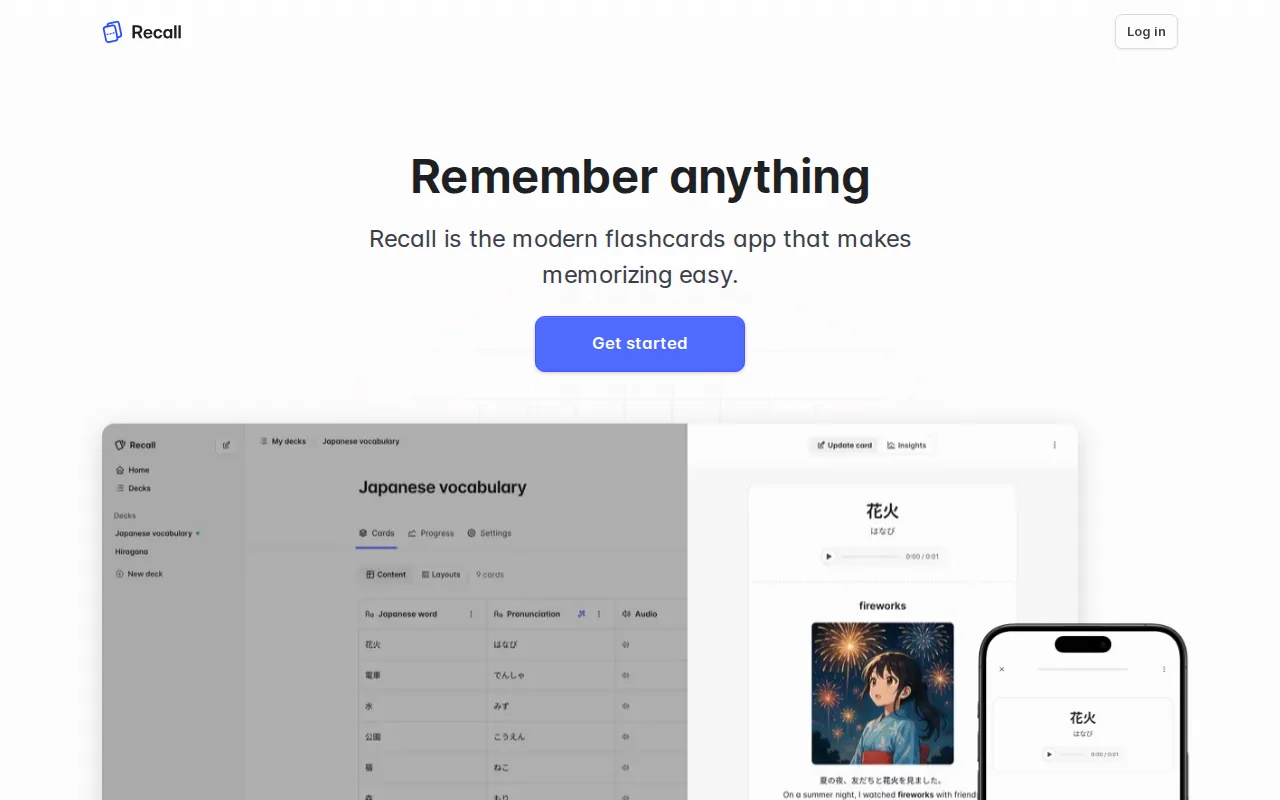
Write one card for the decision, one for the alternative, and one for the failure mode. For a feed, a card might ask when to fan out on write. Your answer should name the benefit, such as quicker feed reads, and the cost, such as extra work when a popular account posts. Then add the condition that might change your choice.
Use an interactive question loop rather than flipping through definitions. Answer aloud, then ask a partner or AI interviewer to change one constraint. If you said a cache can speed up reads, the follow-up might ask how you’ll handle a stale value after an update. If your answer stalls, rewrite the card as a question about that missing decision.
Feedback timing changes how useful this loop feels. Some practice tools give feedback while you answer, and others only after the task is complete. An AI chat interface doesn’t by itself tell you when critique arrives, so check before you rely on it.
| Recall check | What a clear answer includes | Follow-up to ask |
|---|---|---|
| Choice | The constraint you’re optimizing for | What requirement would change your pick? |
| Alternative | Another design and what it costs | When would you choose it instead? |
| Failure | A likely fault and its user impact | How will the system detect or limit it? |
| Feedback | The exact gap in your explanation | Can you answer the same question with a new constraint? |
Repeat a card only after trying to answer it from memory. If you use Phantom Code AI during interview preparation, treat its guidance as a prompt to reason more clearly, not a substitute for your own explanation.
Frequently Asked Questions
How do I practice system design tradeoffs?
Practice by defending one design choice against a stated constraint. Start with a prompt, clarify the user need, sketch a simple architecture, and explain what your choice costs. Then change one requirement, such as latency or consistency, and revise your answer. Feedback is most useful when it points to a specific assumption or tradeoff you skipped.
What should I say when explaining a system design tradeoff?
State the requirement, name the option you chose, and explain what you give up. For example, a cache can lower read latency, but it introduces stale-data and invalidation concerns. Then say what change in the requirements would make you choose another design. That final condition shows your answer depends on the scenario.
How do interactive prompts help with system design interviews?
Interactive prompts make you respond to follow-up questions instead of stopping at a rehearsed diagram. A partner or AI interviewer can change the load, ask about a failure, or challenge an assumption. Your task is to update the design and explain why. This practice can reveal gaps that passive reading won’t show.
Should I use AI or a human for system design mock interviews?
Use either for structured practice, and include a human when you need live pushback on unclear reasoning. AI can help you repeat a scenario and explore follow-ups. A human partner can react to your explanation and ask questions based on what they hear. In both cases, answer aloud and review the exact point where your reasoning became vague.
How do I remember system design tradeoffs under interview pressure?
Use short question cards that ask you to recall the constraint, your choice, the alternative, and the failure mode. Answer each card aloud before checking your notes. Then ask someone to change one requirement and see whether your decision changes. This builds recall around the reasoning, rather than memorizing a fixed architecture.
Conclusion
Pick one prompt that matches your weakest area, set a timer, and explain the tradeoff aloud before drawing more boxes. Then ask a partner to change one constraint and revise your answer. Phantom Code AI can be one part of interview prep, but the next step is to test your reasoning in a full mock conversation.