Best Coding Interview Practice Apps for 2026

Compare coding interview practice apps for DSA, system design, and behavioral prep, with real-time guidance, voice practice, and human feedback.
A coding interview can test more than whether your solution works. You may need to explain your plan while you code, then defend a trade-off under time pressure. Here are five coding interview practice app options, plus Phantom Code AI, and what each is built to help you practice.
Table of Contents
- Phantom Code AI
- AlgoExpert: curated problems with video explanations
- Four-Leaf: voice-based conversational interview practice
- NeetCode: structured DSA practice with AI hints
- Exercism: free practice with human mentor feedback
- Interviewing.io: anonymous mock interviews with engineers
- FAQ
- Conclusion
1. Phantom Code AI
Phantom Code AI is a desktop assistant for coding interviews that listens to the conversation, transcribes it, recognizes problem types, and provides real-time guidance during mock or live technical interviews. It supports DSA, system design, and behavioral interview prep. That makes it a fit for engineers who want one tool for several interview formats.
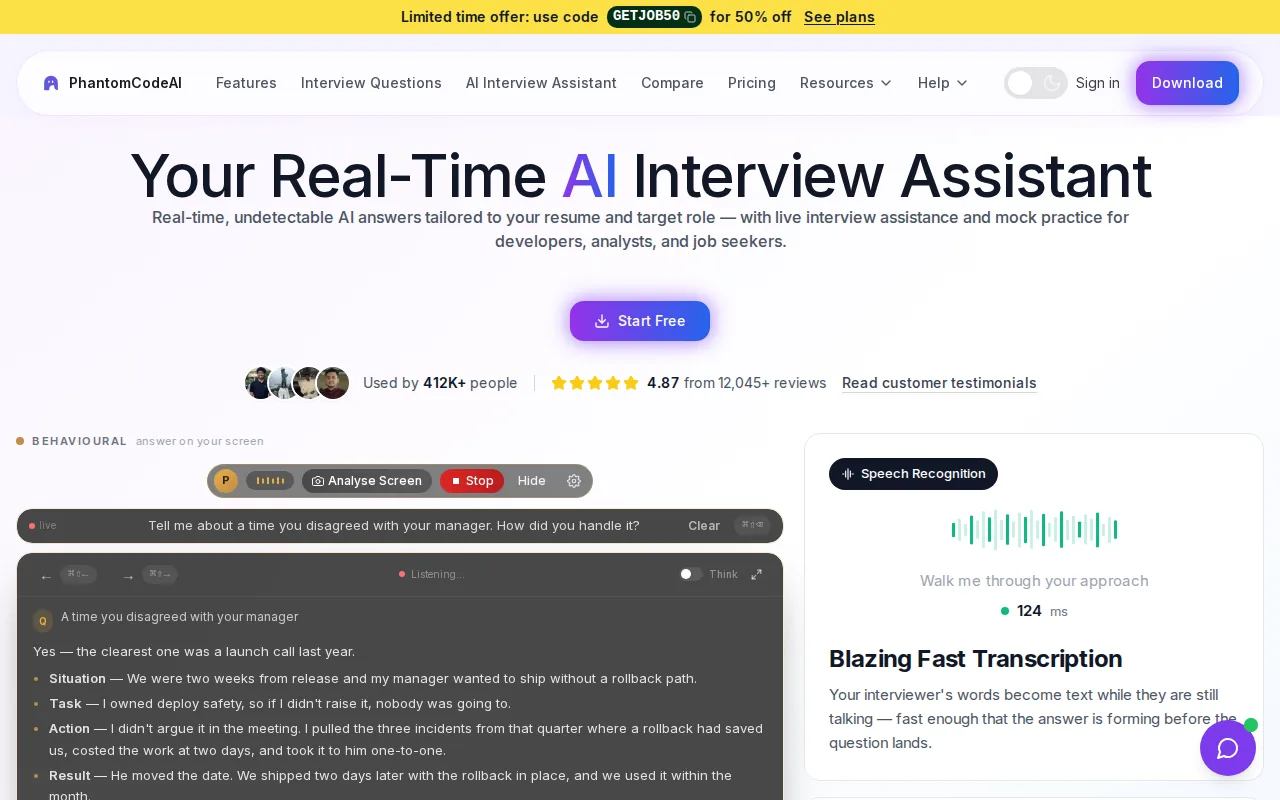
During a DSA question, for example, the assistant can hear the prompt and help identify the problem type while you work through a solution. In a system design round, you can use guidance while discussing the design. For behavioral questions, transcription can help you review what you said afterward.
Phantom Code AI runs on macOS and Windows. New accounts get free credits at signup with no card required, and paid plans start at $19. Its real-time help is different from a standard question bank: the focus is guidance during spoken interview practice, rather than only solving a prompt alone.
Use that distinction carefully. For a mock, live guidance can help you rehearse how you respond when you get stuck. In a real interview, follow the employer's rules on outside assistance. If you want to practice a timed coding round first, try AI-graded DSA mock interviews and review how you explain your approach.
2. AlgoExpert: curated problems with video explanations
AlgoExpert is a practice tool with a curated problem set, video explanations, and an in-browser editor. It suits candidates who want a selected group of problems to work through, rather than an open-ended question bank. Its coverage includes data structures and algorithms as well as system design.
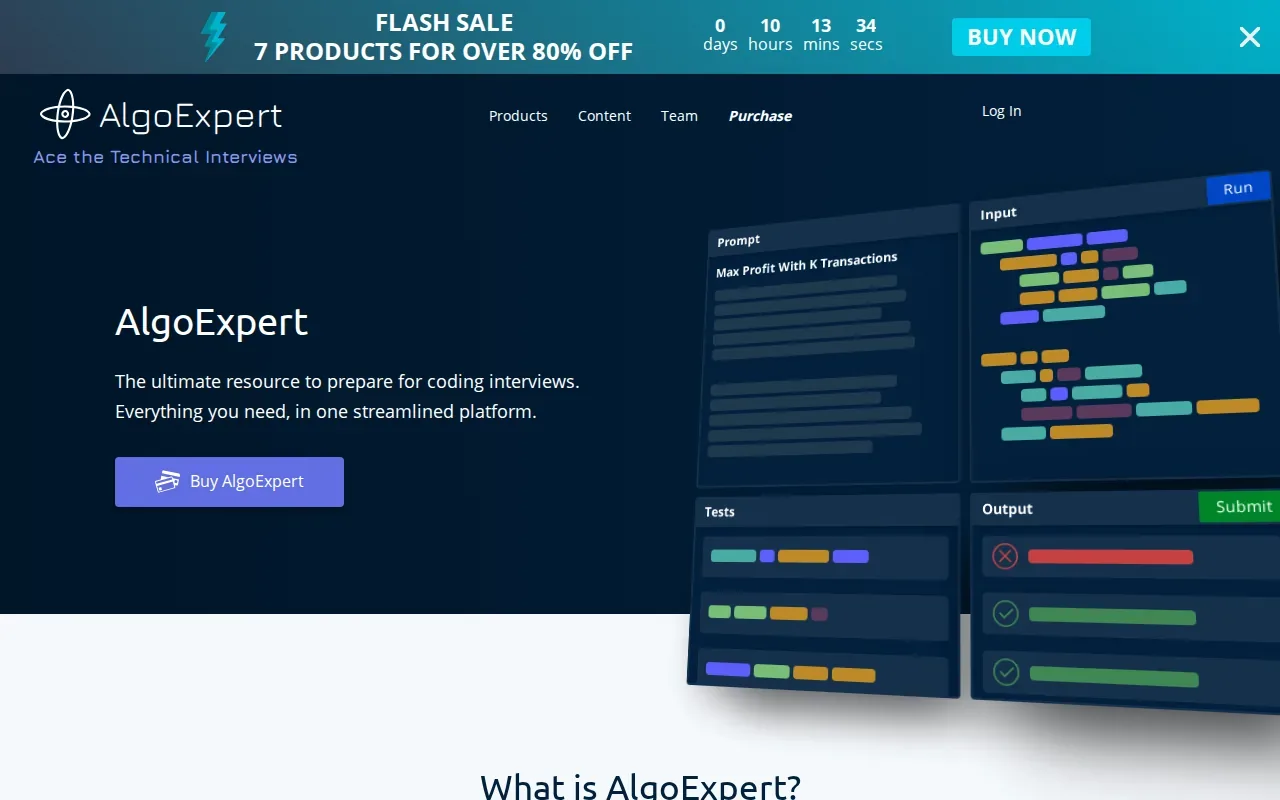
The video explanations give you a way to compare your reasoning with a worked explanation after attempting a problem. That can be useful when you reach a correct answer but aren’t sure whether your approach is efficient, or when you need to learn a pattern before trying a related question.
AlgoExpert doesn’t provide real-time interview guidance. Think of it as structured solo study: attempt a prompt, review the explanation, then solve another problem that tests the same idea. For a system design interview, its coverage also lets you practice beyond code puzzles.
It’s a sensible fit when you learn well from explanations and want a defined set to study. Pair it with spoken mock practice if you also need to get used to explaining your choices as you work.
3. Four-Leaf: voice-based conversational interview practice
Four-Leaf runs voice-based mock interviews. It’s best suited to candidates who can solve coding questions but want to rehearse explaining their reasoning aloud. The service costs $20 a month.
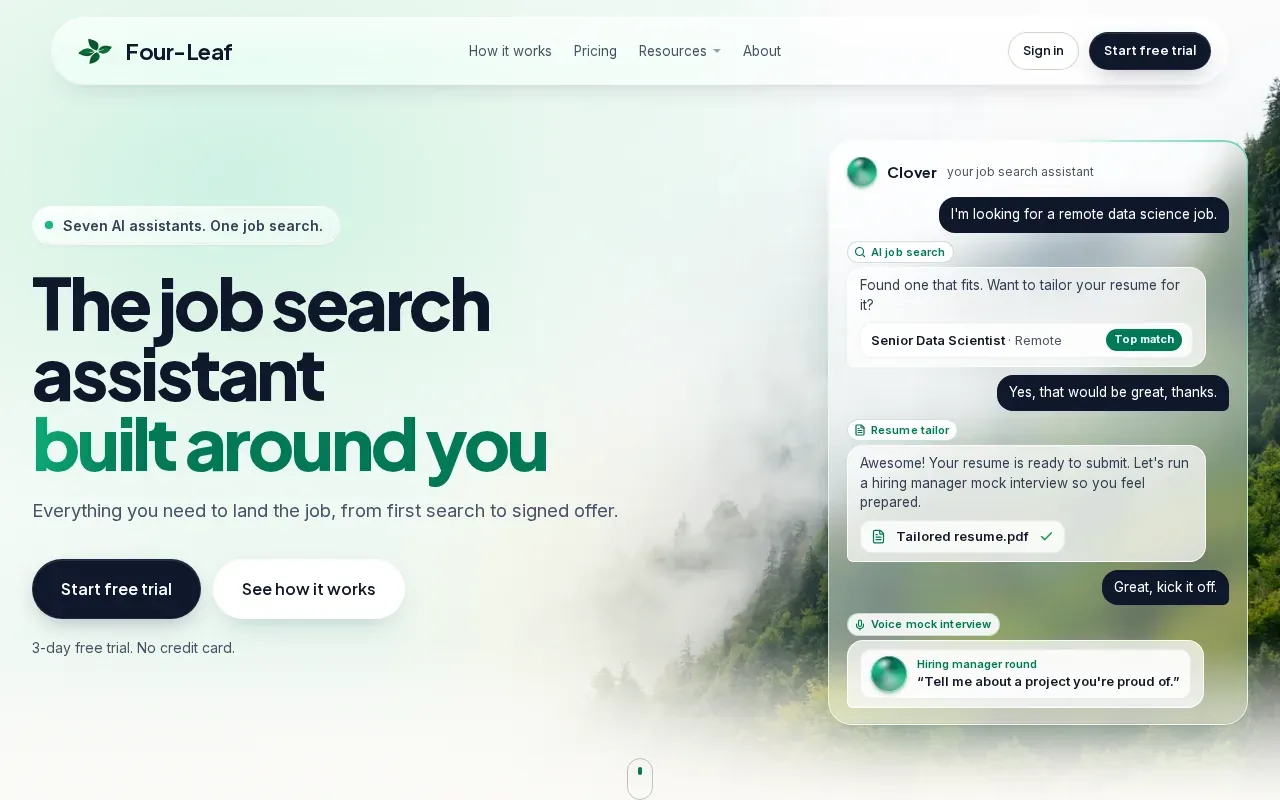
In a spoken practice round, you can talk through the prompt and your approach as you solve it. That changes the task from silent problem-solving to explaining your choices while you work. It also gives you a chance to practise the parts that can feel awkward at first, such as stating a plan before writing code or explaining why you chose one approach over another.
Four-Leaf offers role-specific questions for engineering roles such as frontend, backend, and ML. Its scored feedback looks at how you answer, rather than limiting feedback to whether code passes a test.
Imagine you spot a sliding-window approach but jump straight into implementation. A voice-based rehearsal gives you a place to practise stating the pattern and explaining why it fits before you type. Then you can repeat the same habit in later rounds.
Four-Leaf’s focus is spoken interview practice. If your main goal is to build a large base of solved problems, use a structured problem set alongside it. If your weak spot is explaining your work out loud, this format targets that skill directly.
4. NeetCode: structured DSA practice with AI hints
NeetCode is a structured prep option for candidates who want an organized route through coding problems. Its NeetCode 150 and Blind 75 study lists are known as core prep lists for many FAANG candidates. NeetCode also has structured courses, AI-assisted assessments, a head-to-head Versus mode, and more than 300 problems.
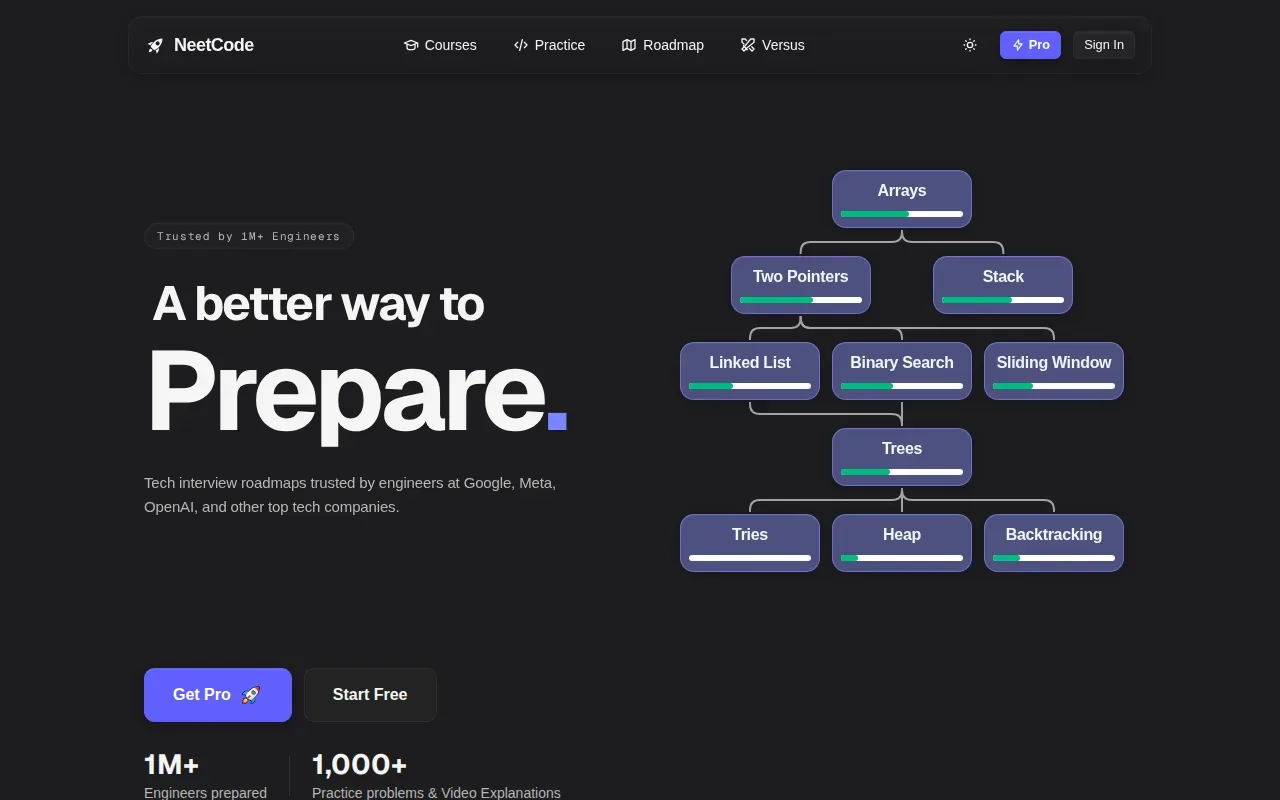
NeetBot, its AI assistant, provides hints and debugging help. That can make a solo study session more useful when you’re stuck on a problem: ask for a nudge, try the next step yourself, then use debugging help to find where your code goes wrong.
The structured lists help you avoid picking problems at random. You can work through a set with a clear goal, then return to questions that exposed a weak pattern. The head-to-head mode adds a way to practise against another user, while courses and assessments support other study styles.
NeetCode is best for candidates who want structured prep, with free study lists and a paid Pro plan for extra features. Its AI hints can support problem-solving, but they aren’t the same as a live spoken mock with real-time guidance during an interview conversation. If you’re preparing for a technical screen, use the problem lists to build pattern knowledge, then rehearse explaining your approach aloud.
5. Exercism: free practice with human mentor feedback
Exercism is a free, open-source coding practice platform with exercises in more than 50 languages. It’s a strong fit if you want to practise writing code and get feedback from human mentors on submitted solutions.
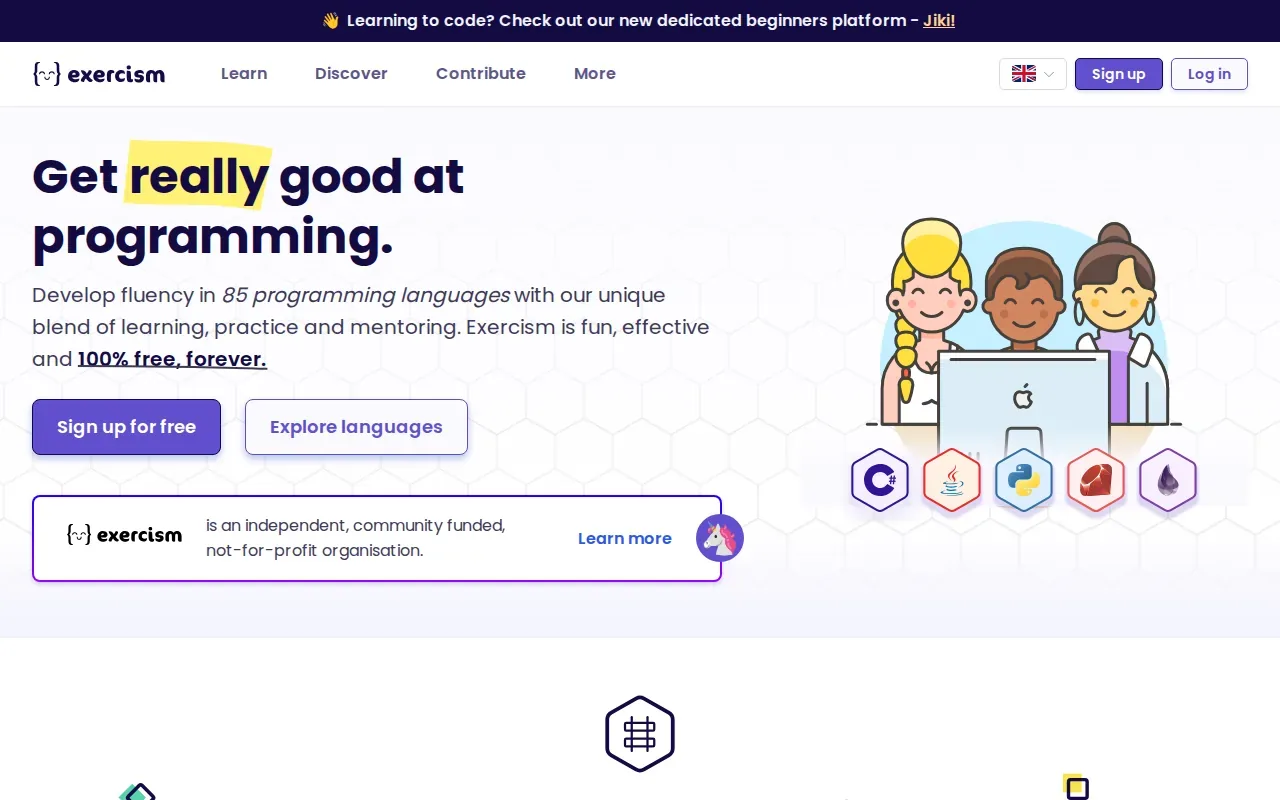
The mentor feedback is the key difference. Instead of relying only on automated checks, you can submit a solution and ask a volunteer mentor to review it. That can help you notice a code style issue or a choice that needs a clearer explanation, then apply that feedback in your next exercise.
Exercism’s exercises support steady coding practice, and its open-source model makes it a useful low-cost option. It’s a good way to improve your comfort in a language you plan to use in an interview. Try to explain your approach as you solve each exercise, even if you’re working alone.
Mentor feedback is tied to submitted solutions, so it’s different from live coaching during a timed interview. If you need to practise speaking under pressure, add a mock interview to your routine. If you want human input on code between interviews, Exercism gives you a place to seek it without a paid subscription.
6. Interviewing.io: anonymous mock interviews with engineers
Interviewing.io centers practice on anonymous mock interviews with senior engineers from large tech companies. It’s for candidates who want a human interviewer rather than a solo problem set or an AI-led conversation. Its mock interviews cover data structures and algorithms, system design, and behavioral rounds.
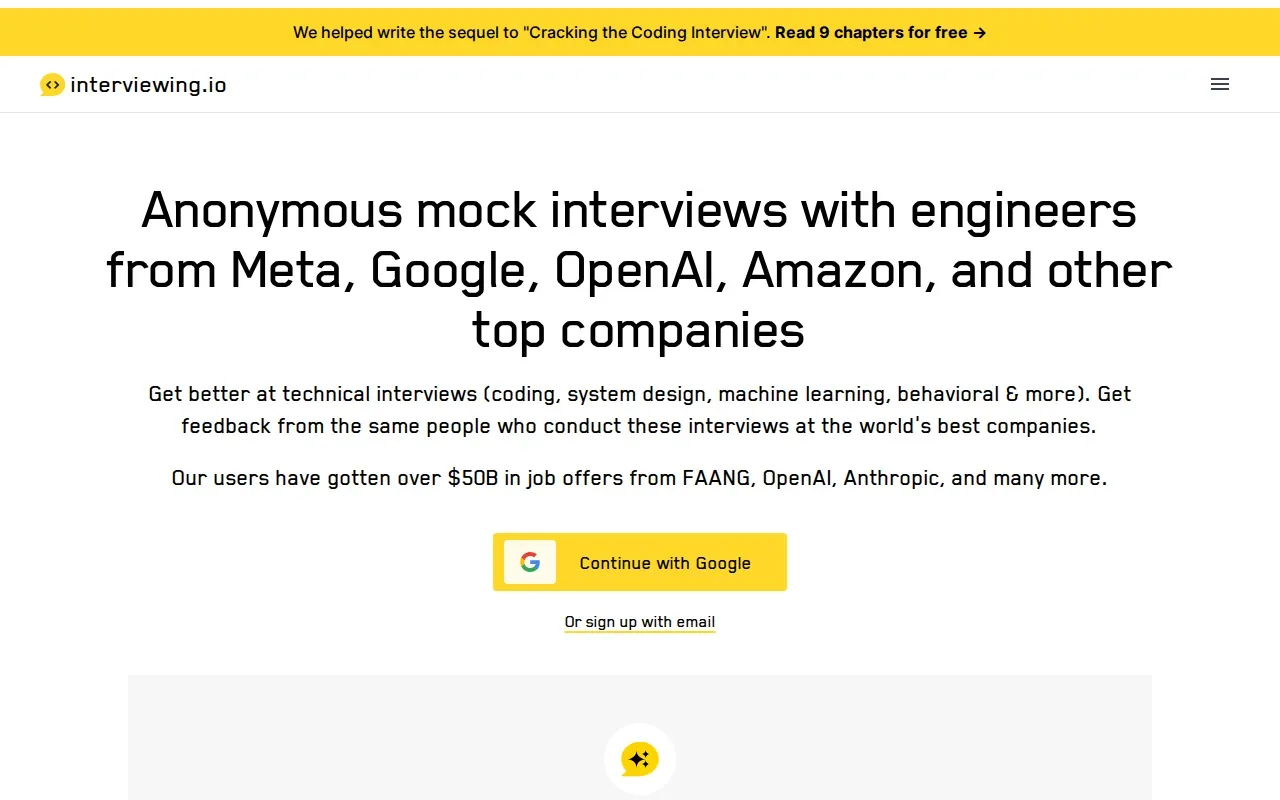
A live mock can show how it feels to explain your thinking while someone else follows the solution. You get to practise responding to a follow-up question in the moment, rather than pausing a video or asking an AI for a hint. Your interviewer gives you feedback at the end, which gives you something to review afterward.
That feedback can help you revisit where you explained a step clearly and where your reasoning may have been hard to follow. Use it to pick one change for your next session, such as saying the time complexity before you finish or asking a clarifying question before coding.
Interviewing.io doesn’t provide real-time AI guidance. Its value is the practice with another person and the chance to get feedback in a conversational setting. If you want human interaction and can make time for a scheduled mock, that’s a different kind of rehearsal than practising alone.
| Practice need | Best fit from this list | Why it fits |
|---|---|---|
| Live AI guidance during practice | Phantom Code AI | Listens, transcribes, recognizes problem types, and gives real-time guidance. |
| Curated questions with explanations | AlgoExpert | Pairs a selected problem set with video explanations. |
| Spoken practice with live scoring | Four-Leaf | Runs voice-based conversational interviews with feedback. |
| Organized DSA study | NeetCode | Has structured lists, courses, and AI hints. |
| Human feedback on code | Exercism | Lets learners request feedback from human mentors. |
| Practice with a real person | Interviewing.io | Centers prep around anonymous mock interviews with experienced engineers. |
FAQ
What is the best app for coding interview practice?
The best app depends on the skill you need to practise. Phantom Code AI fits candidates who want real-time guidance and transcription across coding, system design, and behavioral prep. For structured solo DSA study, NeetCode is a fit. For human feedback, try Exercism or a mock with Interviewing.io.
Can an app help me practise system design interviews?
Yes, some options in this list support system design practice. Phantom Code AI and AlgoExpert include system design among their supported formats. Four-Leaf also covers system design in its conversational practice. Check the specific format you need before choosing, since a tool focused on coding problems may not match a design interview.
Are there free coding interview practice apps?
Yes. Exercism is 100% free, and NeetCode has free study lists for interview prep. These tools suit solo practice and code review. If you want live guidance or a spoken mock, check the relevant tool’s current terms and choose based on the kind of feedback you need.
Should I use AI or a human for mock interviews?
Both can help with different parts of practice. AI can give you a repeatable way to work through questions and review your approach. A human mock lets you practise responding to another person and can give feedback on a live conversation. Use AI for repeat drills, then add human practice when you want to test how your explanation lands.
Conclusion
Choose the option that matches your main gap: NeetCode for structured DSA work, Exercism for mentor feedback, or Interviewing.io for a mock with an experienced engineer. If you want real-time guidance across several interview formats, start with Phantom Code AI’s free signup credits and try a mock round.